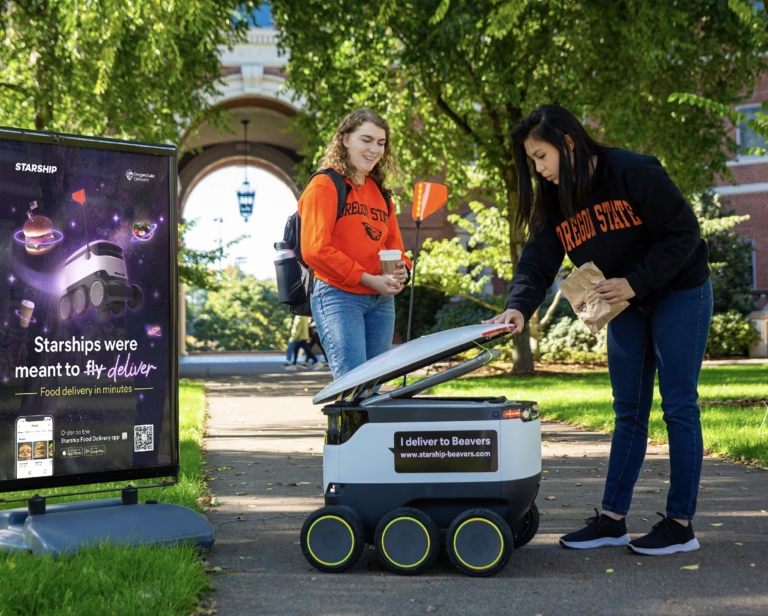
Last-mile delivery—the final, most expensive segment of the supply chain—has long been a bottleneck for e-commerce and food services. In 2026, autonomous sidewalk robots are moving from pilot programs to commercial scale, addressing labor shortages, traffic congestion, and sustainability demands. These compact, wheeled bots, equipped with LiDAR, cameras, radars, and AI-driven navigation, operate at pedestrian speeds (typically 3-6 mph) on sidewalks and in controlled environments, delivering food, groceries, and small packages directly to doorsteps.
Market momentum is strong. The global autonomous last-mile delivery sector, valued at roughly $1.3 billion in 2025, is projected to grow at a 24.5% CAGR through 2035. In the U.S., the market is expected to expand from $24.5 million in 2026 to $67.7 million by 2034. Starship Technologies leads with a fleet of 2,700 robots that have completed over 9 million deliveries worldwide across campuses, suburbs, and select cities in eight countries. The company has forged major partnerships with Uber Eats and Just Eat, recently launching in UK locations like Sheffield and Barnsley.
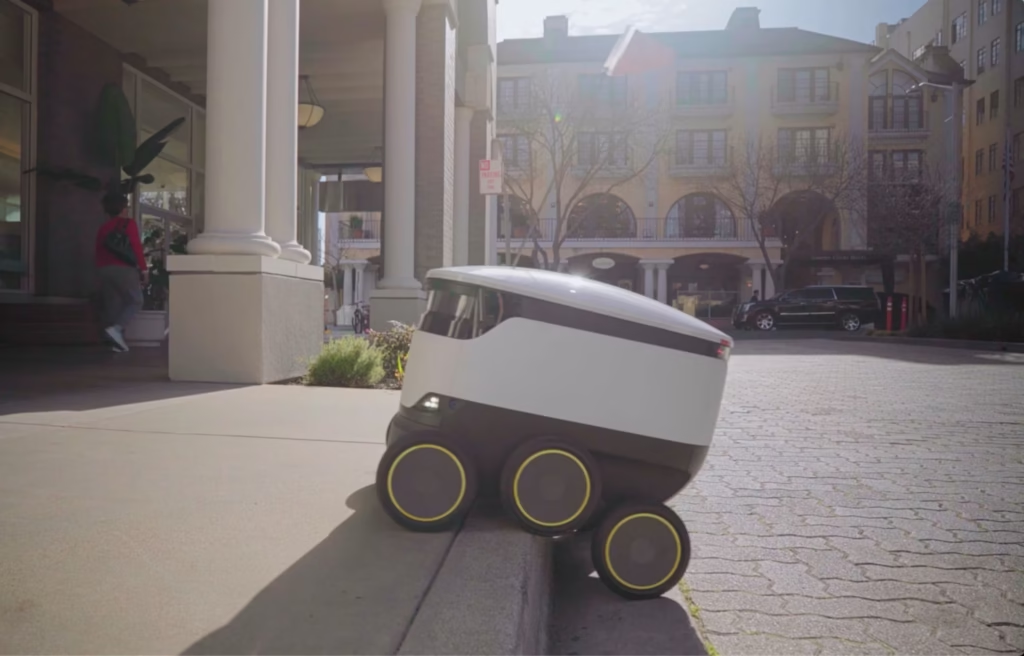
Serve Robotics has scaled aggressively, deploying 2,000 robots—the largest U.S. sidewalk fleet—across 20 cities including Los Angeles, Atlanta, Dallas, and Chicago. It partners with DoorDash and Uber Eats, completing over 100,000 deliveries while expanding into high-density neighborhoods. Kiwibot dominates campus markets with 500+ units and is testing suburban grocery runs with Walmart. Nuro focuses on road-legal autonomous vehicles for higher-volume loads.
Benefits are clear: robots cut costs by operating 24/7 without driver wages, reduce emissions compared to vans or cars, and enable contactless, sub-30-minute deliveries during peak hours. Profitable unit economics have emerged on campuses and in suburban areas where navigation is simpler.
Challenges remain significant. Regulations form a patchwork—some cities welcome bots with speed and weight limits, while others pause operations for safety reviews. Public acceptance is growing; most pedestrians simply ignore the robots, though viral videos of malfunctions and concerns over accessibility, liability, and job displacement persist. Technical hurdles include complex urban obstacles, weather, and package security.
As of mid-2026, the industry is in transition. Campus and suburban deployments prove viability, while urban rollout accelerates with AI fleet coordination. With continued regulatory alignment and technological refinement, last-mile robots are poised to become a standard, greener fixture in delivery logistics—potentially handling a substantial share of the final mile within the decade.

Author: RobotsInc.com
The RobotsInc Editorial Team is dedicated to covering the global robotics industry with accuracy, clarity, and technical insight. Our editors research emerging technologies, industry trends, product launches, and business developments to deliver informative, fact-based articles for engineers, manufacturers, researchers, investors, and robotics enthusiasts.