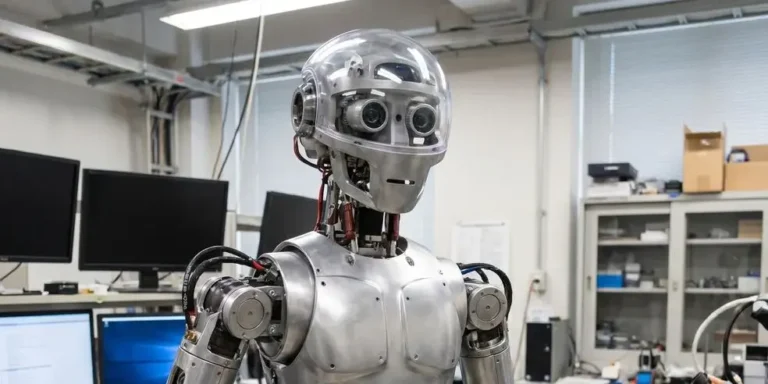
If you’ve been keeping an eye on tech news, you’ve probably seen videos of humanoid robots doing backflips, opening doors, and even pouring coffee. After decades in the realm of science fiction, humanoid robots are finally stepping out of the lab and into our world. Fueled by breakthroughs in artificial intelligence, hardware, and software, the field has witnessed explosive growth over the past few years. In this post, we’ll take stock of the current state of humanoid robots—the key players, the technology driving them, the applications that are becoming reality, and the challenges that still stand in the way of a robot in every home.
A Quick Stroll Through History
Humanoid robotics isn’t new. Early pioneers like WABOT-1 (1973) and Honda’s ASIMO (2000) demonstrated that machines could mimic human form and motion, but they were limited to pre-programmed movements and required controlled environments. The real turning point came in the 2010s with Boston Dynamics’ Atlas—a hydraulically powered robot capable of dynamic movements like running and jumping. Around the same time, advances in deep reinforcement learning and simulation allowed robots to learn skills autonomously. The synergy of AI and hardware has since accelerated progress dramatically, setting the stage for the modern humanoid robot boom.
Who’s Leading the Pack? (2026 Edition)
A handful of well-funded startups and tech giants are now racing to commercialize humanoid robots. Here are the most prominent contenders as of April 2026:
- Boston Dynamics (Atlas): The legendary research platform continues to push the boundaries of dynamic locomotion. Atlas now performs complex parkour, manipulates tools, and can recover from pushes—all powered by pure AI rather than pre-scripted motions. Though not yet sold commercially, Atlas serves as a testbed for algorithms that will trickle down to products like Stretch (their box-moving robot).
- Tesla (Optimus): Elon Musk’s ambitious project has moved from概念 to working prototypes. The latest Optimus (Gen 2) can walk at 5 km/h, carry 20 kg payloads, and execute dexterous tasks like folding laundry in a simulated home environment. Tesla is building a dedicated manufacturing line with the goal of sub‑$20,000 units within a few years.
- Agility Robotics (Digit): Perhaps the most commercially advanced humanoid, Digit has been deployed in Amazon fulfillment centers and other warehouses since 2023. It can navigate cluttered spaces, pick up packages, and work alongside humans. In 2025 Agility announced a partnership with GXO Logistics to deploy hundreds of Digits.
- Figure AI (Figure 01): Backed by Microsoft, OpenAI, and others, Figure made waves in 2024 with a video of its robot making coffee and conversing with people. Its key differentiator is the integration of a GPT‑4‑style large language model, enabling natural language instruction following. Figure aims to target manufacturing and retail.
- Samsung (Neura): The Korean giant entered the fray in 2023 with its Neura bot, focusing on elderly care and household assistance. Early pilots in South Korea show promise in medication reminders and fetch‑and‑carry tasks.
- Chinese Players: UBTECH (Walker X), Xiaomi (CyberOne), and various state‑backed initiatives are rapidly advancing. Walker X can perform Tai Chi and navigate stairs; China aims to lead in factory automation with humanoids by 2030.
| Robot | Height | Weight | Max Speed | Payload | Primary Use | Status |
|---|---|---|---|---|---|---|
| Atlas | 1.5 m | 89 kg | 5 m/s | 11 kg | Research | Prototype |
| Optimus | 1.7 m | 57 kg | 5 km/h | 20 kg | General purpose | Prototype (small batch) |
| Digit | 1.6 m | 85 kg | 2.5 km/h | 16 kg | Logistics | Limited commercial |
| Figure 01 | 1.6 m | 60 kg | 4 km/h | 20 kg | Manufacturing/Retail | Pilot deployments |
| Neura | 1.5 m | 55 kg | 3 km/h | 7 kg | Elder care | Pilot (Korea) |
Specs are approximate and based on publicly available data.
Why the Sudden Progress? Technological Enablers
Several converging trends have made humanoid robots viable in 2026:
- Actuators & Power: New electric actuators (e.g., Series Elastic Actuators) provide force control and efficiency. Battery energy density has improved, though all‑day operation remains a challenge.
- Perception & AI: High‑resolution depth cameras and lidar give robots 3D situational awareness. More importantly, end‑to‑end learning from simulation (using engines like NVIDIA Isaac Sim or Unity) lets robots acquire skills without real‑world trial‑and‑error.
- Large Language Models: Robots can now understand complex verbal instructions, generate task plans, and even explain failures—making them easier to program and interact with.
- Scalable Manufacturing: Companies like Tesla are applying mass‑production techniques from automotive to robot construction, dramatically cutting costs.
- Open‑source Ecosystems: Frameworks such as ROS 2 and Open‑AI’s Embodied projects accelerate development and foster collaboration.
Real‑World Applications Taking Root
While a robot butler like “Rosie” from The Jetsons is still far off, humanoid robots are finding niches where their human‑like form factor excels:
- Warehousing & Logistics: Digit and others are moving boxes, palletizing goods, and reducing injuries among human workers. The ability to navigate human‑sized spaces without infrastructure changes is a huge advantage.
- Manufacturing: Robots are handling repetitive or dangerous tasks—sanding, parts inspection, and even assembly. Their dexterous hands can use human tools, avoiding costly custom fixtures.
- Healthcare & Assistance: Samsung’s Neura and similar bots are being tested for patient lifting, delivery of supplies, and companionship. Strict safety standards are a barrier, but pilot programs show potential.
- Construction & Inspection: Atlas and competitors have demonstrated use of power tools and climbing ladders. They could work in hazardous zones (e.g., post‑disaster sites) where humans cannot.
- Domestic Tasks: Figure’s coffee‑making demo was a milestone, but a truly autonomous household robot remains a stretch goal. Likely, the first wave will be “assistants” for specific chores like folding laundry or vacuuming.
Challenges That Remain
Despite the hype, significant hurdles block mass adoption:
- Cost: Even at projected volumes, humanoids still cost tens of thousands of dollars—prohibitively expensive for most consumers.
- Battery Life: Most robots operate 2–4 hours on a single charge; scaling to 8+ hours requires lighter batteries or more efficient motors.
- Dexterity: Robotic hands are improving (e.g., 22‑DOF anthropomorphic designs), but they still can’t match human tactile sensitivity and manipulation skills in unstructured environments.
- Safety: Ensuring robots don’t inadvertently harm people demands robust force control, fallback behaviors, and rigorous testing. Legal liability frameworks are still nascent.
- Public Acceptance: Cultural anxiety about job loss and robot uprisings persists. Transparent communication and positive early experiences will be crucial.
- Software brittleness: While AI has advanced, robots still struggle with the “long-tail” of real‑world edge cases—a stray cable, unexpected object, or changing lighting can cause failure.
What’s Next? The Near‑Term Outlook (2026–2028)
Based on current trajectories, we can expect:
- Proliferation in controlled environments: More deployments in warehouses, factories, and healthcare facilities—places where tasks are structured and safety can be managed.
- Improved AI integration: Seamless multimodal interaction (voice, gesture, vision) will make robots intuitive to direct. Cloud‑based “collective learning” could allow robots to share experiences rapidly.
- Cost decline: As production scales and component costs drop, prices could fall below $50,000 by 2028, opening the market to small businesses.
- Regulatory frameworks: Governments will start drafting standards for service robots (e.g., ISO 13482 updates), addressing safety, data privacy, and ethical use.
- Human‑robot collaboration: Robots won’t replace humans outright but will work alongside them, handling heavy or dull tasks while humans handle judgment and fine manipulation.
Conclusion: On the Cusp of Something Big
We are living through a pivotal moment in robotics. The humanoid robots of 2026 are no longer实验室 experiments; they are functional machines beginning to prove their worth in real-world settings. The progress is undeniable—yet we are still in the early innings. Challenges of cost, dexterity, and public trust remain, but the pace of innovation suggests that within the next decade, humanoid robots could become as commonplace as industrial arms are today. Whether they ultimately enhance our lives, reshape the workforce, or both, one thing is clear: the future is walking on two legs.

Author: RobotsInc.com
The RobotsInc Editorial Team is dedicated to covering the global robotics industry with accuracy, clarity, and technical insight. Our editors research emerging technologies, industry trends, product launches, and business developments to deliver informative, fact-based articles for engineers, manufacturers, researchers, investors, and robotics enthusiasts.