Profile
Tyromotion is an Austrian leader in advanced rehabilitation technology, founded in 2007 and specializing in robotic and mechatronic therapy devices. The company develops innovative, evidence-based solutions that support patients recovering from neurological and orthopedic conditions across all phases of rehabilitation. Headquartered in Graz, Tyromotion combines sophisticated robotics, sensor technology, biofeedback, and gamification to deliver intensive, task-specific therapy that improves motor function, balance, gait, and overall independence.
Tyromotion’s mission centers on transforming recovery into success stories. The company envisions a world where rehabilitation unlocks every person’s maximum health potential. With more than 8,500 devices installed worldwide and support reaching over 10 million patients in more than 72 countries, Tyromotion partners with clinics, hospitals, and therapists through a network of over 45 distributors. It emphasizes long-term relationships that include clinical training, technical service, room-planning tools, and software integration rather than simply selling hardware.
Tyromotion offers a complete portfolio under its TyroTherapy concept. Its robot-based products focus on upper- and lower-extremity rehabilitation with high repetition rates, objective assessments, and adaptive support that scales from passive to fully active training.
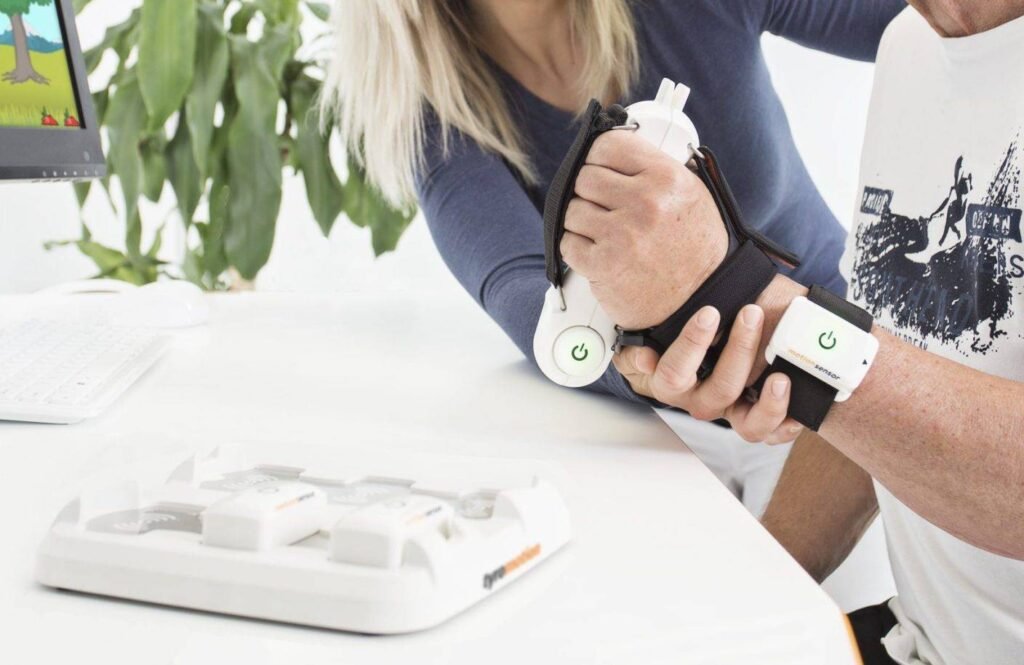
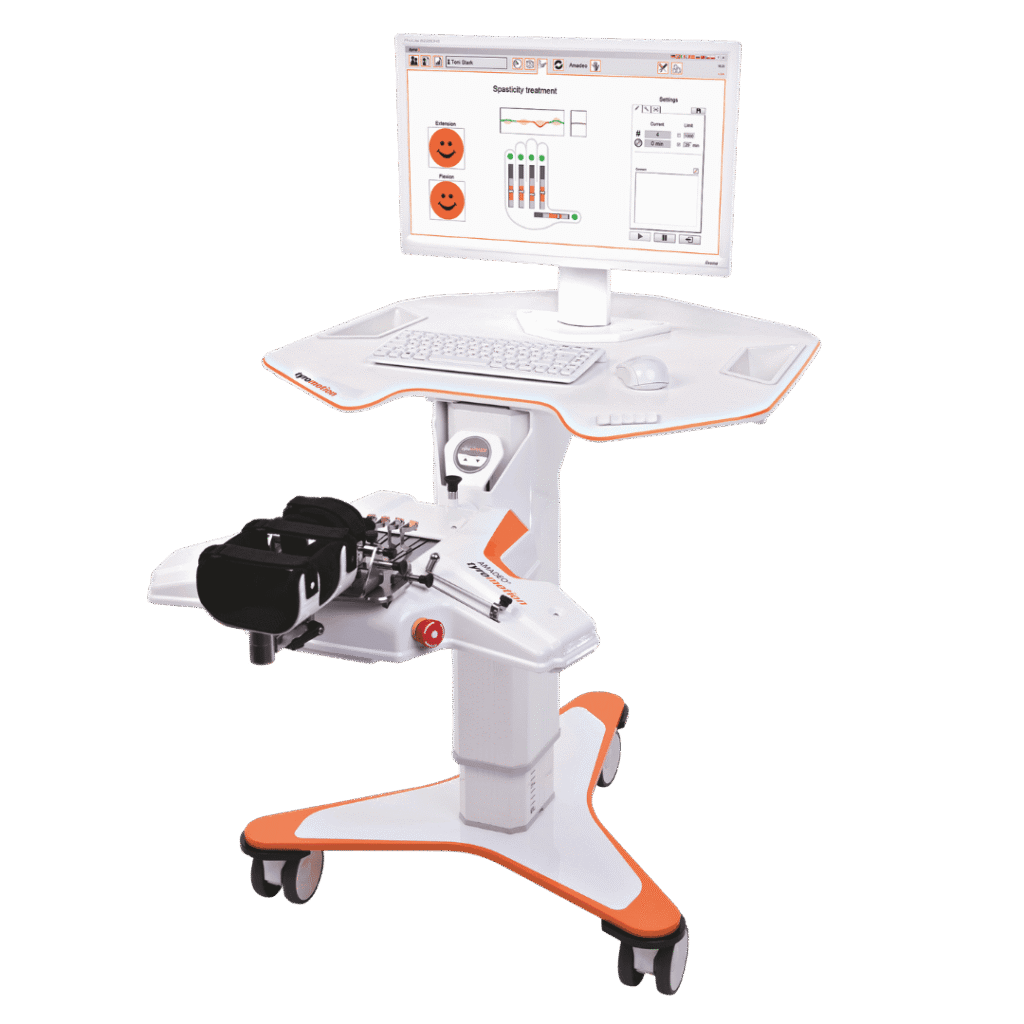
The Amadeo is a robotic finger-hand rehabilitation device that allows patients to perform up to 700 precise grasping and finger-extension movements per session. It supports passive, active-assisted, and active modes, includes EMG biofeedback to detect patient intention, and provides targeted spasticity management through assessments using the Modified Ashworth and Tardieu scales. Suitable for pediatric to adult patients, Amadeo helps restore fine motor skills for everyday tasks such as writing or using utensils.
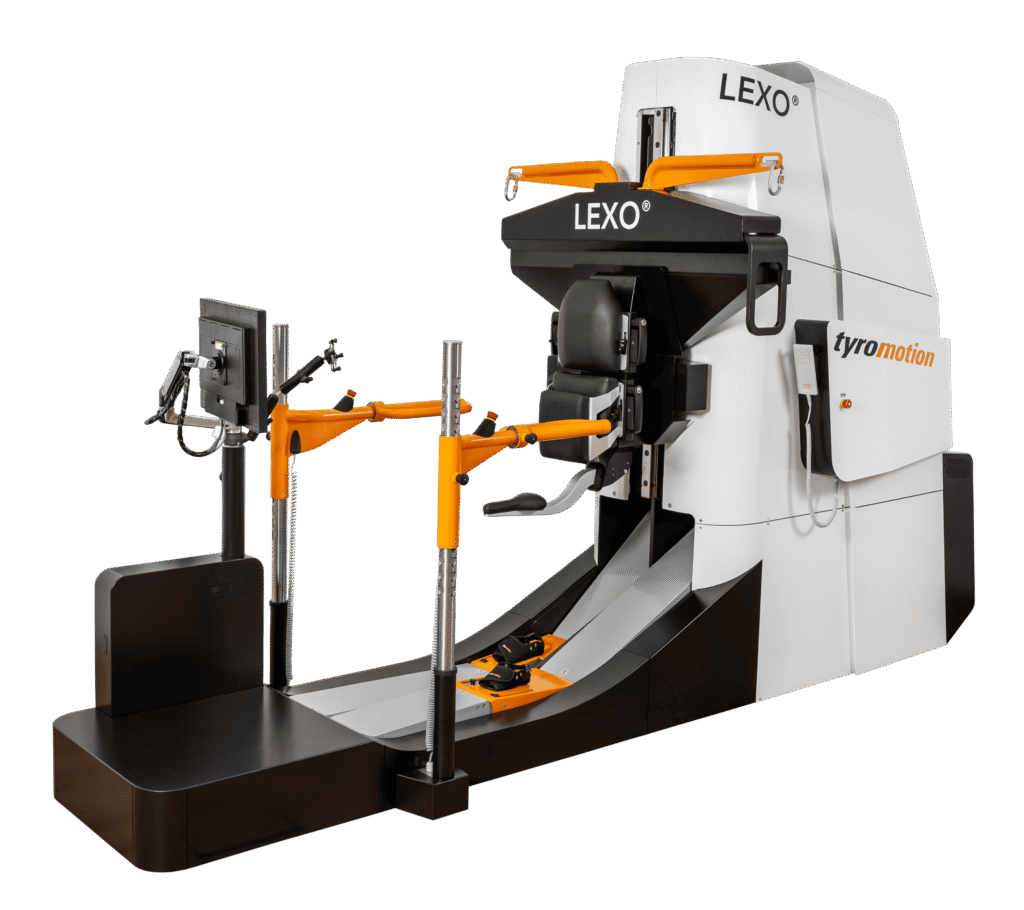
The Lexo represents Tyromotion’s robotic gait trainer. This end-effector-based system features fast setup, high patient activity, and integrated trunk support via the PELVIS PLUS system. It promotes physiological walking patterns through passive, active, and assisted modes while accommodating patients from 15 kg to 180 kg. Unlike complex exoskeletons, the Lexo enables efficient workflows and maximum therapy time, benefiting stroke, spinal cord injury, and cerebral palsy patients throughout acute to chronic stages.
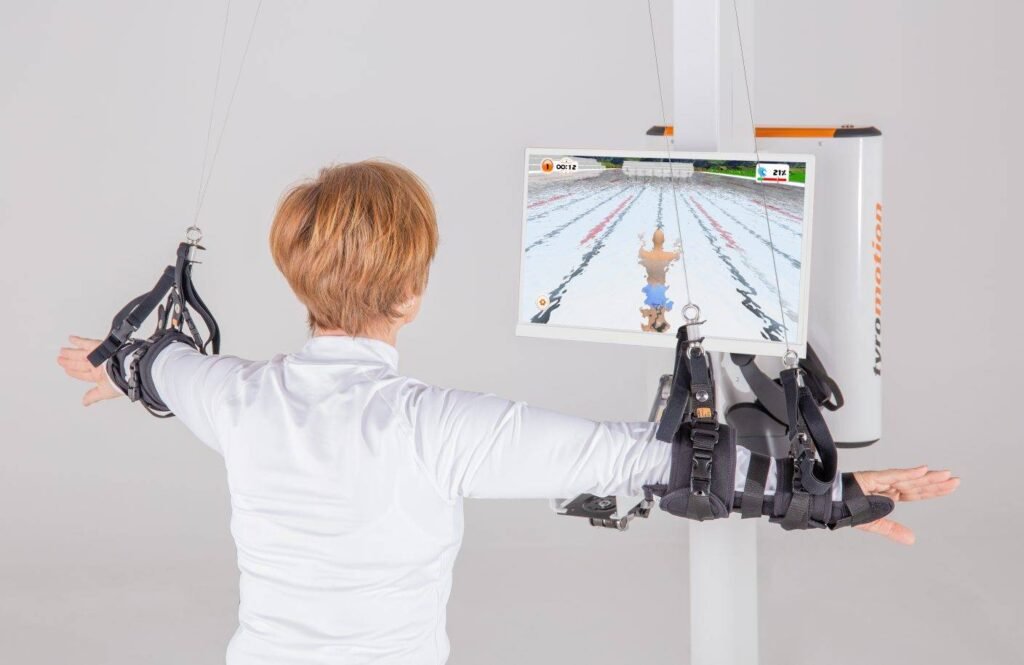
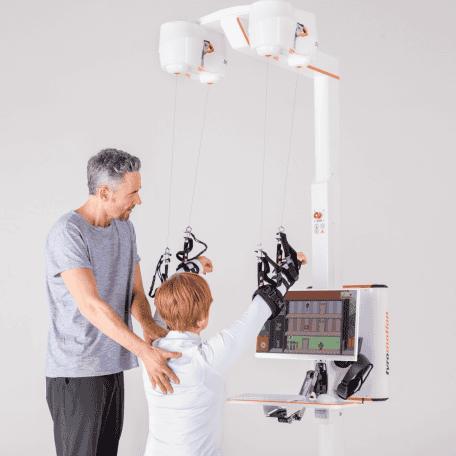
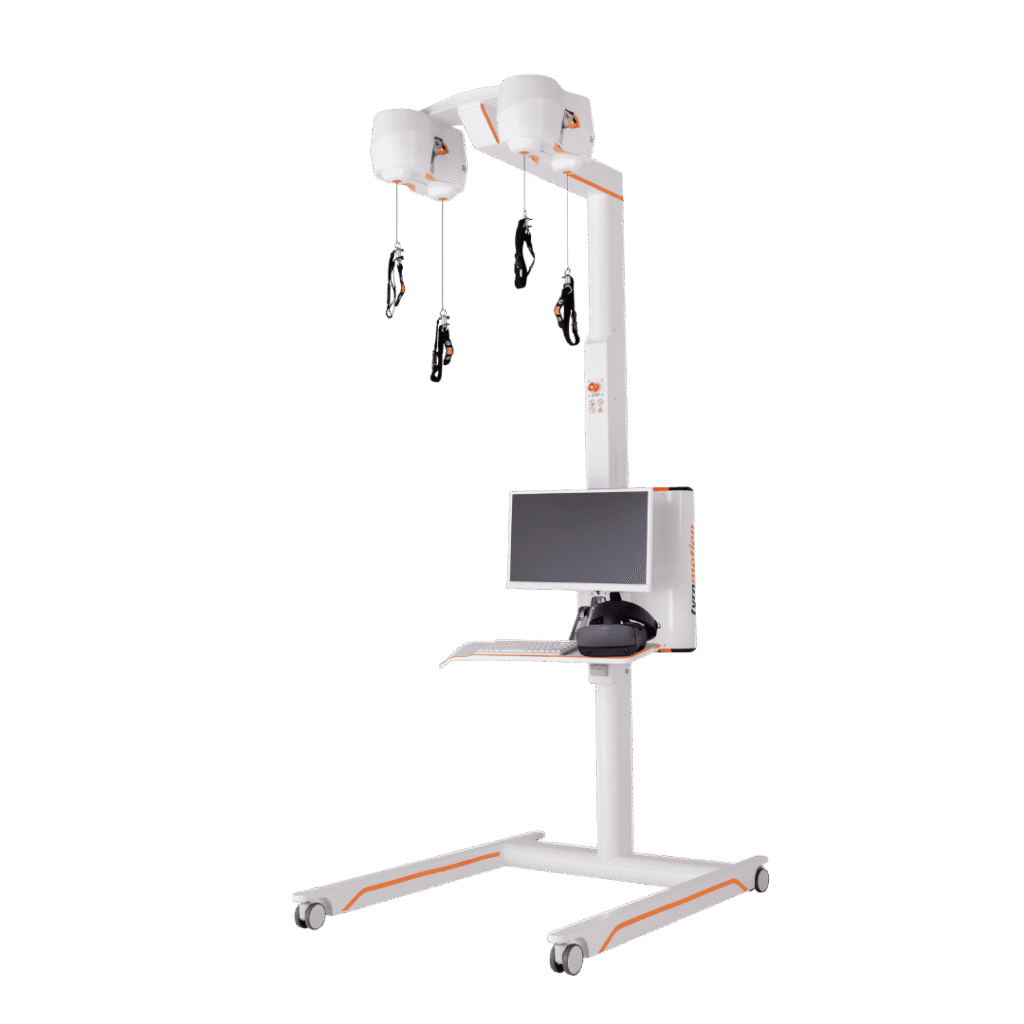
Additional robot-assisted and sensor-driven systems include the Diego, which delivers shoulder and arm rehabilitation through natural movement patterns and functional training. The Pablo serves as a multifunctional device with extensive accessories, offering biofeedback, objective metrics, and gamified exercises for upper-extremity recovery. The Myro provides interactive, task-specific therapy using a sensor-based surface where patients manipulate real objects to train both motor skills and cognition in the upper limbs.
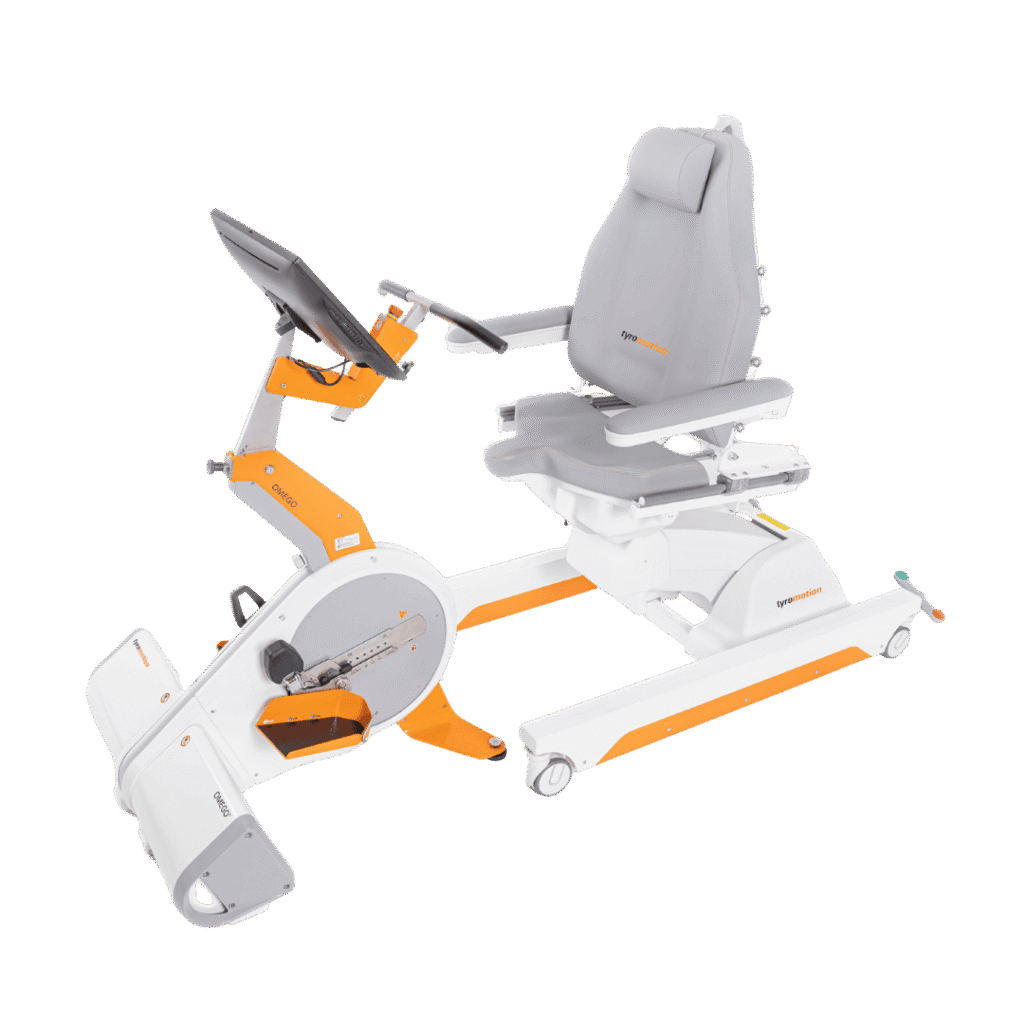
For lower-body and balance work, the compact Tymo delivers versatile postural control and balance training in standing, sitting, or supported positions. The Omego Plus combines multiple leg-training modalities—stepper, leg press, cycling, and foot-lift exercises—in one unit for uni- and bilateral work across all rehabilitation phases. The Tyrostation creates an ergonomic therapy environment that houses Pablo and Tymo components for seamless sessions. Maya is the accompanying software platform that streamlines documentation, reporting, and standardized therapy management so clinicians can focus on patients.
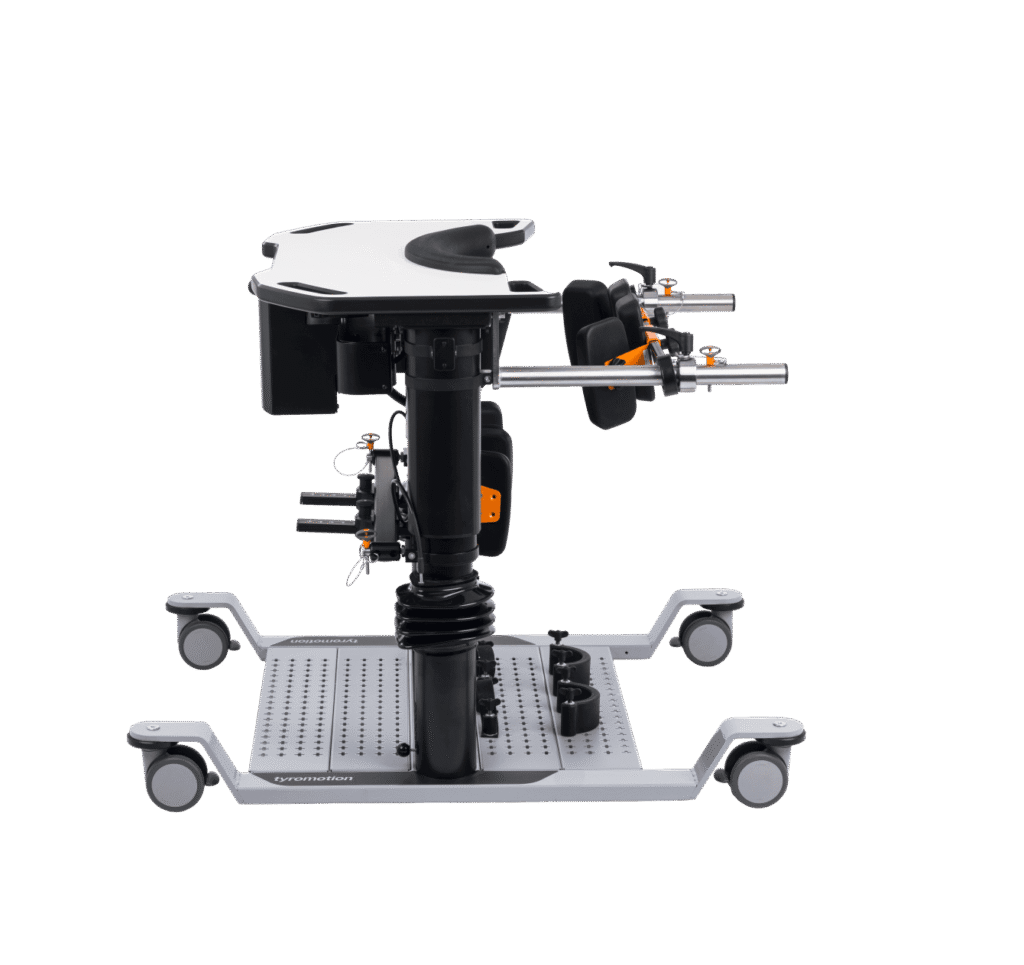
Tyromotion devices incorporate safety features, space-efficient designs, and pediatric kits while delivering measurable outcomes backed by clinical studies. A forthcoming system called Elvis will add standing and balance therapy capabilities with an integrated lift mechanism.

Map
Sorry, no records were found. Please adjust your search criteria and try again.
Sorry, unable to load the Maps API.