Profile
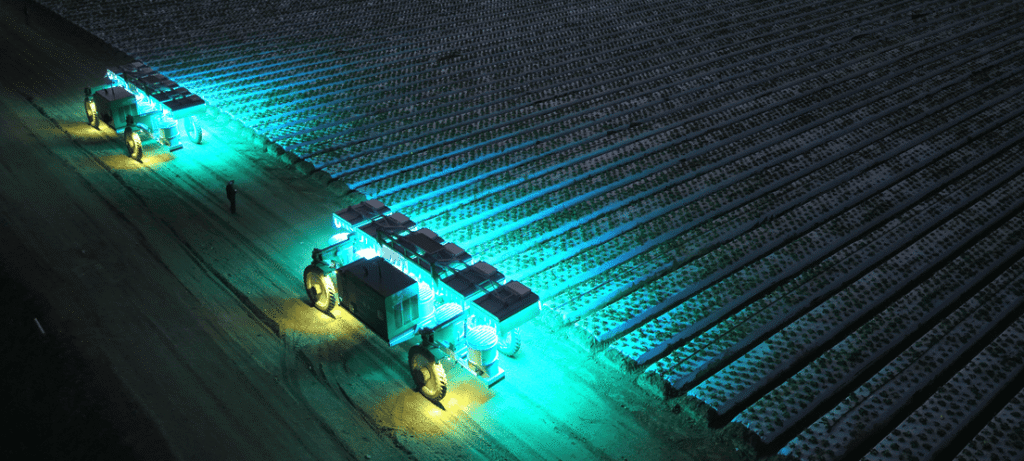
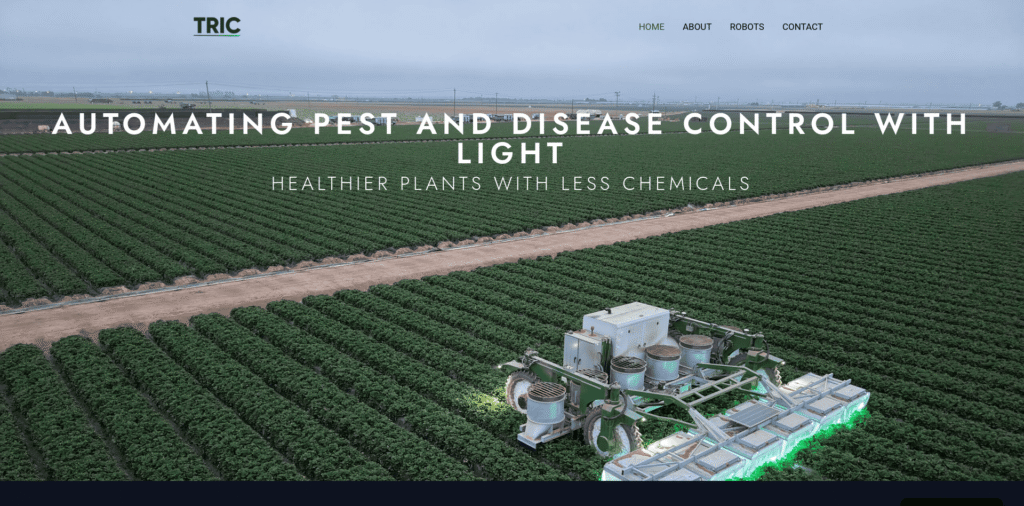
TriC Robotics is an agricultural technology company focused on sustainable, chemical-free pest and disease control for specialty crops, particularly strawberries. Headquartered in San Luis Obispo, California, the company develops and operates large-scale autonomous robots that use ultraviolet (UV-C) light and other mechanical methods as alternatives to traditional chemical pesticides. Founded around 2017 (spun out of the University of Delaware), TRIC aims to reduce chemical usage, lower labor costs, improve yields, prevent resistance buildup in pests, and support organic farming practices while providing data-driven insights for better crop management.
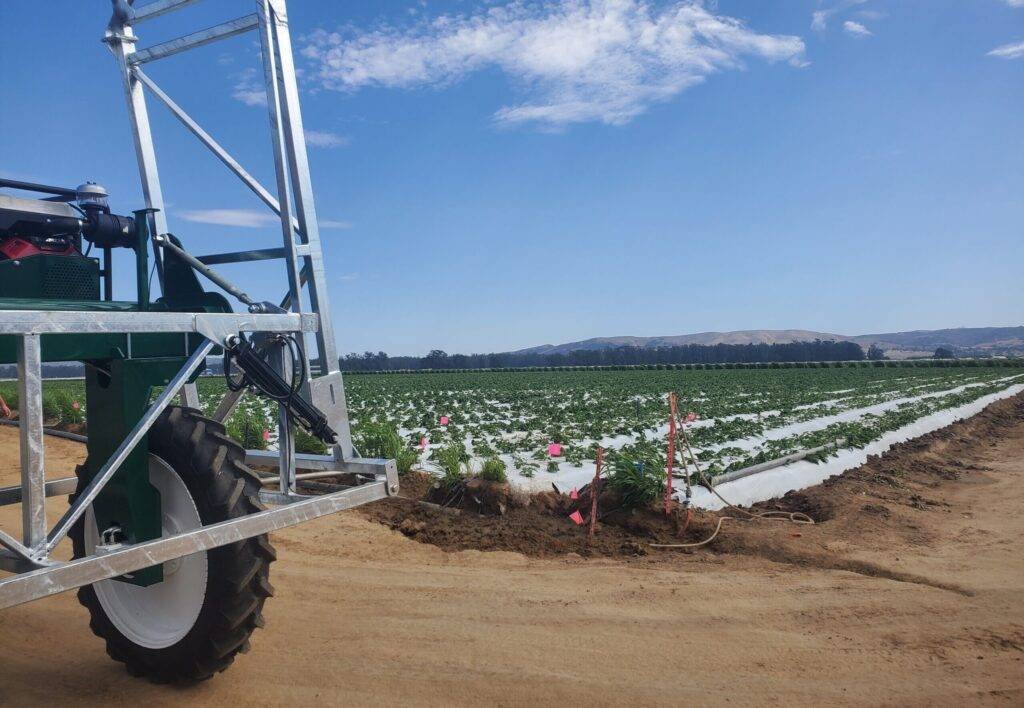
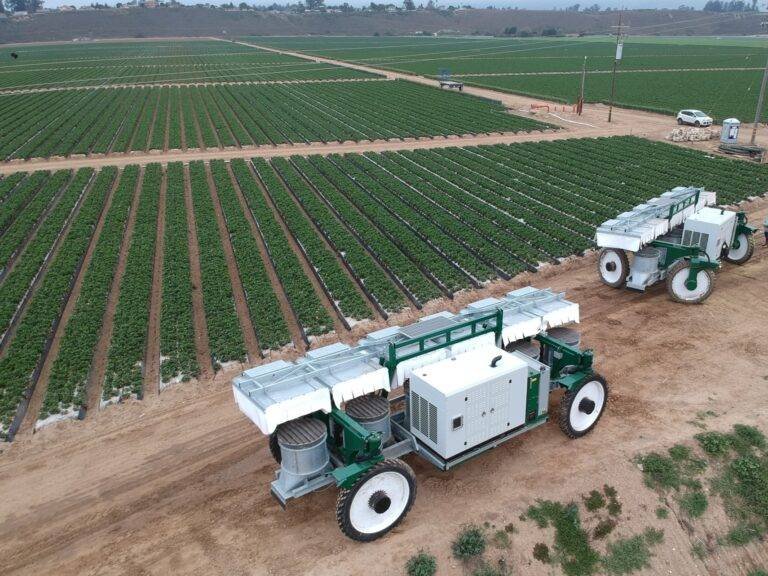
The core of their technology is tractor-scale autonomy designed specifically for farm conditions. Unlike smaller robots, their platforms mimic the size, durability, and familiarity of traditional farm equipment to navigate uneven terrain, ruts, and existing field layouts without requiring infrastructure changes. Key advantages include higher coverage (up to 7x more than single-row systems), larger payloads, and reliable operation in real-world farming environments. Robots are typically offered as a service, with TRIC handling setup, operation (often at night), maintenance, and data collection, so farmers pay similarly to conventional treatments but gain sustainability benefits.
Main Robot Platforms and Products:
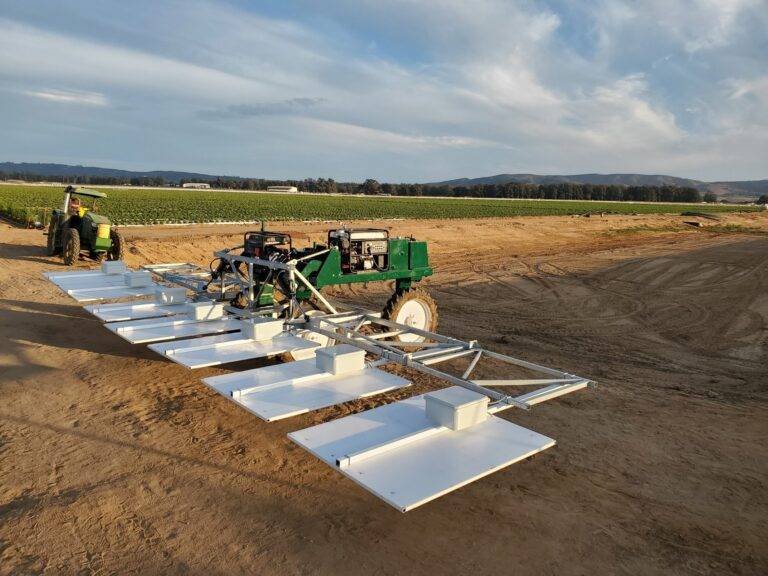
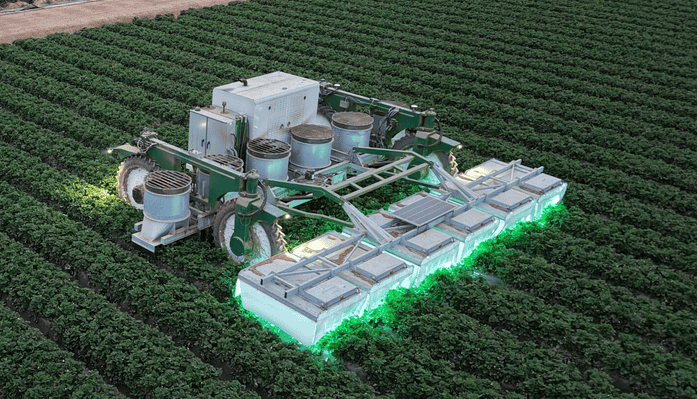
- Eden Platform: A three-wheeled, UV-light-focused robot with a span of over 40 feet. It matches the form factor of conventional spray rigs for easy integration. Features include automated boom height and wing adjustments for precise dosing on uneven rows, high-resolution cameras for monitoring and security, and effective control against mites, mildew, mold, and diseases like botrytis. It emphasizes resistance-free, non-chemical treatment that improves yields by reducing crop loss.
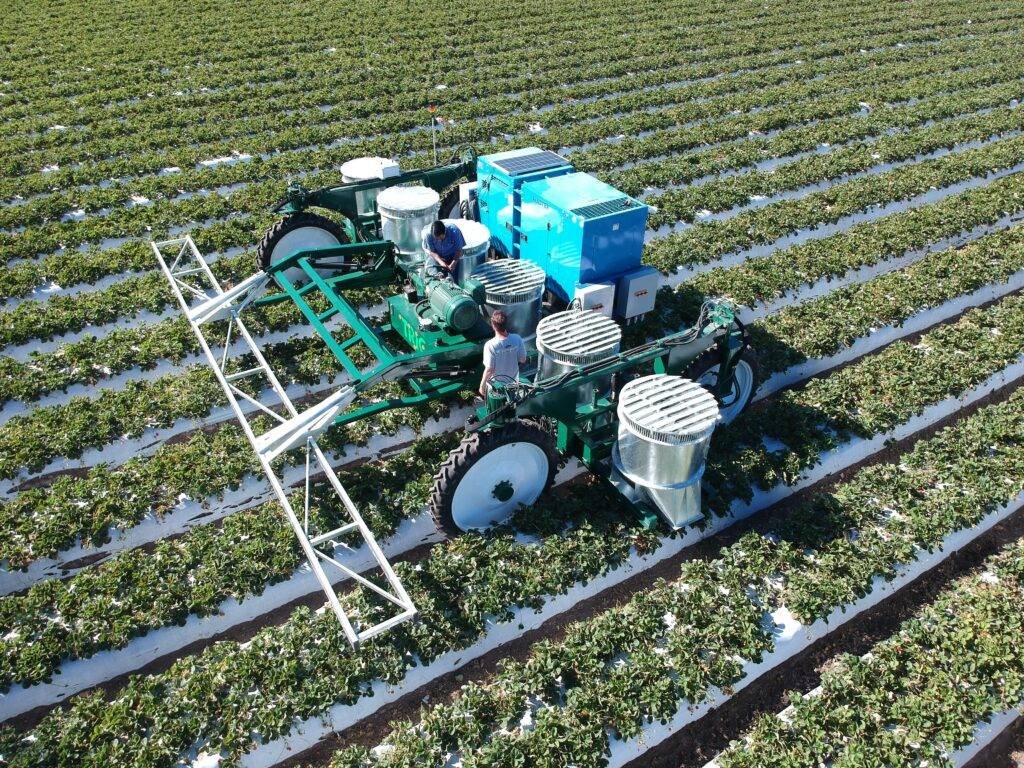
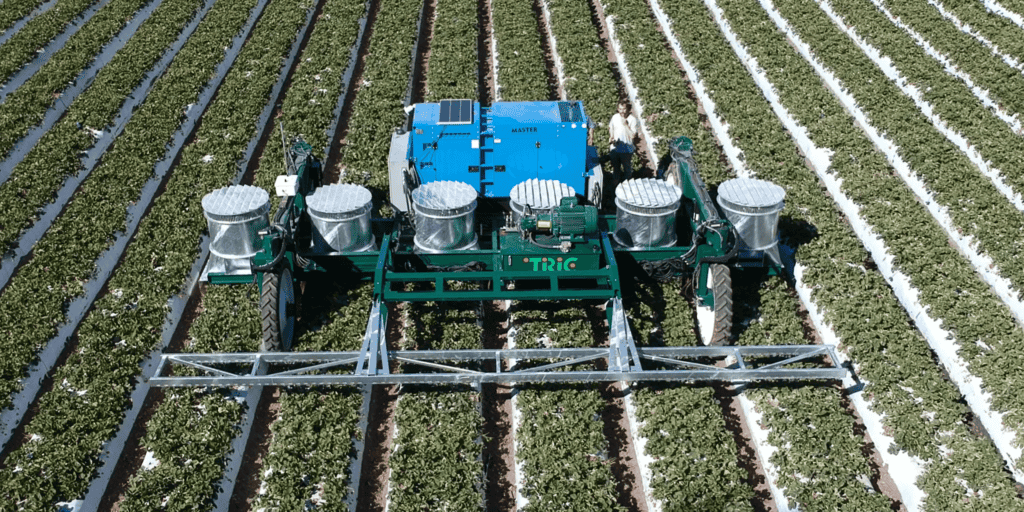
- Luna Platform: Built in a similar form factor to the Harvest Pro, this six-row robot covers 50-100+ acres. It supports multiple payloads, including UV booms for light treatment, electric bug vacuums (a six-row model that doubles effectiveness in pest removal), and cameras for real-time plant analytics. It offers remote start/monitoring and cooperative fleet management for larger operations. The bug vacuum is fully electric and provides a sustainable mechanical pest control option.
TRIC’s approach integrates autonomy (consistent navigation and row tracking), adjustable payloads with precise dosing, and data analytics from bi-weekly treatments. This enables better integrated pest management (IPM), eliminates re-entry periods, reduces ground compaction concerns (using large tires), and supports diesel-generator power for reliability in remote fields. The company has raised significant funding (e.g., $5.5M seed round) to expand its fleet and operations, primarily in California strawberry regions like Santa Maria and Oxnard.
Overall, TRIC Robotics represents a shift toward precision agriculture robotics that prioritizes environmental sustainability, operational efficiency, and long-term reliability. By automating what was previously labor-intensive or chemically heavy work, they help farmers achieve healthier plants, higher organic market potential, and data-backed decisions while addressing broader industry challenges like pesticide resistance and labor shortages.
Map
Sorry, no records were found. Please adjust your search criteria and try again.
Sorry, unable to load the Maps API.