Profile
Tesla: Accelerating the World Toward a Driverless Future
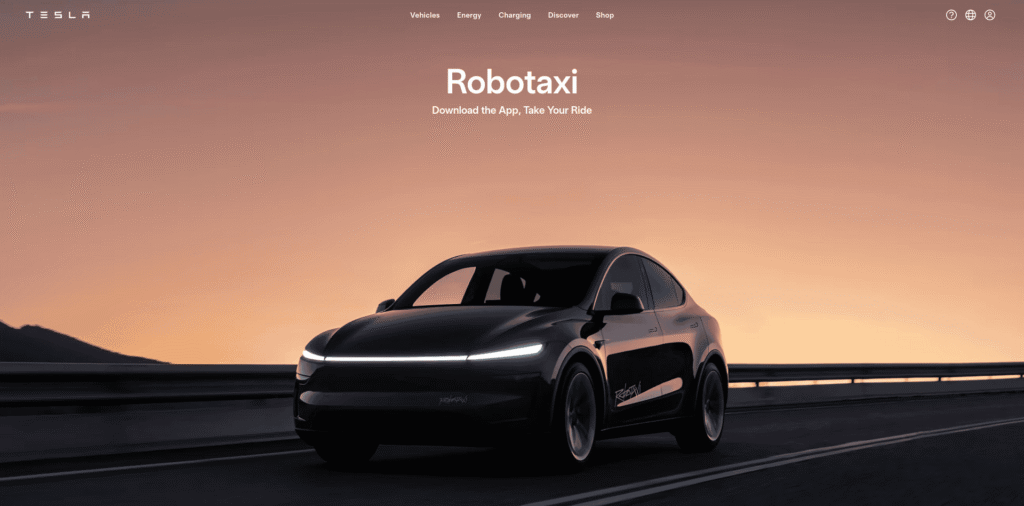
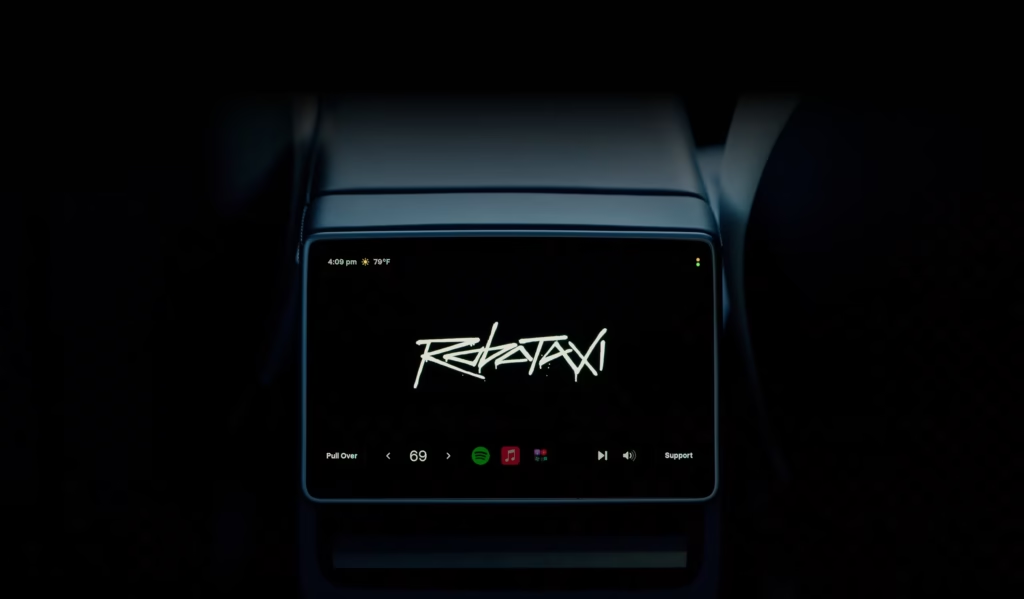
Tesla, Inc., spearheaded by CEO Elon Musk, has long defined itself not merely as an electric vehicle (EV) manufacturer, but as an AI and robotics company. While Tesla initially disrupted the automotive industry with high-performance electric cars and energy storage solutions, its long-term vision has always been to achieve Full Self-Driving (FSD) capability. The Tesla Robotaxi represents the culmination of this vision—a future where personal car ownership is optional, and a network of autonomous vehicles provides on-demand transportation.
The Hardware: Tesla Vision
At the core of the Tesla Robotaxi strategy is a distinct technological philosophy. Unlike competitors such as Waymo, which rely heavily on expensive and bulky LiDAR (Light Detection and Ranging) systems, Tesla banks entirely on “Tesla Vision.” This system utilizes a suite of eight surround cameras, providing a 360-degree view of the environment at up to 250 meters of range, complemented by 12 ultrasonic sensors for short-range detection and a forward-facing radar (though recent updates have moved toward vision-only).
This camera-centric approach is underpinned by the Tesla FSD Chip, custom silicon designed specifically for neural network processing. By processing vast amounts of visual data in real-time, the onboard computer aims to interpret the world much like a human driver would, recognizing traffic lights, stop signs, pedestrians, and other vehicles, but with machine precision and reaction times.
The Neural Network: From Fleet Learning to Autonomy
Tesla’s most significant advantage in the race to autonomy is its fleet learning model. Every Tesla vehicle on the road—regardless of whether it is in autonomous mode—acts as a data collector. With millions of vehicles globally, Tesla accumulates billions of miles of real-world driving data. This data is fed into massive neural networks trained on supercomputers (such as Tesla’s Dojo project).
This “edge computing” model allows Tesla to iterate rapidly. When a car encounters a difficult scenario, the system learns from it, and the update is pushed wirelessly to the entire fleet. This continuous feedback loop is designed to improve the system exponentially, teaching the AI driver to handle edge cases—like erratic drivers, construction zones, and complex intersections—that are difficult to program explicitly.
The Robotaxi Network: A New Economy
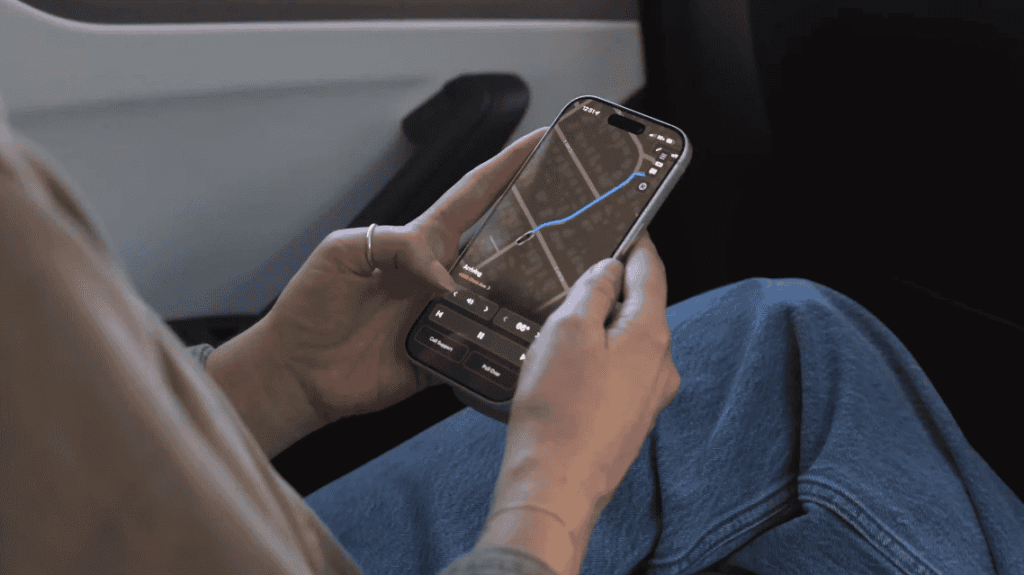
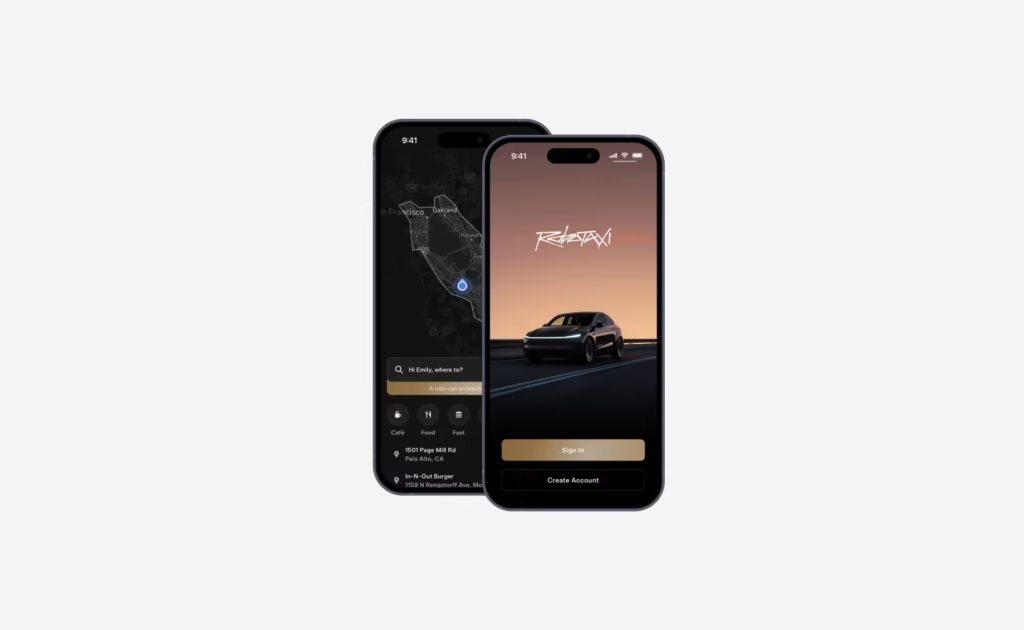
The Robotaxi concept extends beyond simply driving a car from point A to point B; it is a business model. Musk has proposed a “Tesla Network,” where owners can add their personal Tesla vehicles to a shared fleet when they are not using them. The car would autonomously drive to pick up passengers, generate income for the owner, and return, effectively paying for itself over time.
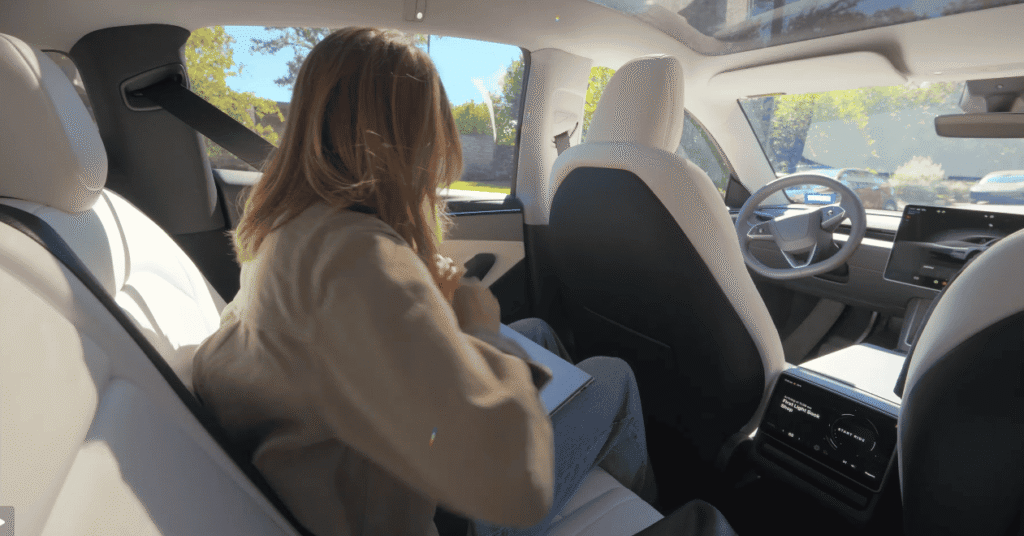
This network aims to drastically reduce the cost per mile of transportation, making ride-hailing cheaper than public transit or car ownership. Furthermore, because Tesla controls both the vehicle manufacturing and the AI software, they can optimize the vehicle design specifically for autonomy—such as removing steering wheels and pedals in future purpose-built Robotaxi models (like the rumored “Cybercab”), maximizing interior space for passengers.
Challenges and Regulatory Hurdles
The path to a fully realized Robotaxi network is fraught with challenges. Technically, achieving Level 5 Autonomy—where the car can drive anywhere, under any conditions, without human intervention—is an unsolved problem. There are also immense regulatory hurdles, as governments grapple with liability, insurance, safety validation, and infrastructure readiness. Public trust remains a critical factor; high-profile accidents involving autonomous systems, even partially automated ones, heavily impact consumer perception.
Conclusion
Tesla’s Robotaxi vision is a bold reimagining of urban mobility. By leveraging vertical integration—combining electric drivetrains, custom AI silicon, and a massive real-world data network—Tesla is attempting to leapfrog traditional automakers and tech giants. If successful, the Tesla Robotaxi will not just change how we drive; it will redefine the concept of transportation, turning cars from depreciating assets into income-generating robots.
Map
Sorry, no records were found. Please adjust your search criteria and try again.
Sorry, unable to load the Maps API.