Profile
Physik Instrumente (PI) is a globally recognized leader in precision motion and positioning technology, specializing in nanopositioning systems, piezo actuators, linear stages, and advanced robotic solutions. Founded in 1970 in Karlsruhe, Germany, the company remains family-owned and has grown into an international group with manufacturing facilities in Germany, the United States, Italy, and China, employing over 1,500 people worldwide. Physik Instrumente has earned a reputation for ultra-high precision, reliability, and innovation, serving cutting-edge industries including semiconductor manufacturing, photonics, aerospace, medical technology, and industrial automation. Their core expertise lies in translating precision engineering into practical, high-performance motion systems that enable next-generation robotic applications where sub-micron or even nanometer accuracy is required.
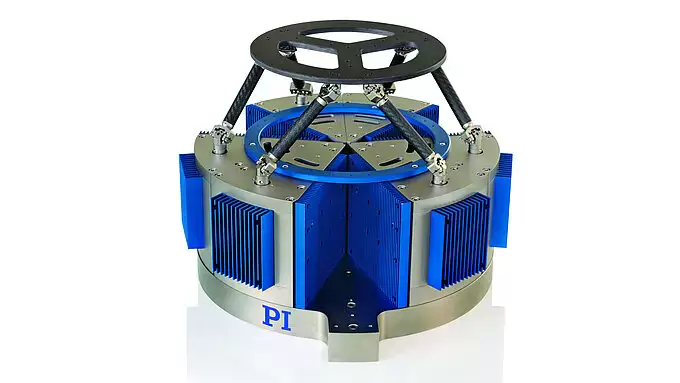
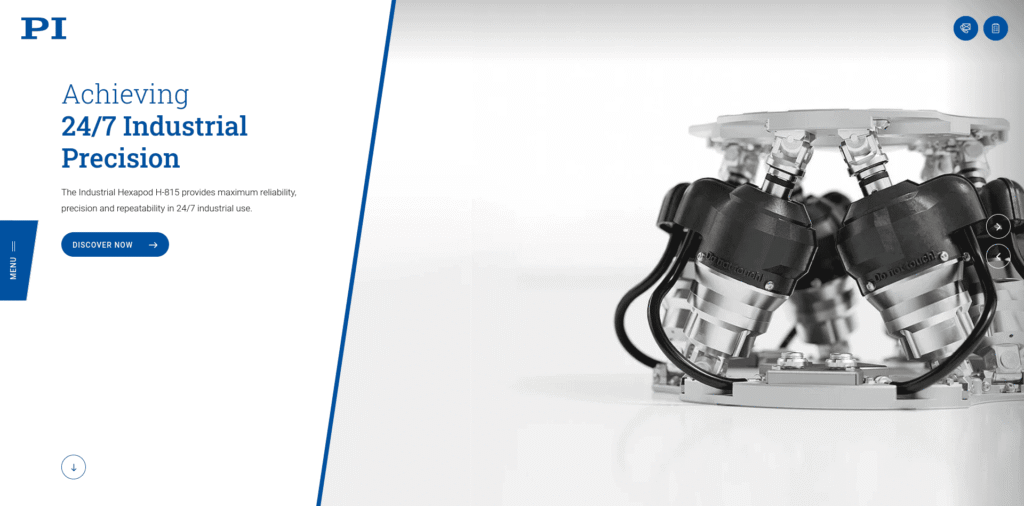
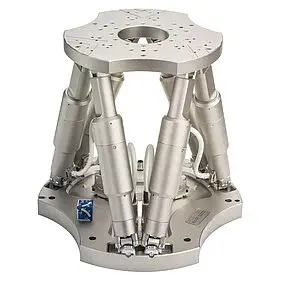
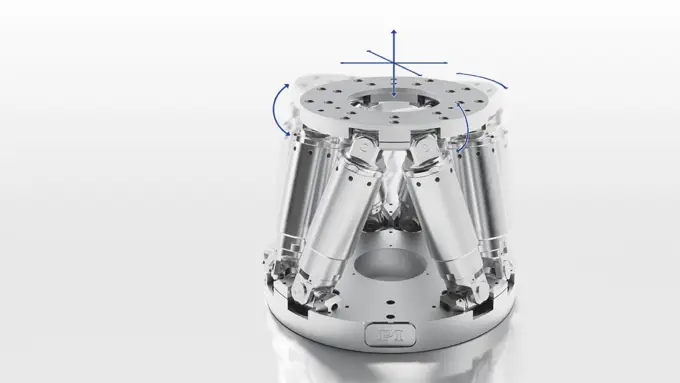
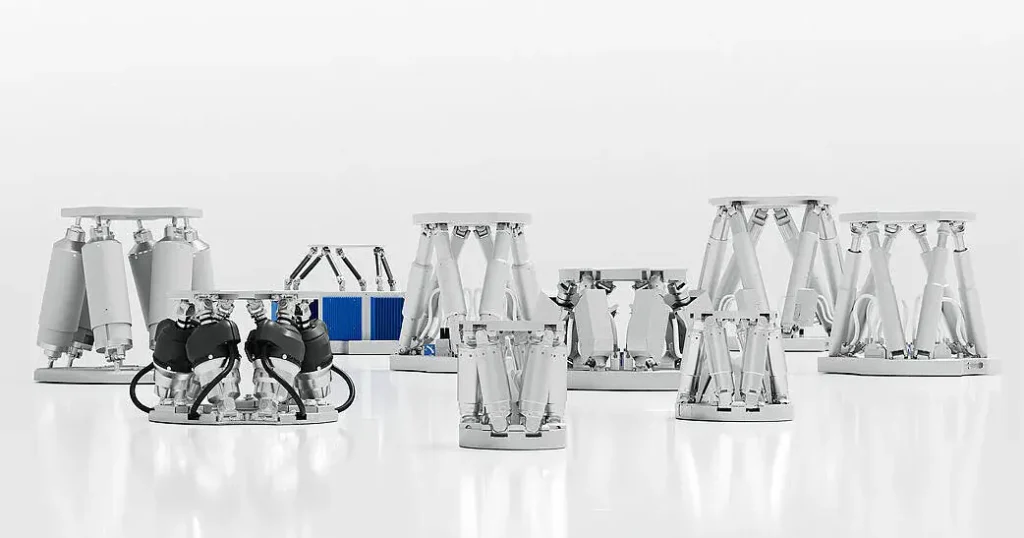
A significant portion of Physik Instrumente’s portfolio is directly targeted at robotics and automation. Their flagship robot-based products are the Hexapod parallel kinematic positioning systems. These 6-axis hexapod robots provide exceptional stiffness, load capacity, and precision, making them ideal for applications such as optical alignment, satellite testing, medical device assembly, astronomy, and precision machining. Models like the H-840, H-811, and the newer lightweight hexapods offer travel ranges from a few millimeters to tens of millimeters with repeatability down to 0.1 µm and rotational accuracy in the micro-radian range. Unlike serial kinematics robots, hexapods distribute error across all six struts, resulting in significantly higher accuracy and stiffness. Physik Instrumente also offers specialized hexapod controllers with advanced features including virtual pivot point programming, trajectory generation, and seamless integration with industrial robot controllers via EtherCAT, Profinet, or ROS interfaces.
Beyond hexapods, Physik Instrumente provides a comprehensive range of robotic-compatible motion technologies. Their PIMag® magnetic direct-drive stages deliver high speed and precision without mechanical wear, while PIglide air-bearing stages offer nearly frictionless motion for the highest accuracy in inspection and metrology robots. Piezo-based nanopositioners and fast steering mirrors enable dynamic positioning at kHz frequencies, critical for laser processing, microscopy, and adaptive robotics. The company also develops piezo-driven grippers, micro-dosing systems, and fast focusing mechanisms used as end-of-arm tools in high-precision robotic cells. Their motion controllers and software platforms, including the ACS Motion Control line acquired in recent years, support multi-axis synchronization, machine learning-based tuning, and Industry 4.0 connectivity.
Physik Instrumente emphasizes vertical integration — they design and manufacture most critical components including piezo ceramics, sensors, and electronics in-house. This control over the full technology stack allows them to achieve performance levels difficult for competitors to match. Their solutions are widely adopted in collaborative robotics, semiconductor wafer handling, photonics alignment robots, and research platforms such as the Mars rover testbeds or large telescope mirror alignment systems. Recent innovations focus on lighter, faster hexapods with integrated absolute encoders, improved software for easier robot programming, and AI-supported alignment routines.
With a strong commitment to quality (ISO 9001, ISO 14001) and customer-specific engineering, Physik Instrumente serves as an essential technology partner for robotics integrators and OEMs requiring the highest levels of precision and repeatability. As automation moves toward more demanding micro-assembly, optics, and life sciences applications, Physik Instrumente’s hexapods, nanopositioners, and smart motion subsystems are increasingly becoming the enabling technology behind tomorrow’s most advanced robotic systems. Their combination of German engineering excellence and global support infrastructure positions them at the forefront of precision robotics.
Map
Sorry, no records were found. Please adjust your search criteria and try again.
Sorry, unable to load the Maps API.