Profile
Physical Intelligence (stylized as π), is a leading artificial intelligence company specializing in the development of foundation models for robotics. Founded in 2023 by a team of prominent researchers and engineers with backgrounds from OpenAI, Google DeepMind, UC Berkeley, and other top institutions (including robotics pioneer Pieter Abbeel), the San Francisco-based company aims to create “physical intelligence.” This refers to general-purpose AI systems that enable robots to operate effectively in the unstructured, dynamic environments of the real world—much like how large language models revolutionized text and reasoning.
The company’s central innovation is a family of foundation models (notably π0 and its successors) trained on massive-scale datasets of real robot interactions, human demonstrations, video, and simulation data. Unlike traditional robotics, which relies on task-specific programming or narrow solutions, Physical Intelligence’s models use end-to-end neural networks combining imitation learning, reinforcement learning (including variants of RL from human feedback adapted for physical actions), vision-language-action architectures, and large-scale scaling laws. A single model can generalize across different robot hardware platforms—robotic arms, dexterous hands, mobile manipulators, and more—allowing it to perform diverse tasks without extensive retraining for each new scenario or object.
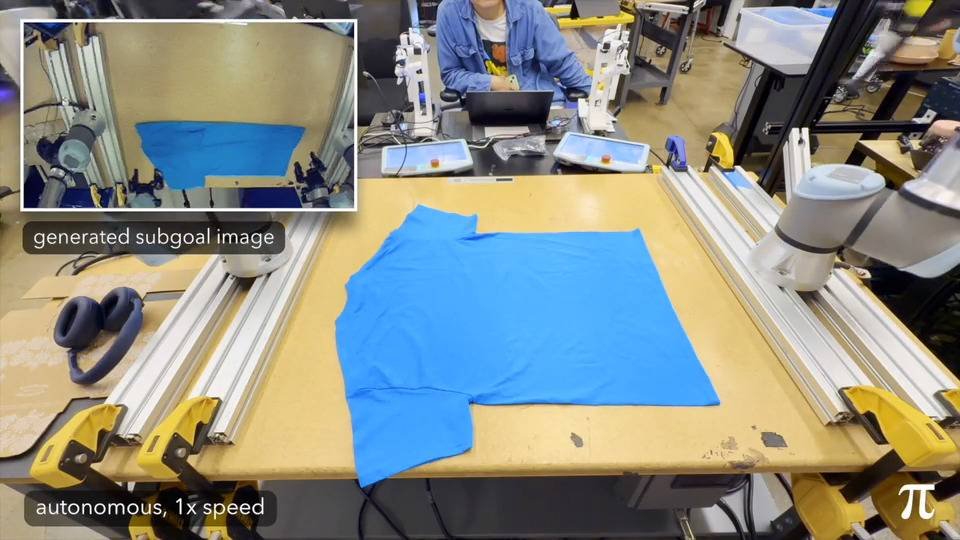
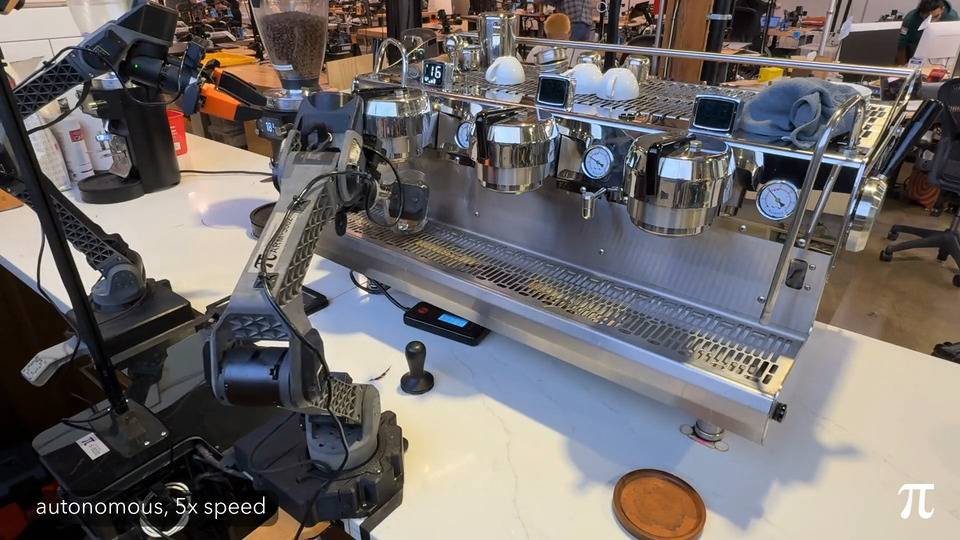
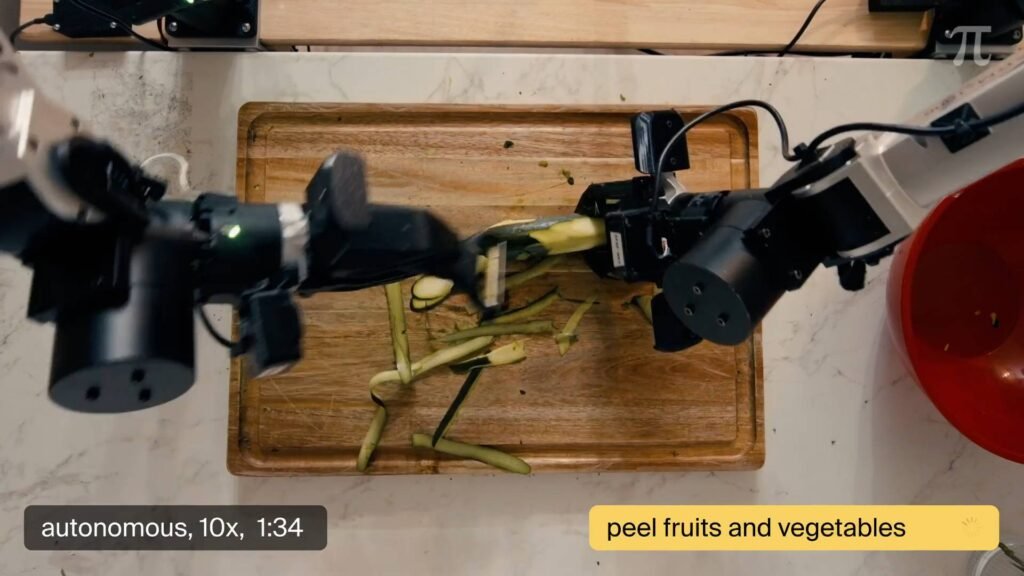
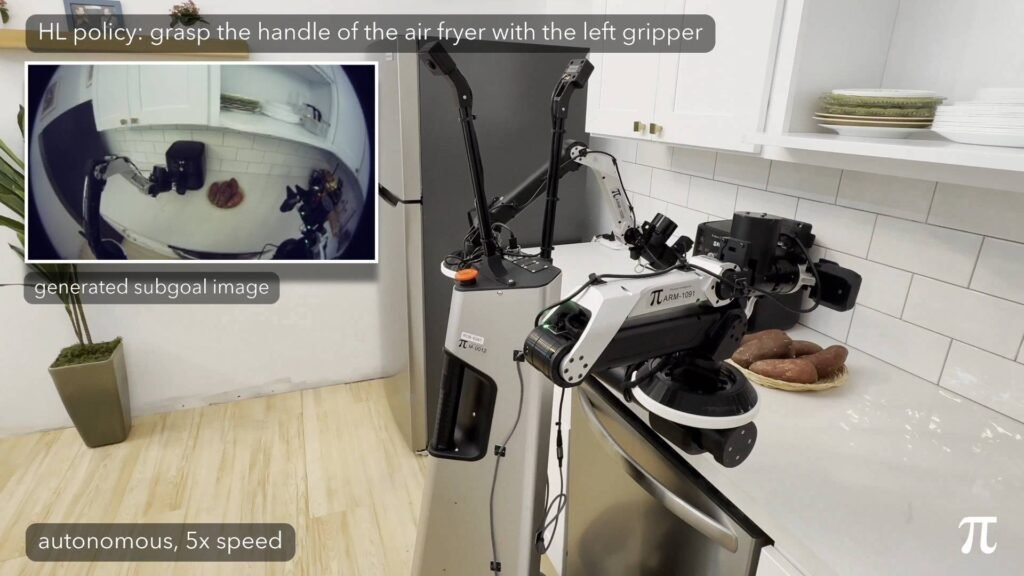
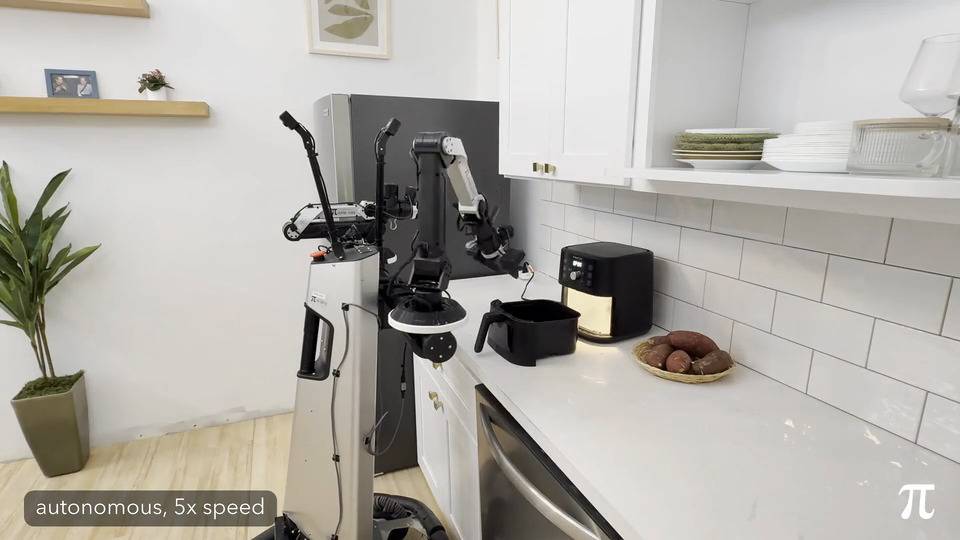
Their robot-based “products” center on these deployable AI models and supporting infrastructure rather than mass-produced consumer hardware. The Pi models serve as a universal “brain” that hardware partners or developers can integrate into various robots. Demonstrated capabilities include complex manipulation such as folding laundry, preparing food, sorting objects, tool use, assembling items, cleaning, and long-horizon multi-step tasks that require physical common sense, error recovery, and adaptation to novel situations. By the mid-2020s, the company had built extensive robot farms for continuous data collection, enabling rapid iteration and improvement of the models. Applications span consumer/home assistance (helping with household chores or elderly care), industrial automation (warehouse picking, electronics assembly, delicate handling), healthcare support, and beyond.
Physical Intelligence has raised substantial funding (hundreds of millions from investors including Thrive Capital, Lux Capital, and others), achieving a high valuation and allowing aggressive expansion of research and hardware infrastructure. Their website serves as a showcase for technical papers, impressive demonstration videos, career opportunities, and partnership information. The approach emphasizes openness in research while focusing on building practical, useful robots that can scale to millions of deployments. Challenges acknowledged include achieving consistent real-world reliability, safety in human environments, and ethical deployment.
Overall, π represents a significant shift toward generalist robots. By treating physical skills as a scalable data-and-compute problem, the company is helping accelerate the transition from scripted industrial automation to truly intelligent physical agents that can augment human labor across sectors. Their work positions them as a key player in the race to realize versatile, affordable robotics for everyday use.

Map
Sorry, no records were found. Please adjust your search criteria and try again.
Sorry, unable to load the Maps API.