Profile
Neuralink is a neurotechnology company founded in 2016 by Elon Musk and a team of engineers and neuroscientists. The company develops implantable brain-machine interfaces (BMIs) designed to create high-bandwidth, bidirectional communication between the human brain and external computing devices. Neuralink’s long-term vision is to enable humans to merge with artificial intelligence, restore lost sensory and motor functions, and address neurological conditions such as paralysis, blindness, deafness, and neurodegenerative diseases. The company is headquartered in Fremont, California, and operates with a strong focus on safety, scalability, and regulatory compliance.
The core of Neuralink’s technology is the N1 Implant, a small, coin-sized device with ultra-thin, flexible electrode threads (each containing multiple electrodes) that are surgically inserted into the brain. These threads record neural activity at high resolution and can also deliver electrical stimulation. The implant is fully wireless, rechargeable via an inductive charger, and processes data onboard before transmitting it securely to external devices (computers, phones, etc.). The first human implantation occurred in January 2024 on patient Noland Arbaugh, who has since demonstrated control of a computer cursor, played games (such as Chess and Civilization VI), and used software entirely with thought. Subsequent patients have shown even higher performance, with one achieving over 8 bits per second in cursor control.
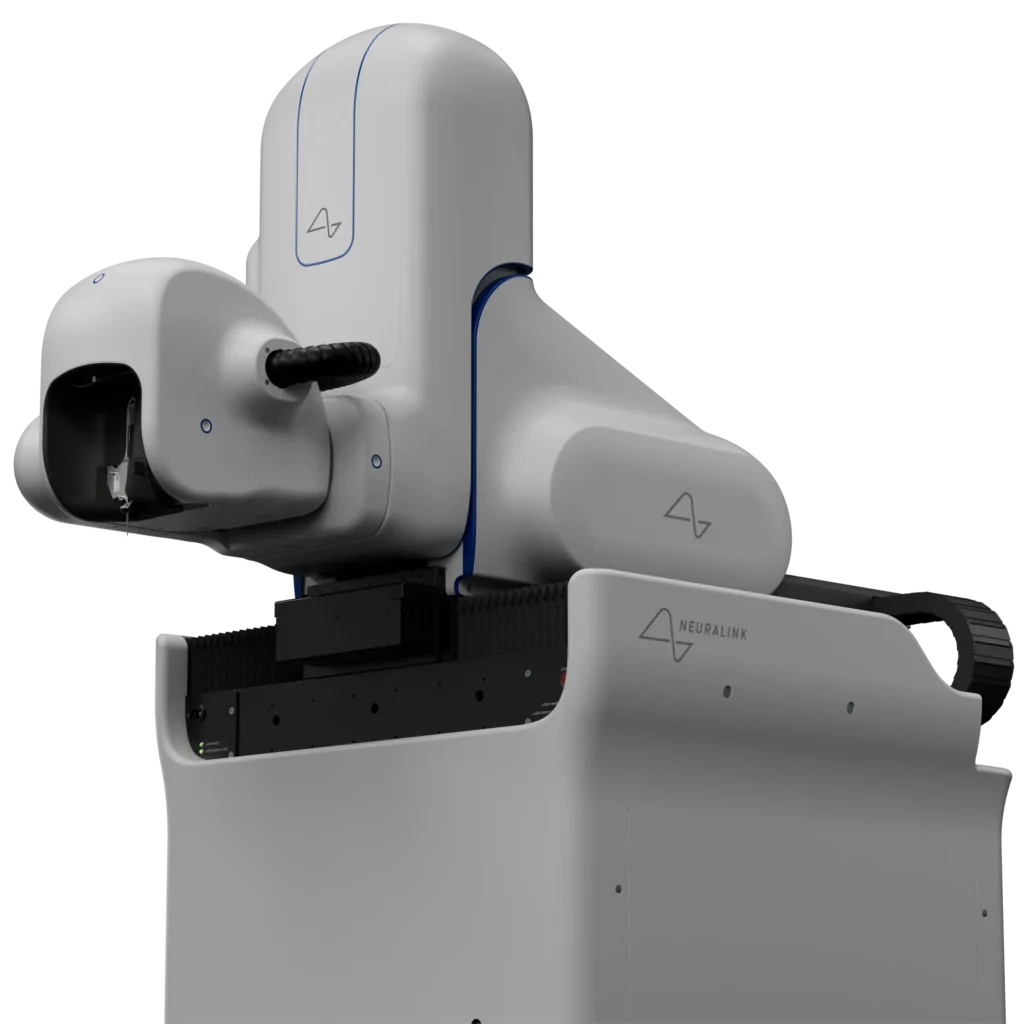
A critical component of the system is the R1 Surgical Robot, a custom-designed robotic system that performs highly precise, minimally invasive brain surgery. The robot inserts the implant’s threads with sub-millimeter accuracy, avoiding blood vessels and minimizing tissue damage. This robotic approach is essential for safety, consistency, and eventual scalability of the procedure. The system includes advanced imaging, real-time feedback, and automated planning tools.
Neuralink has received FDA Breakthrough Device Designation and is conducting clinical trials under an Investigational Device Exemption. Early results have shown promising safety and efficacy, with patients regaining digital independence. The company continues to refine the hardware, software, and surgical methods while expanding applications toward restoring vision (via cortical stimulation), speech, and mobility.
Map
Sorry, no records were found. Please adjust your search criteria and try again.
Sorry, unable to load the Maps API.