Profile
Hyperion Robotics is a Finnish deep-tech company (with expanding UK operations) founded in 2020 in Helsinki. It specializes in robotic 3D printing and advanced manufacturing for low-carbon concrete infrastructure foundations. The company combines computational design, industrial robotics, proprietary software, and optimized low-carbon concrete mixes to revolutionize traditional construction, which is notoriously carbon-intensive, slow, and wasteful. By producing optimized, reinforced concrete structures via robotic extrusion (often described as “micro-factories”), Hyperion achieves up to 70% lower CO₂ emissions, 75% less material usage, 67% lower energy consumption, significant cost savings (around 30%), and up to 3x faster delivery compared to conventional cast-in-place methods.
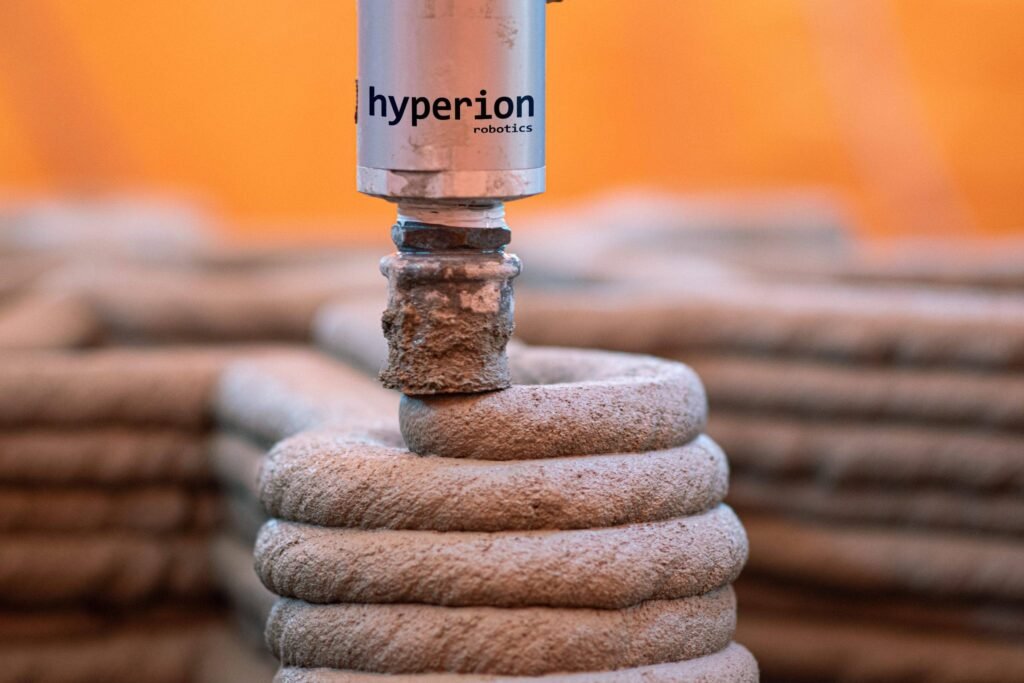
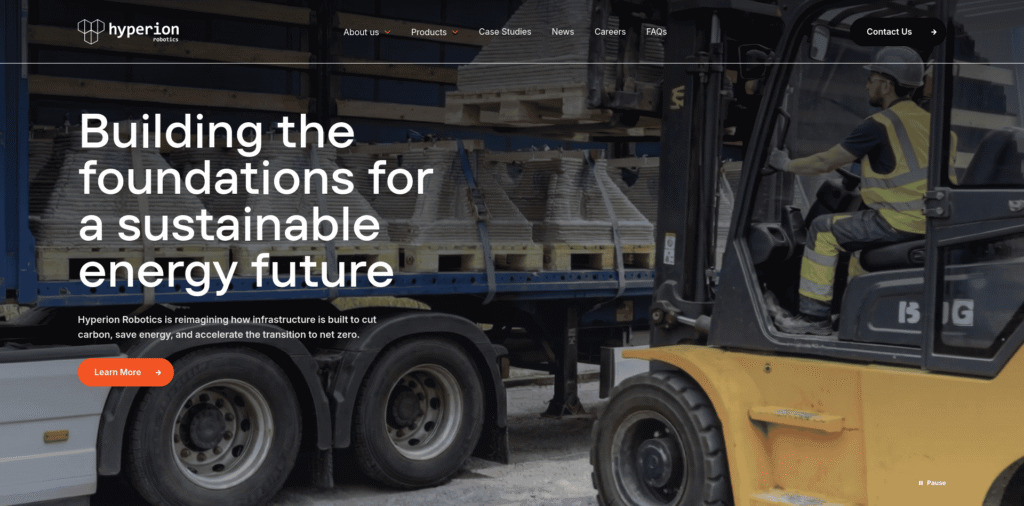
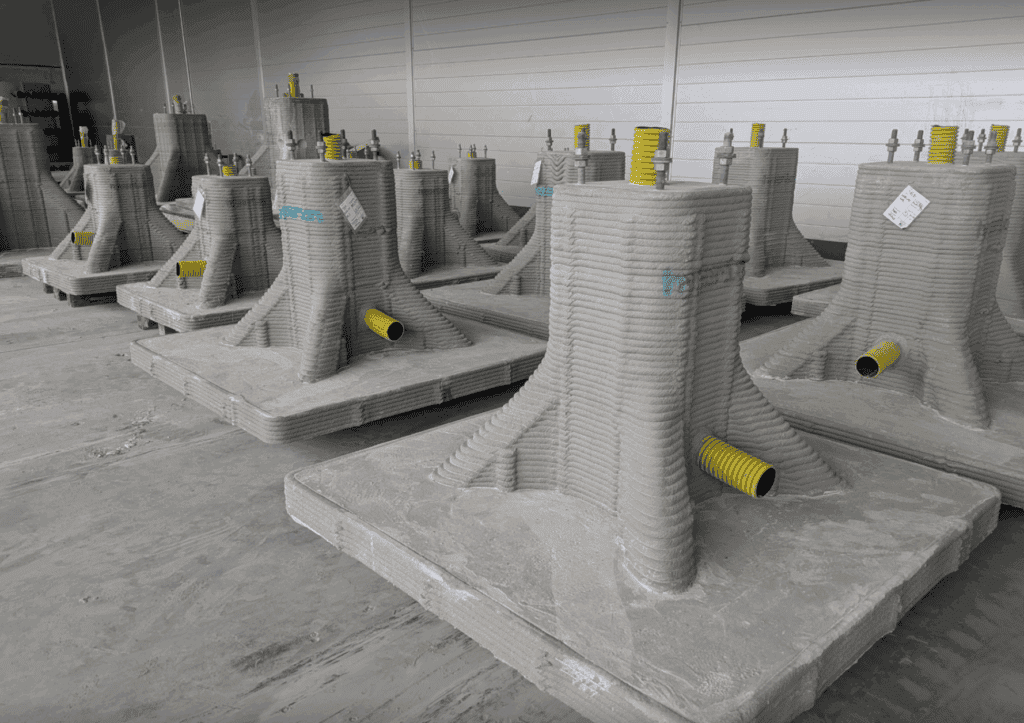
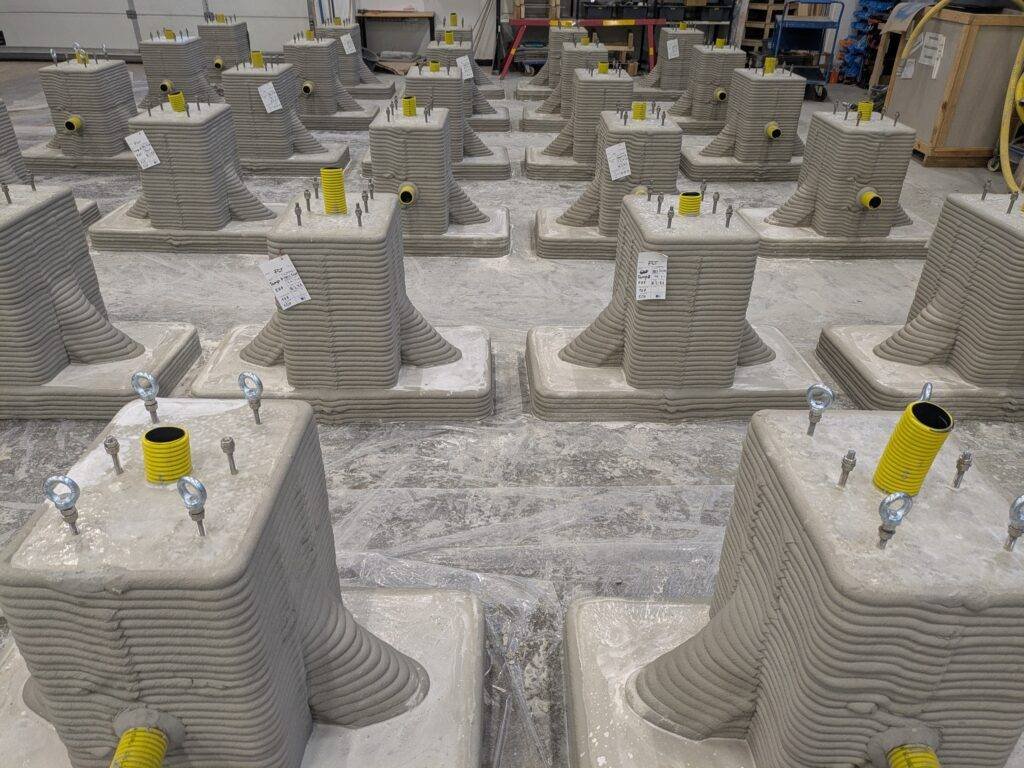
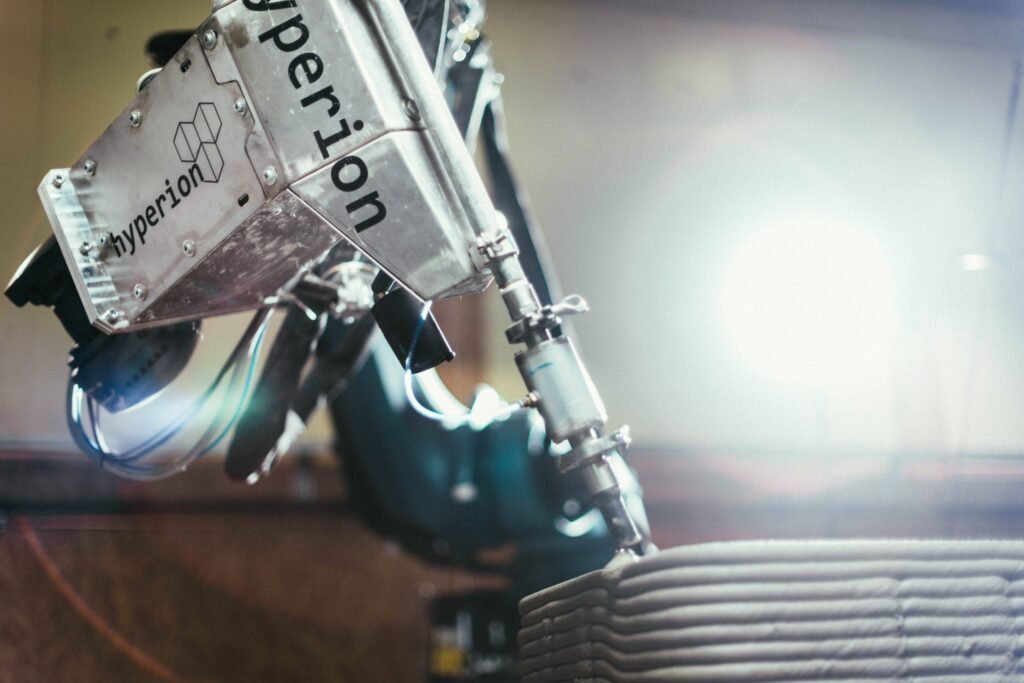
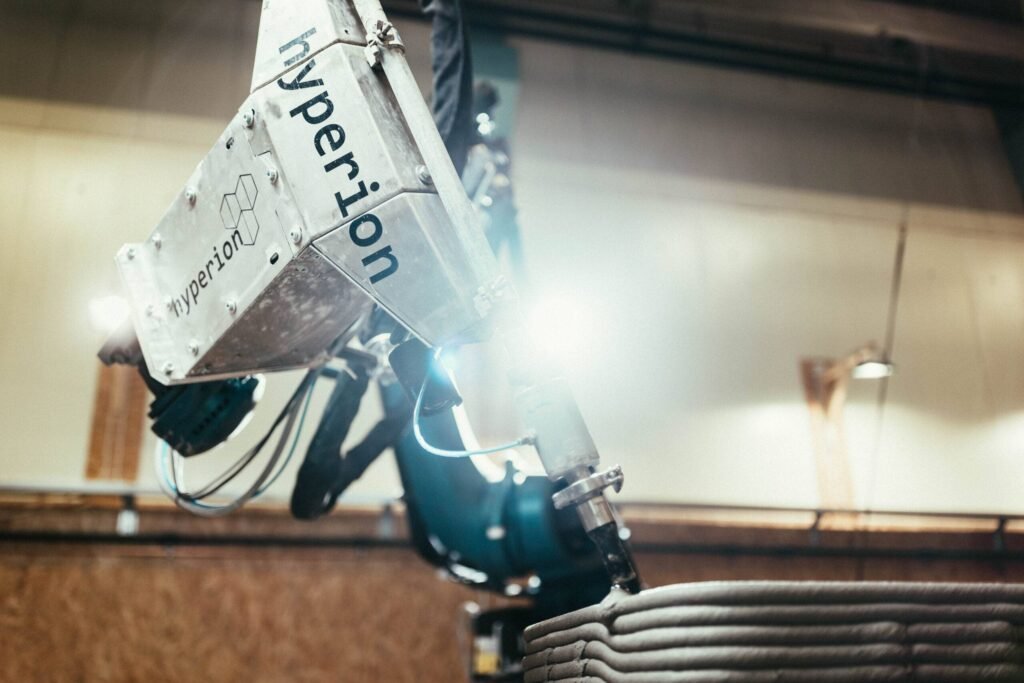
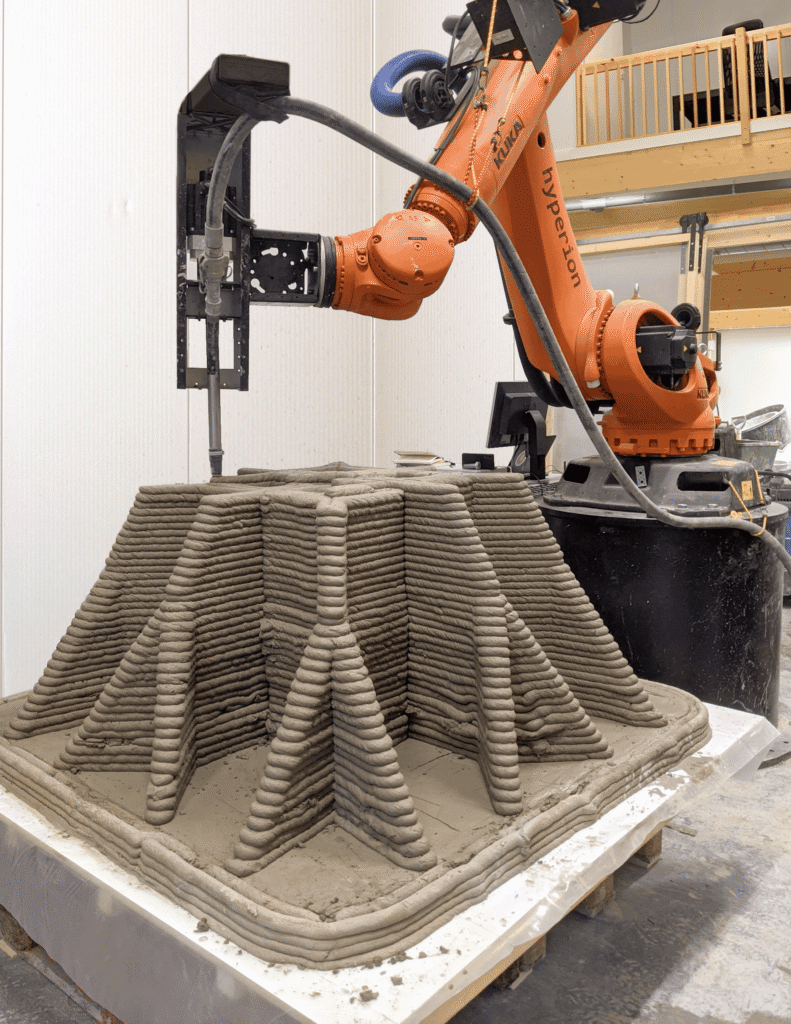
Their core innovation lies in robotic 3D concrete printing using industrial robot arms equipped with custom extruders. This enables precise, geometry-optimized designs that minimize material while maintaining or exceeding structural performance (e.g., foundations exceeding 2x design loads in tests). Structures are produced off-site in controlled environments or near-site facilities, then transported and installed quickly with reduced on-site labor and disruption (up to 80% less site exposure). This approach also supports use of recycled materials and low-carbon mixes. The company is actively scaling with projects like the UK’s first fully digital, automated low-carbon infrastructure factory in Flixborough (near Scunthorpe) in partnership with LKAB Minerals.
Key robot-based products include a range of pre-engineered, CE-marked foundations tailored to different load and application needs:
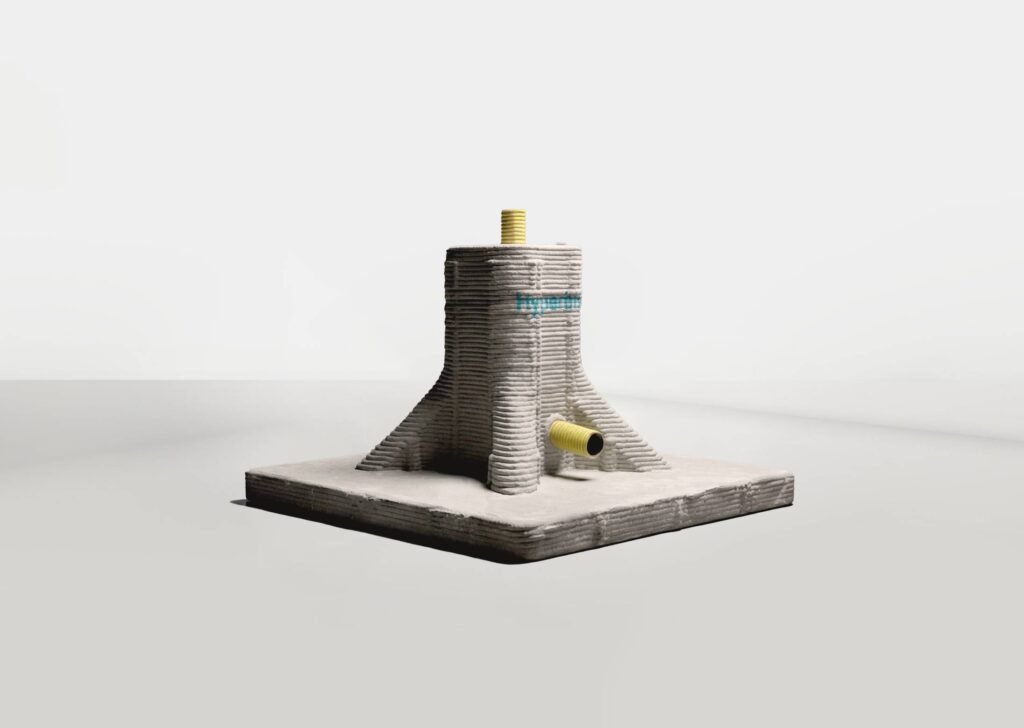
- Helios (S-series): Compact solutions for lightweight infrastructure. Dimensions: ~600–1,200 mm width/length, 500–1,000 mm height, <1 tonne. Ideal for EV charging stations, signage, CCTV masts, fence posts, battery units, and small pipe supports.
- Orion (M-series): Versatile mid-range foundations (1,200–2,500 mm width/length, 800–1,500 mm height, 1–5 tonnes). Suited for substation equipment, water pipelines, lighting columns, gate systems, and warehouse columns.
- Atlas (L-series): Heavy-duty systems for large loads (2,500 mm+ width/length, 1,500–3,000 mm height, 5+ tonnes). Used for electrical pylons, tall masts (>12 m), ski-lifts, and major structural installations.
Hyperion also delivers custom solutions, including 3D-printed concrete sleepers for CO₂ pipelines (e.g., with Costain) and pad foundations for reservoirs. Their technology has been deployed in water, energy, EV, and data center projects, with strong backing from investors and partners. The team blends expertise in robotics, structural engineering, materials science, and business, emphasizing innovation, sustainability, efficiency, collaboration, and resilience. Hyperion positions itself as a key enabler for net-zero infrastructure in energy transition sectors.
Map
Sorry, no records were found. Please adjust your search criteria and try again.
Sorry, unable to load the Maps API.