Profile
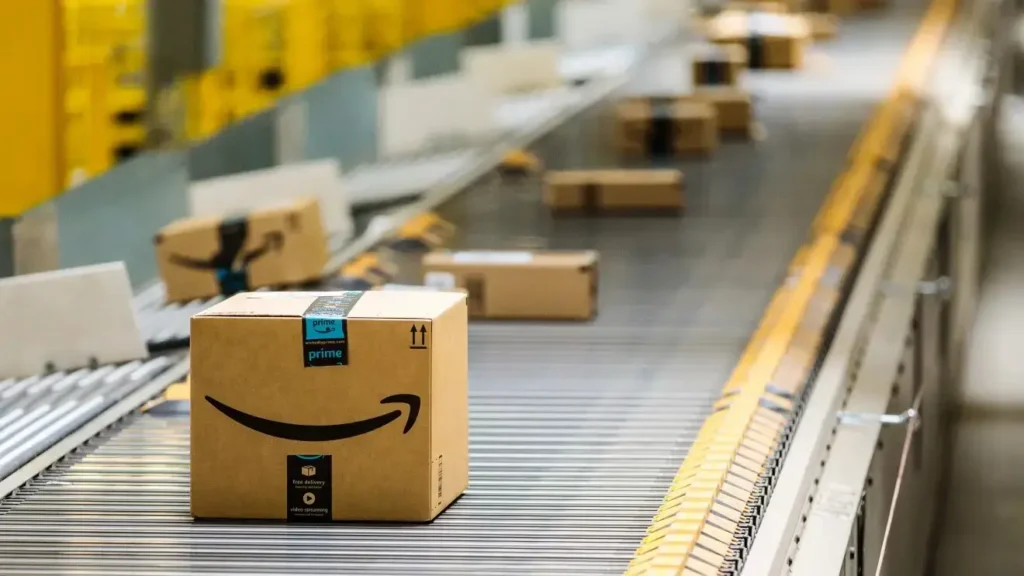
Amazon Robotics, a division of Amazon.com Inc. within the Fulfillment Technologies and Robotics (FTR) organization, develops and deploys advanced robotic systems that power one of the world’s largest logistics networks. Originally founded as Kiva Systems in 2003, the company was acquired by Amazon in 2012 and rebranded. Headquartered in North Reading, Massachusetts, with additional engineering hubs across the United States and Europe, Amazon Robotics integrates mechanical engineering, artificial intelligence, computer vision, machine learning, and large-scale fleet orchestration to transform warehouse operations. The division’s technologies are deployed across hundreds of Amazon fulfillment centers, sortation facilities, and delivery stations, with hundreds of thousands of robots operating collaboratively to process billions of customer orders annually.
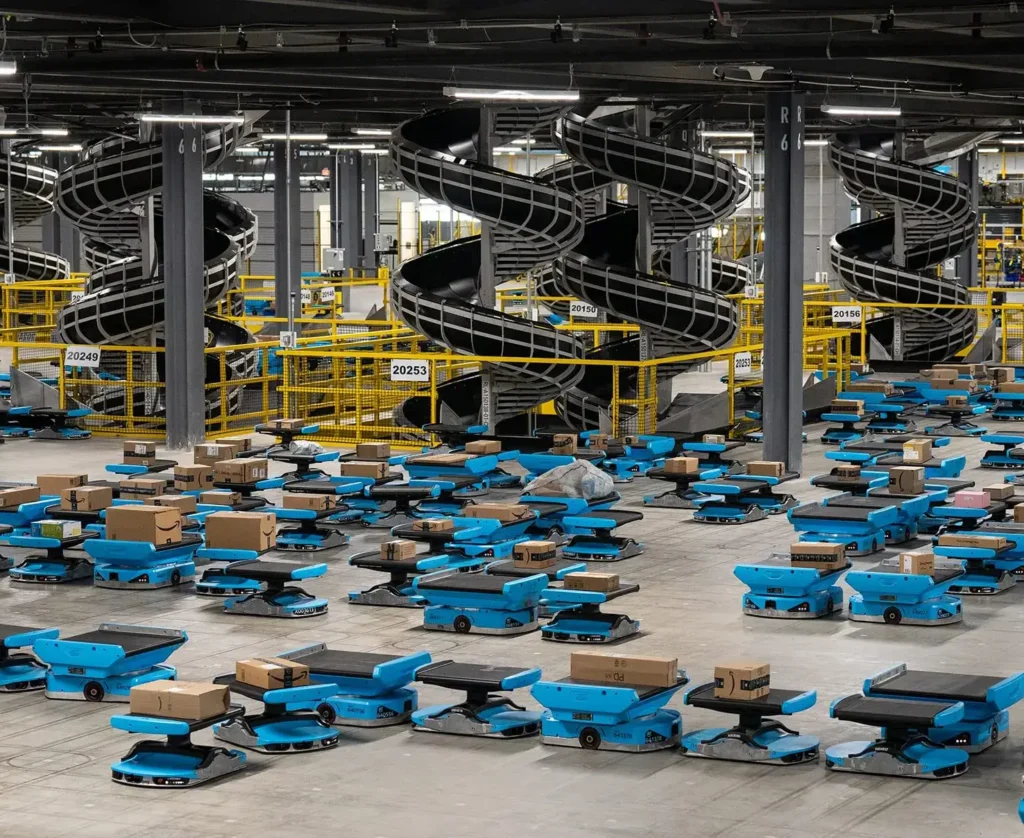
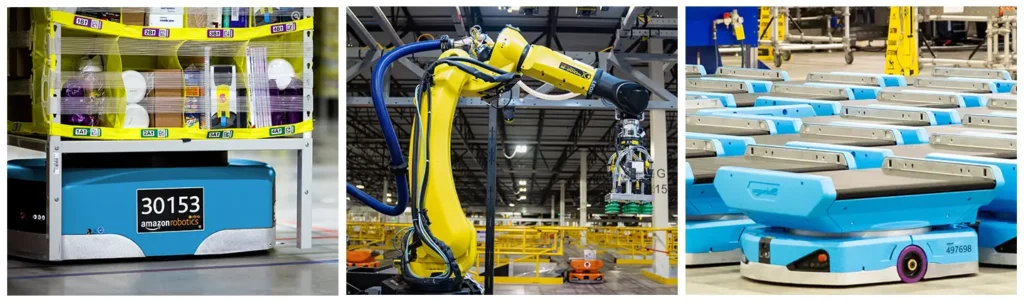
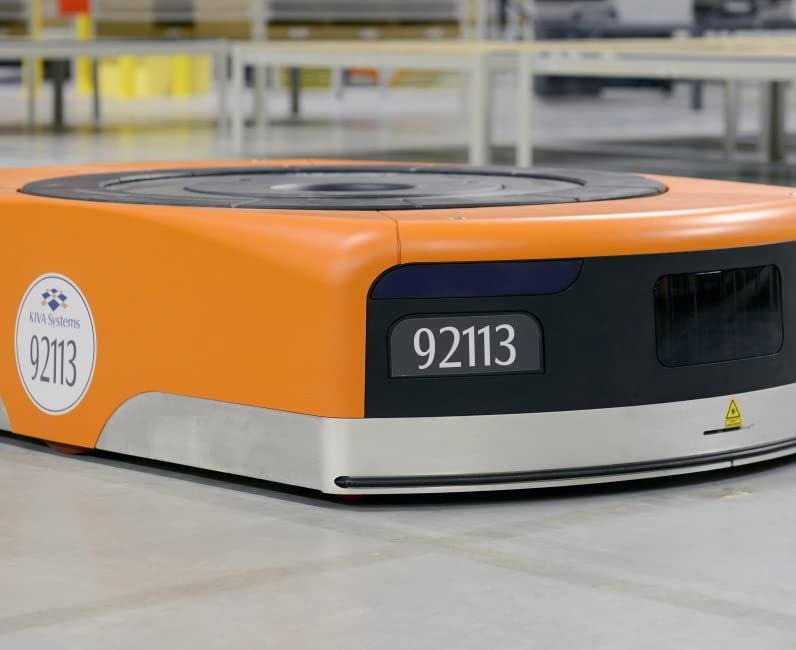
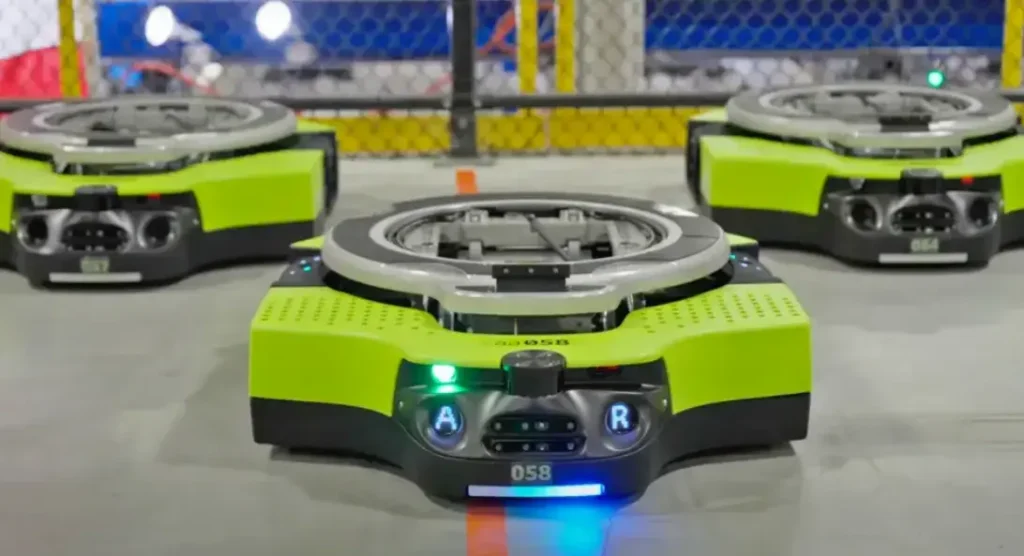
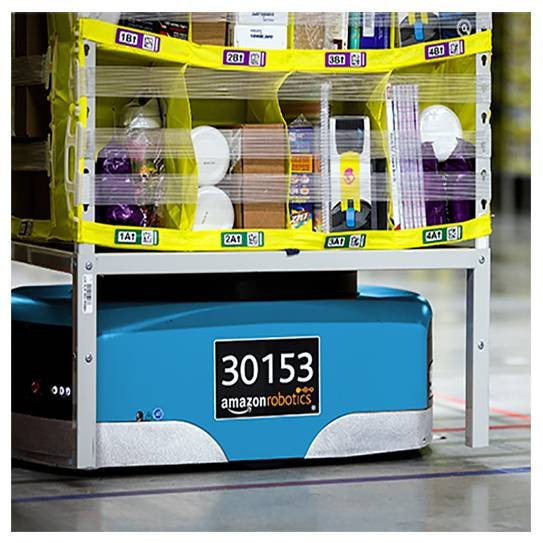
Amazon Robotics is best known for its revolutionary Autonomous Mobile Robots (AMRs). The iconic orange Drive Units navigate warehouse floors using advanced sensors and computer vision to carry entire inventory pods (shelves) directly to human associates or automated workstations. This “goods-to-person” approach dramatically reduces walking time, increases productivity, and improves ergonomics. The company has since expanded into more sophisticated manipulation and mobile robotics. Proteus represents a major leap as Amazon’s first fully autonomous mobile robot capable of safely navigating dynamic, human-shared environments without fixed guides or magnetic tape. Stretch is a mobile manipulator equipped with a 7-degree-of-freedom arm and suction gripper designed for case picking, trailer unloading, and pallet handling in unstructured settings.
In item-level manipulation, Sparrow uses deep learning, multi-camera vision, and custom end-of-arm tooling to identify, grasp, and handle millions of unique SKUs with high dexterity. Complementary systems include Robin and Cardinal for high-speed sorting and induction, and the Sequoia robotic storage and retrieval system that dramatically accelerates inventory put-away and retrieval rates. These platforms are orchestrated by proprietary software that employs reinforcement learning, SLAM (Simultaneous Localization and Mapping), multi-agent path planning, and real-time traffic optimization to coordinate thousands of robots simultaneously while maintaining safety and efficiency.
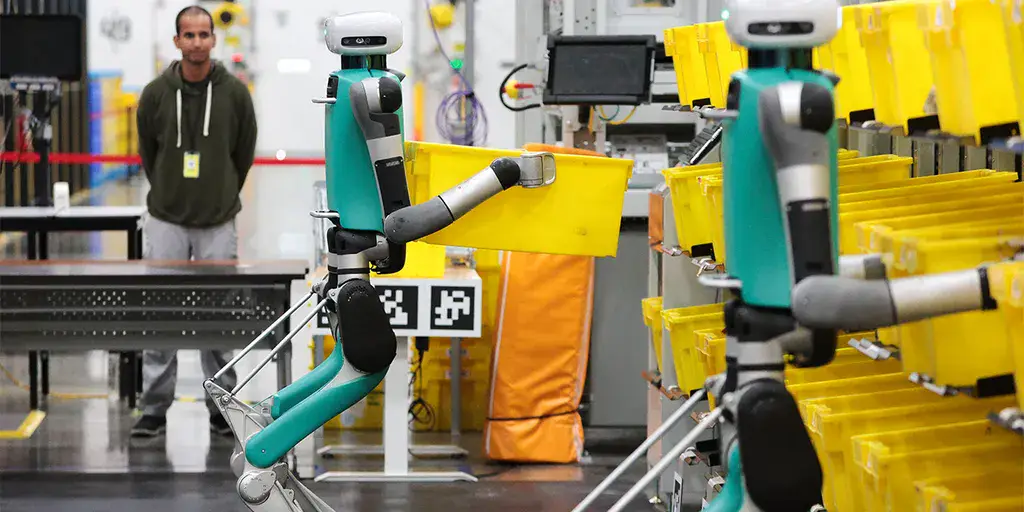
Beyond hardware, Amazon Robotics invests heavily in simulation environments, synthetic data generation, and continuous model improvement using real-world operational data. Their solutions emphasize human-robot collaboration, workplace safety, and scalability. The technology not only supports faster customer delivery but also reduces physical strain on associates. The careers page at amazon.jobs highlights a fast-paced, inventive culture where engineers see their innovations deployed at massive scale almost immediately. As e-commerce demand grows, Amazon Robotics continues to push boundaries in dexterous manipulation, last-mile automation, and AI-powered perception. Their work serves as both an internal competitive advantage and a benchmark that influences the broader warehouse automation and industrial robotics industries worldwide.
Map
Sorry, no records were found. Please adjust your search criteria and try again.
Sorry, unable to load the Maps API.