For decades, Apple has redefined entire industries — personal computing with the Mac, music with the iPod, smartphones with the iPhone, and wearables with the Apple Watch. Now, as growth in its core businesses matures, the company is turning its attention to what could be its next major frontier: robotics.
While Apple has not made any official announcements, multiple credible reports from Bloomberg’s Mark Gurman, analyst Ming-Chi Kuo, and investment firms like Morgan Stanley paint a clear picture: Apple is actively developing robotics products as part of its broader push into artificial intelligence and the smart home.
From Project Titan to Personal Robots
Apple’s interest in robotics didn’t appear overnight. After quietly canceling its ambitious Project Titan electric and autonomous car effort in early 2024 (after spending over $10 billion), many of the engineers and technologies from that project were redirected toward AI and robotics. Skills in computer vision, sensor fusion, autonomous navigation, and machine learning — all critical for self-driving cars — are now being applied to home and personal robotics.
The First Product: A Tabletop Robotic Companion (2027)
The most advanced project reportedly in development is a tabletop robot (internally codenamed J595). Described as an iPad-like display mounted on a movable robotic arm, this device would act as an intelligent virtual companion. It could swivel and reposition itself to face whoever is speaking, follow users around a room, display information, control smart home devices, and serve as a more engaging interface for a future version of Siri.
This product is expected to launch around 2027 and could be priced near $1,000. It represents a strategic middle ground: more capable and personal than a smart speaker like HomePod, but less complex and expensive than a full mobile or humanoid robot.
Apple is also exploring:
- A wall-mounted smart display (possibly launching as early as 2026)
- Mobile robots on wheels that can follow users around the home
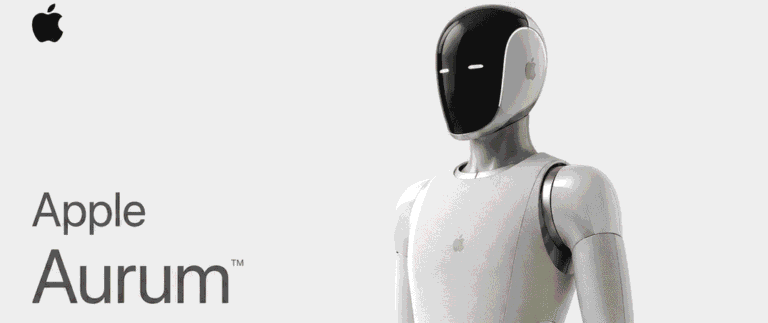
- Longer-term concepts for humanoid robots for both home and industrial use
Why Apple is Entering Robotics Now
Several factors are driving Apple’s move:
- Search for the Next Growth Engine — iPhone sales have plateaued in many markets. Apple needs new high-margin product categories.
- Apple Intelligence Push — The company is heavily investing in on-device AI. A physical robot would be the ultimate embodiment of its AI ambitions, requiring advanced perception, reasoning, and natural interaction.
- Smart Home Dominance — Apple wants to strengthen its presence in the home beyond the current limited HomeKit ecosystem. A compelling robotic product could become the central hub for Apple’s smart home strategy.
- Huge Market Opportunity — Morgan Stanley analysts have projected that Apple could generate up to $133 billion annually from humanoid and personal robots by 2040, capturing roughly 9% of the market.
Challenges Ahead
Despite the excitement, Apple faces significant hurdles. Robotics is notoriously difficult — combining hardware, software, AI, safety, and cost-effectiveness at scale. Competitors like Figure AI, 1X Technologies, Apptronik, Sanctuary AI, and Boston Dynamics are already advancing humanoid platforms, while Amazon, Google, and startups are active in home robotics.
Apple’s legendary secrecy and high standards for user experience mean it will likely only enter the market when it believes it can deliver a truly polished, differentiated product — not just another gadget.
The Bigger Picture
If successful, Apple’s robotics efforts could fundamentally change how we interact with technology at home and work. Imagine a friendly, always-available Apple robot that helps with household chores, entertains children, assists elderly family members, or serves as a productivity companion in the office.
Apple’s entry would likely accelerate the entire industry, bringing mainstream attention, higher quality standards, and ecosystem integration that only Apple can deliver.
While we’re still in the early rumor and prototype phase, one thing is clear: after redefining how we communicate, consume media, and stay healthy, Apple is now positioning itself to help shape the future of physical AI and embodied intelligence.
The age of personal robots may be closer than we think — and Apple wants to be the company that puts one in millions of homes.

Author: RobotsInc.com
The RobotsInc Editorial Team is dedicated to covering the global robotics industry with accuracy, clarity, and technical insight. Our editors research emerging technologies, industry trends, product launches, and business developments to deliver informative, fact-based articles for engineers, manufacturers, researchers, investors, and robotics enthusiasts.