Profile
The German Aerospace Center (DLR): Pioneering Space and Robotics Innovation
The Deutsches Zentrum für Luft- und Raumfahrt (DLR) serves as Germany’s national research center for aeronautics, space, energy, and transport research. Headquartered in Cologne, with approximately 35 locations across Germany, DLR operates as both a research institution and a space agency, functioning similarly to NASA in the United States or ESA in Europe. Established in 1969 through the merger of several predecessor organizations, DLR employs roughly 10,000 scientists, engineers, and staff dedicated to advancing technology for terrestrial and extraterrestrial applications.
Space Robotics and Exploration Systems
DLR’s robotics division represents one of Europe’s most significant contributions to space exploration technology. The center gained international recognition through the ROvret (RObotic VErification and TEchnology) program and the development of Eurobot, a sophisticated space assistant designed for International Space Station (ISS) operations. These systems demonstrate DLR’s expertise in creating autonomous and teleoperated manipulators capable of performing extravehicular activities (EVAs) and station maintenance tasks in microgravity environments.
The MASCOT (Mobile Asteroid Surface Scout) lander, deployed on asteroid Ryugu by the Japanese Hayabusa2 mission in 2018, exemplifies DLR’s miniaturized robotic capabilities. This small hopping robot successfully transmitted surface data and images despite operating in extremely low-gravity conditions, showcasing innovative locomotion mechanisms for celestial body exploration.
Humanoid Robotics: The Torque-Controlled Revolution
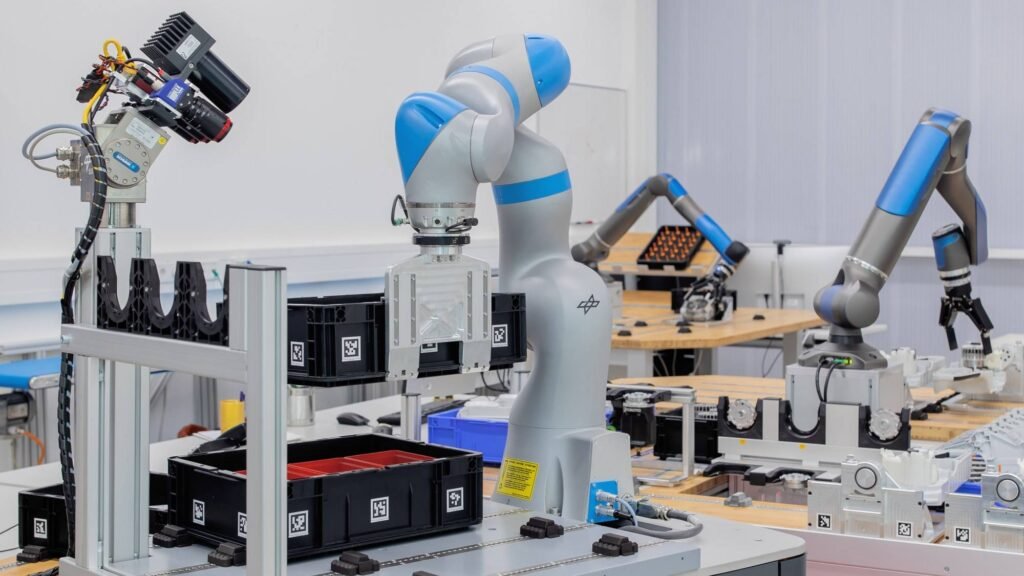
DLR’s most celebrated robotics achievement remains the DLR Hand Arm System and subsequent humanoid robots. The center pioneered torque-controlled robot technology-a breakthrough approach that allows robots to sense and control the exact forces they exert on their environment. Unlike traditional industrial robots that rely on position control and require safety cages, DLR’s systems use series elastic actuators and advanced force-torque sensors to achieve compliance and dexterity comparable to human limbs.
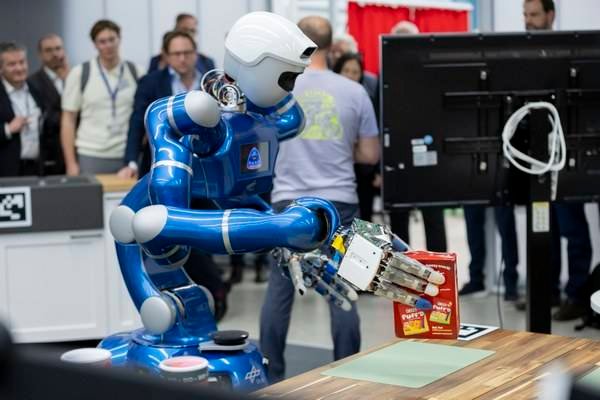
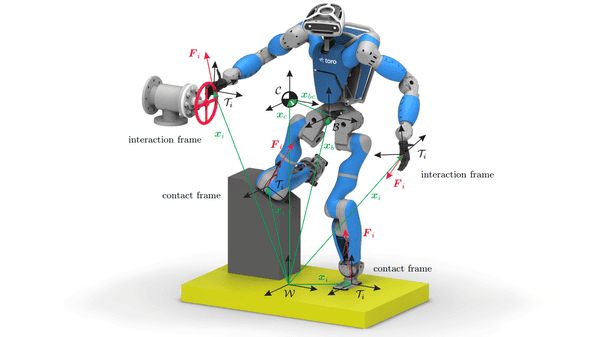
The DLR Hand, featuring 52 degrees of freedom and advanced tactile sensors, demonstrated unprecedented manipulation capabilities, including grasping delicate objects and using human-designed tools. This research evolved into full humanoid platforms like Agile Justin and Torque Controlled Humanoid Robot (TORO), which integrate mobile bases with sophisticated upper bodies capable of complex manipulation tasks, balance recovery, and physical interaction with humans and environments.
Earth Observation and Service Robotics
Beyond space applications, DLR develops robotic systems for terrestrial challenges. The SEuRAD (Service Robot for Autonomous Decommissioning) project addresses nuclear decommissioning challenges, creating radiation-resistant manipulators and mobile platforms for hazardous environment operations. These systems feature advanced sensing and manipulation capabilities necessary for dismantling nuclear facilities and handling radioactive materials.
DLR’s Institute of Robotics and Mechatronics also pioneers medical robotics, developing robotic systems for minimally invasive surgery and rehabilitation. The MiroSurge system demonstrates telesurgical capabilities with force feedback, enabling surgeons to perform complex procedures with enhanced precision and dexterity through robotic assistance.
Autonomy and AI Integration
The center integrates artificial intelligence with robotic platforms through cognitive robotics research. DLR develops algorithms for autonomous navigation, machine learning for manipulation skills, and human-robot collaboration frameworks. Their SpaceBot Cup competition challenges teams to develop autonomous mobile manipulation systems capable of operating in simulated planetary exploration scenarios, accelerating technology transfer from research to practical applications.
Industry Collaboration and Technology Transfer
DLR operates as a bridge between academic research and industrial application, licensing technologies to companies like KUKA and collaborating with automotive manufacturers on advanced manufacturing robotics. The center’s torque-controlled actuation technology has influenced commercial collaborative robots (cobots) and prosthetics, demonstrating the terrestrial impact of space-derived innovations.
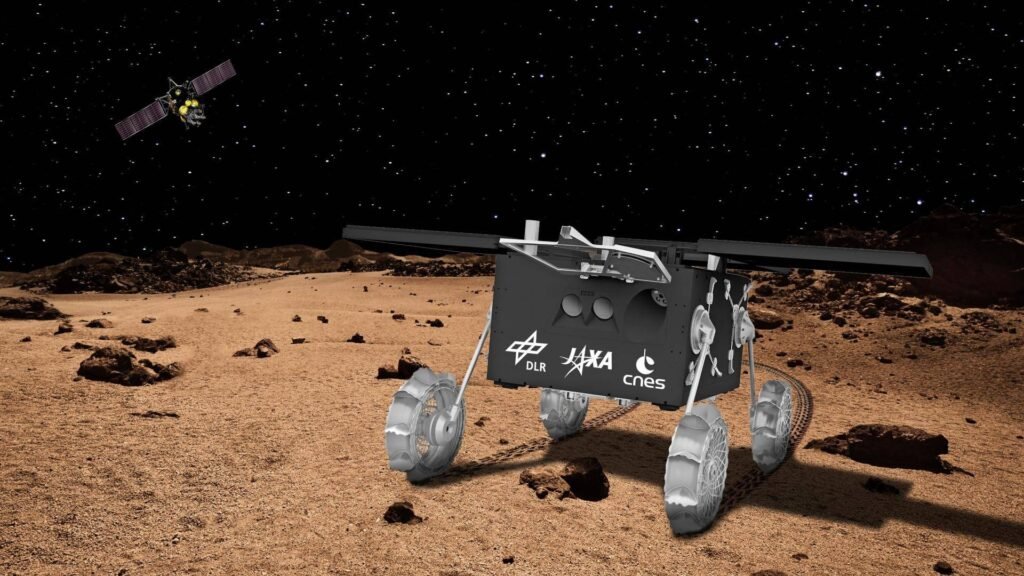
Through facilities like the Robotarium and multiple simulation laboratories, DLR provides testing infrastructure for validating robotic systems under realistic operational conditions, from vacuum chambers replicating space environments to outdoor testing grounds for planetary rover prototypes.
As Europe’s leading space research organization, DLR continues advancing the frontier of robotic autonomy, ensuring that sophisticated robotic systems will enable future human exploration of the Moon, Mars, and beyond while solving critical challenges here on Earth.
Map
Sorry, no records were found. Please adjust your search criteria and try again.
Sorry, unable to load the Maps API.