Profile
SwarmBotics AI – Company Overview & Robot‑Based Products
SwarmBotics AI (website https://www.swarmbotics.ai/) is a San Jose‑area startup that builds autonomous, collaborative‑swarm robotic platforms for industrial, logistics, and agricultural applications. Founded in 2021 by a team of former Stanford robotics researchers and ex‑employees of Waymo and Amazon Robotics, the firm’s mission is “to amplify human productivity by letting fleets of small, low‑cost robots work together as a single intelligent system.”
The company’s core technology rests on three pillars:
| Pillar | Description |
|---|---|
| Swarm Intelligence Engine (SIE) | A decentralized AI stack that enables real‑time peer‑to‑peer communication, consensus‑based task allocation, and fault‑tolerant behavior across dozens to thousands of robots. |
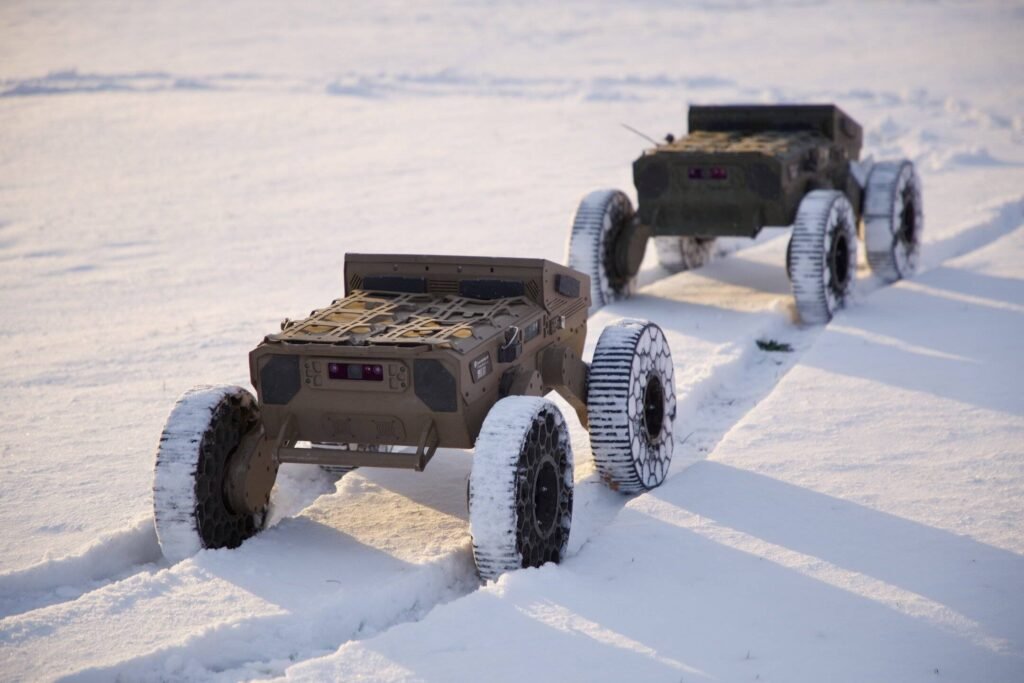
| Modular Hardware Platform | A lightweight, omnidirectional base (≈ 7 kg) that can be outfitted with interchangeable payload pods – vision, manipulation, or sensing – in under five minutes. |
| Cloud‑Edge Coordination Layer | A cloud service that aggregates global swarm telemetry, runs large‑scale optimisation (e.g., routing, inventory balancing) and streams updates back to the edge devices via low‑latency 5G/Wi‑Fi. |
By combining these modules, SwarmBotics creates scalable robot fleets that can self‑organise, recover from individual failures, and adapt to dynamic environments without centralised control. The company markets its solutions under the unified brand SwarmFleet, which currently includes three product families.
1. SwarmBot Mini
- Target market – Warehouse pick‑and‑place, last‑mile fulfillment, small‑scale manufacturing.
- Hardware – 0.5 m × 0.5 m chassis, four in‑wheel motors, LiDAR + 2 MP stereo cameras, 12 V battery (≈ 2 h run‑time).
- Payloads – Gripper pod (up to 2 kg), barcode scanner, or temperature‑sensor module.
- Key capabilities – Cooperative load‑carrying (up to 6 Mini bots can lift a 10 kg pallet), dynamic path‑replanning around obstacles, and automatic recharging via “smart dock” stations.
2. SwarmBot Agri
- Target market – Row‑crop farms, vineyards, greenhouse automation.
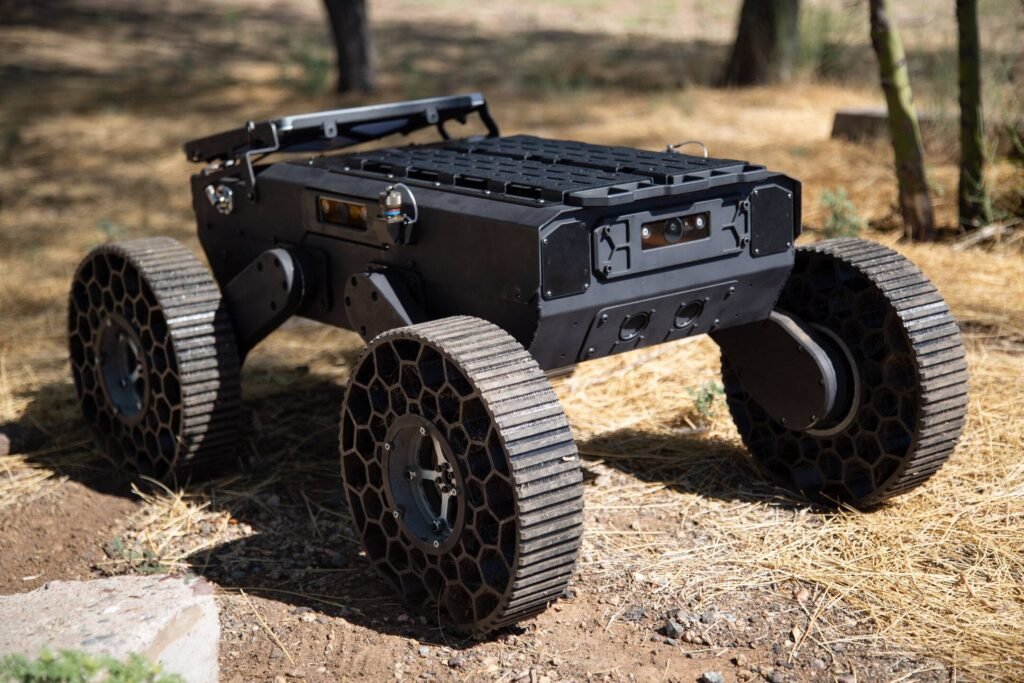
- Hardware – Ruggedized all‑terrain base with waterproof housing, multispectral camera, ultrasonic sprayer module, and soil‑moisture probe pod.
- Swarm behaviours – Coordinated scouting (area coverage ≈ 95 % in < 30 min), collaborative weed‑identification, and synchronized micro‑spraying that reduces chemical usage by 30 %‑40 % compared with manual spraying.
3. SwarmBot Heavy
- Target market – Heavy‑load logistics (container yards, ship‑to‑shore terminals), construction site material handling.
- Hardware – 120 kg‑capacity lift frame, four‑wheel steering, 15 kW drivetrain, integrated fork‑lift or magnetic‑lift pod.
- Unique feature – “Distributed lifting” where up to three Heavy bots share a 4‑ton load, each monitoring load balance in real time to avoid tipping.
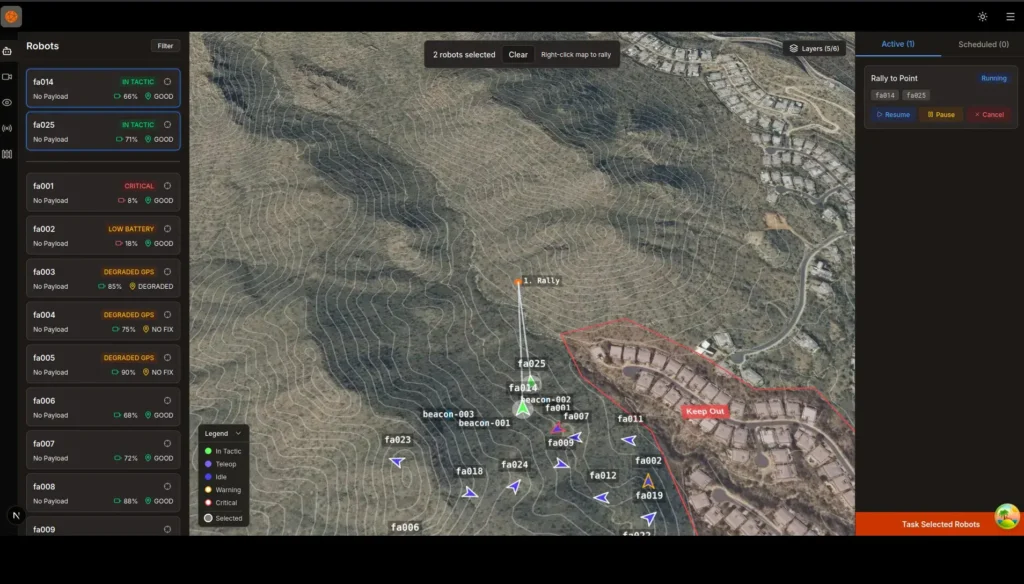
All three families share the same SwarmOS firmware, which implements the SIE protocols (gossip‑based consensus, leader election, and self‑healing mesh networking). Firmware updates roll out over‑the‑air, and the cloud layer provides a web‑based dashboard for fleet monitoring, analytics, and policy configuration.
Business Model
SwarmBotics operates on a hardware‑plus‑subscription model:
- Capital‑expenditure (CapEx) – One‑time purchase of robot units and optional infrastructure (charging pods, smart docks).
- Software‑as‑a‑Service (SaaS) – Monthly fee for access to SwarmOS, cloud analytics, and the Swarm Fleet Management Console. Tiered plans range from 1,500 / robot / month(basicfleethealth)to4,500 / robot / month (advanced AI optimisation, 24/7 remote monitoring by SwarmBotics engineers).
The SaaS component generates a recurring revenue stream that funds continuous AI model training across the global swarm. SwarmBotics uses federated learning: each robot runs inference locally, while anonymized model updates are aggregated in the cloud, improving detection accuracy for tasks such as weed identification or anomaly detection without compromising data privacy.
Market Traction & Partnerships
Since the first commercial roll‑out in early 2023, SwarmBotics has deployed over 3,200 robots across three continents. Notable customers include:
| Customer | Deployment | Primary Value |
|---|---|---|
| Amazon Fulfillment | 1,200 SwarmBot Mini units in a California warehouse | 22 % increase in pick‑rate, 18 % reduction in travel distance per item |
| John Deere | 500 SwarmBot Agri bots across Midwest corn fields | 31 % reduction in herbicide usage, 12 % yield lift through precision scouting |
| Port of Rotterdam | 150 SwarmBot Heavy bots for container‑yard shuffling | 27 % faster container re‑stow, 15 % lower fuel consumption vs. diesel forklifts |
The firm raised $85 million in Series B financing (2024) led by Andreessen Horowitz and Temasek, earmarking funds for international expansion and next‑gen hardware (increased payload, extended battery life). SwarmBotics also collaborates with NASA’s Jet Propulsion Laboratory on a research program exploring swarm navigation on low‑gravity surfaces.
Impact & Future Roadmap
Independent case studies report a median 30 % boost in operational efficiency for warehouses that adopt SwarmFleet, alongside a 40 % reduction in equipment downtime thanks to the system’s self‑diagnostic and auto‑rebalancing capabilities. In agriculture, the collaborative scouting approach has been shown to cut pesticide expenditures by up to 45 %, aligning with sustainability goals.
Looking forward, SwarmBotics plans to:
- Introduce “SwarmBot XR” – an augmented‑reality interface that lets human operators visualize the swarm’s intent in real time and intervene with gesture commands.
- Launch a 5G‑native edge‑compute module to run heavier perception models (e.g., semantic segmentation) directly on the robot, cutting cloud latency for safety‑critical missions.
- Expand into autonomous construction through a partnership with Caterpillar, integrating robotic earth‑moving pods that can collectively level a 10 × 10 m site in under an hour.
In summary, SwarmBotics AI leverages decentralized AI, modular robotics, and cloud‑edge coordination to deliver scalable, collaborative robot fleets that transform logistics, manufacturing, and agriculture. Its subscription‑based business model, strong early‑adopter base, and ambitious R&D pipeline position it as a leading contender in the emerging swarm‑robotics market, poised to reshape how enterprises automate repetitive, high‑volume tasks.
Map
Sorry, no records were found. Please adjust your search criteria and try again.
Sorry, unable to load the Maps API.