Profile
ROS (Robot Operating System): The Universal Framework Powering the Global Robotics Revolution
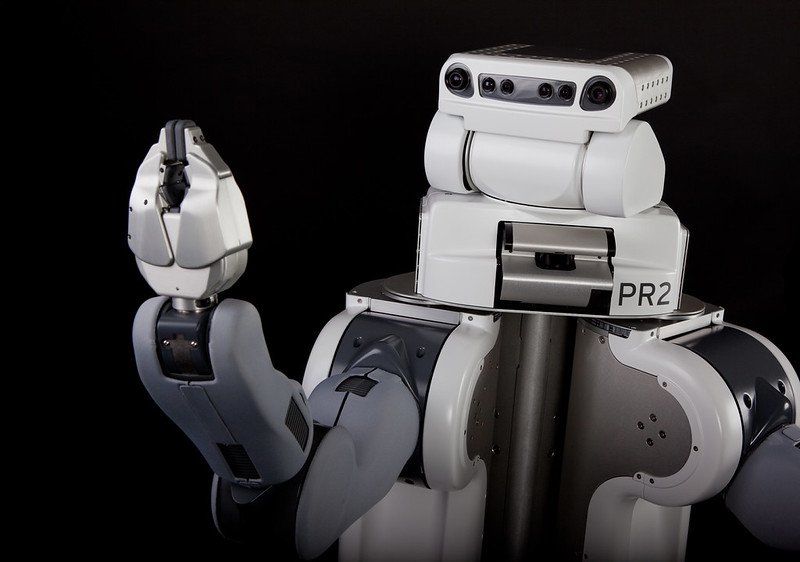
Developed initially by Willow Garage in 2007 and subsequently sustained by the non-profit Open Source Robotics Foundation (OSRF), the Robot Operating System—universally known as ROS—is one of the most transformative and widely adopted software frameworks in modern technological history. Despite its name, ROS is not a literal operating system in the traditional sense (like Linux or Windows); rather, it is a highly sophisticated, flexible meta-operating system and middleware that provides the essential services required to build, control, and program complex, autonomous robots. Headquartered conceptually in the open-source community but utilized globally in cutting-edge research labs and Fortune 500 industrial floors alike, ROS has fundamentally democratized robotics, acting as the universal “nervous system” that allows roboticists to stand on the shoulders of giants rather than reinventing the wheel.
A Modular Architecture for Complex Intelligence
At its core, ROS excels by breaking down the overwhelming complexity of robotics into manageable, interoperable parts. It operates on a distributed, peer-to-peer network of “nodes”—independent processes that perform specific tasks. One node might process visual data from a camera, another might handle wheel odometry, while a third executes path-planning algorithms. These nodes communicate seamlessly through a robust publish/subscribe messaging protocol, passing data via “topics” and triggering actions through “services.” This decoupled architecture means that a programmer can swap out a sensor, upgrade a localization algorithm, or modify a grasping routine without disrupting the rest of the robot’s software ecosystem.
The Power of Open Source and Standardization
Historically, robotics research suffered from severe siloing; labs would spend years writing custom, proprietary code for a specific manipulator or mobile base, only to discard it when starting a new project. ROS shattered these barriers by establishing a unified standard. By providing open-source drivers for thousands of robotic actuators, sensors (like LiDAR and depth cameras), and microcontrollers, ROS ensures hardware interoperability. Furthermore, the ROS community has fostered a culture of immense generosity. Tools for computer vision (OpenCV integration), 3D simulation (Gazebo), and advanced navigation stacks are shared freely, allowing a high school student, a startup founder, and a NASA engineer to utilize the exact same foundational algorithms to solve incredibly diverse problems.
From Prototypes to Industrial Titans
While ROS originated in academic research labs, enabling rapid prototyping for autonomous vehicles, drone swarms, and bipedal humanoids, it has matured remarkably into the industrial sector. The release of ROS 2 specifically addressed the latency, security, and real-time processing demands of commercial manufacturing, autonomous logistics, and life-critical surgical robots. Today, ROS 2 powers massive automated warehouse fulfillment centers (driving the mobile robots that move global supply chains) and intricate agricultural harvesters, proving that open-source software can meet the rigorous, deterministic demands of enterprise automation.
A Thriving Global Ecosystem
Maintained by a vast, global consortium of developers, ROS continues to evolve at a breathtaking pace. It offers high-level tools like RViz for visualizing 3D sensor data and robot models, and integrates deeply with modern artificial intelligence frameworks, allowing robots to leverage machine learning for object recognition and adaptive behavioral planning.
Conclusion
ROS represents the foundational bedrock of the 21st-century robotics industry. By providing a free, adaptable, and universally understood framework, it has accelerated the pace of automation by decades. Whether navigating the chaotic surface of Mars, assisting in minimally invasive surgery, or sorting packages in a dark, bustling fulfillment center, ROS remains the invisible yet omnipotent engine that turns mechanical ambition into intelligent, autonomous reality.
Map
Sorry, no records were found. Please adjust your search criteria and try again.
Sorry, unable to load the Maps API.