Profile
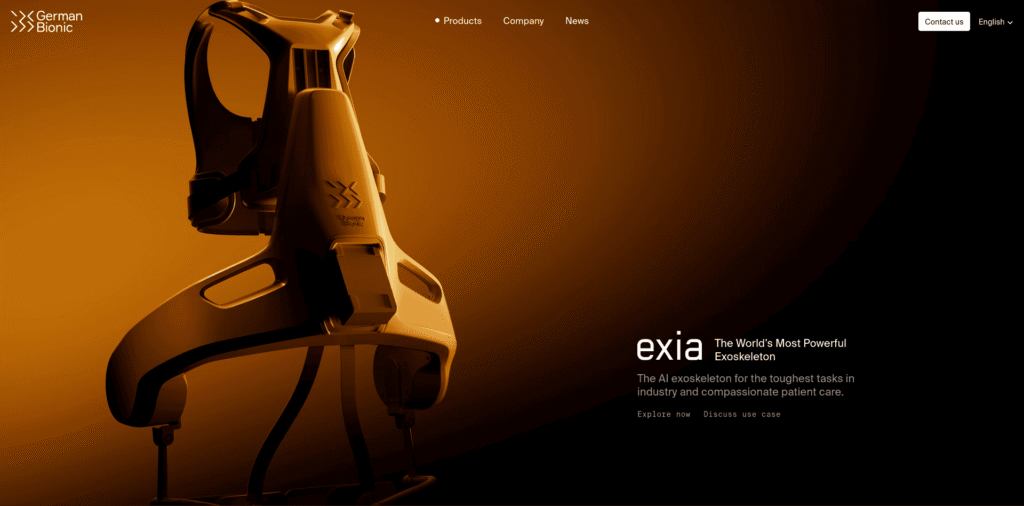
German Bionic is a leading German robotics firm specializing in industrial exoskeletons that merge human intelligence with robotic strength to augment physical capability in demanding work environments. Headquartered in Augsburg, Bavaria, it was founded in 2016 by CEO Peter Kehl, with a mission to reduce workplace musculoskeletal injuries, boost productivity, and support aging workforces via human-centric robotic augmentation, never replacing workers but empowering them.
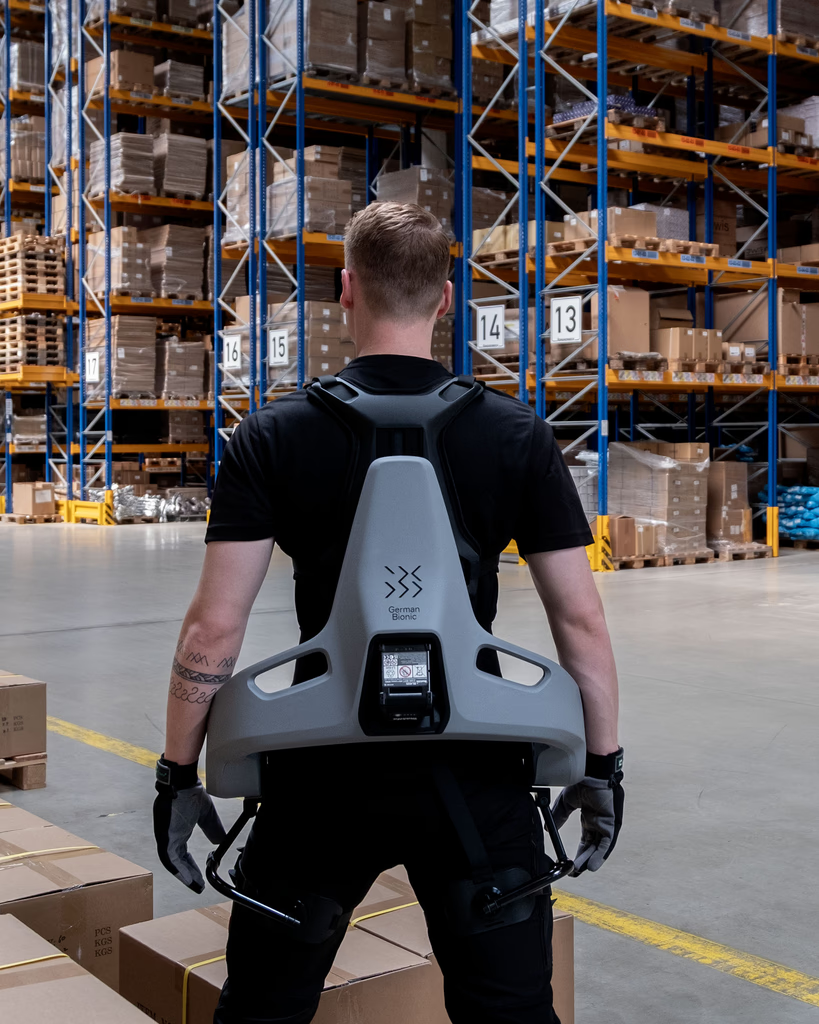
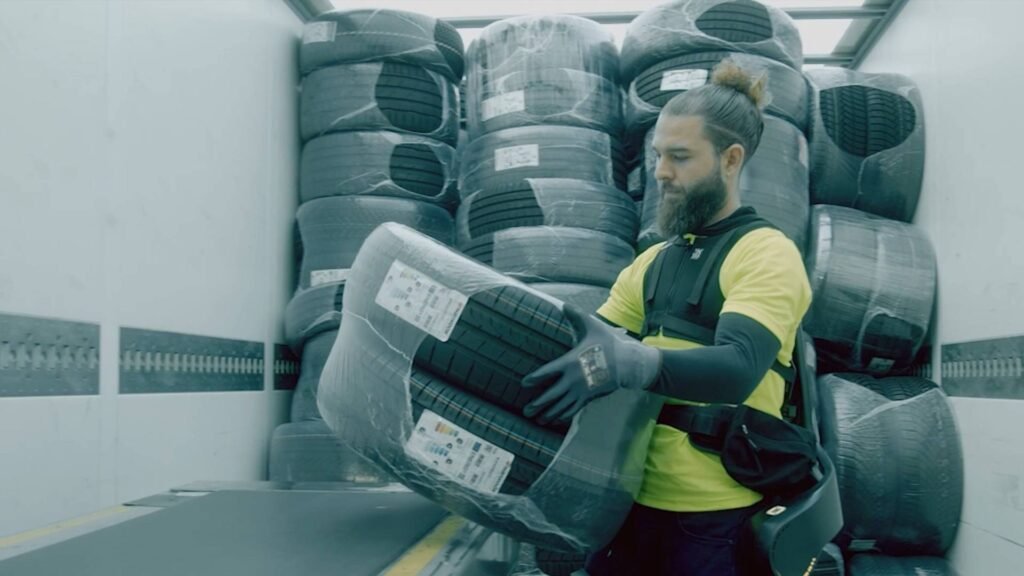
Its product portfolio centers on active (powered) wearable exoskeletons tailored to specific physical strain points. The flagship Cray X lumbar exoskeleton, built for lifting-intensive roles, weighs 4.2kg and uses AI-driven motion sensors to detect when a user bends to lift a load, activating motorized support that reduces lower back strain by up to 40% per lift, with up to 30kg of per-lift assistance. It offers 8+ hours of battery life to cover full shifts, is IP54-rated for dust and water resistance (suitable for harsh industrial and construction environments), and can be donned or removed in under 30 seconds with no specialized training required.
Complementing the Cray X is the Apogee shoulder exoskeleton, designed for overhead and repetitive arm tasks. It reduces shoulder and neck strain by up to 50% for roles including automotive assembly, overhead warehousing picks, and painting, supporting arm weight to minimize fatigue during long-term overhead work. It is lightweight enough for all-day wear, with adjustable support levels to match different task requirements.
All German Bionic exoskeletons integrate with the proprietary German Bionic IO cloud platform, a data analytics tool that aggregates real-time usage metrics from connected devices. Employers access dashboards tracking lift frequency, worker strain levels, exoskeleton adoption rates, and injury risk patterns, allowing them to optimize workflows, measure ROI on exoskeleton deployments, proactively address fatigue risks, and streamline compliance reporting for workplace safety regulations.
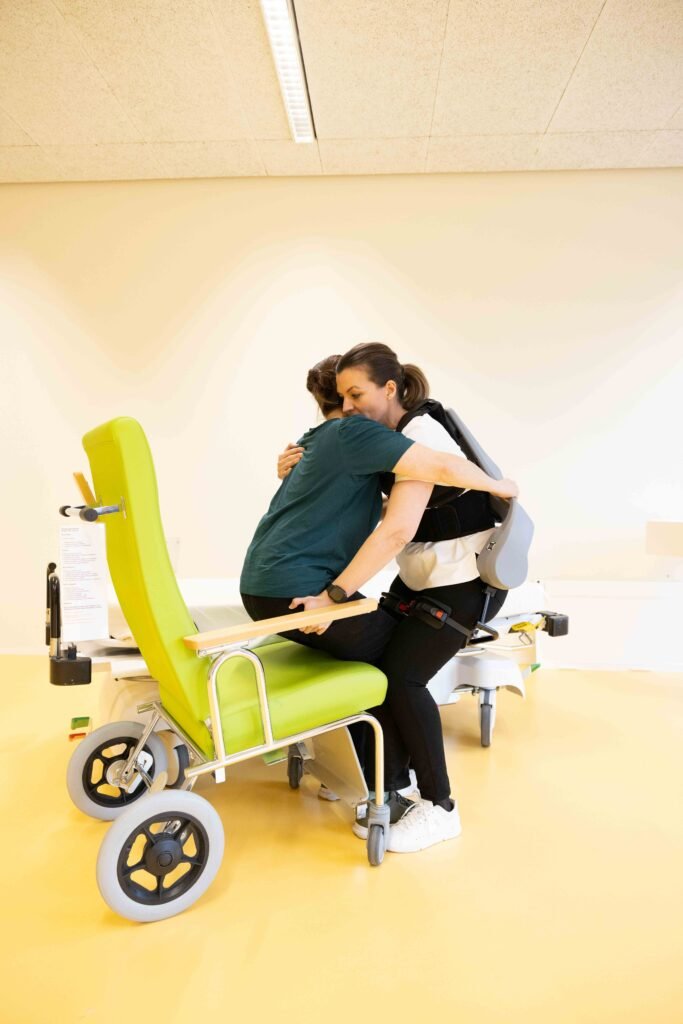
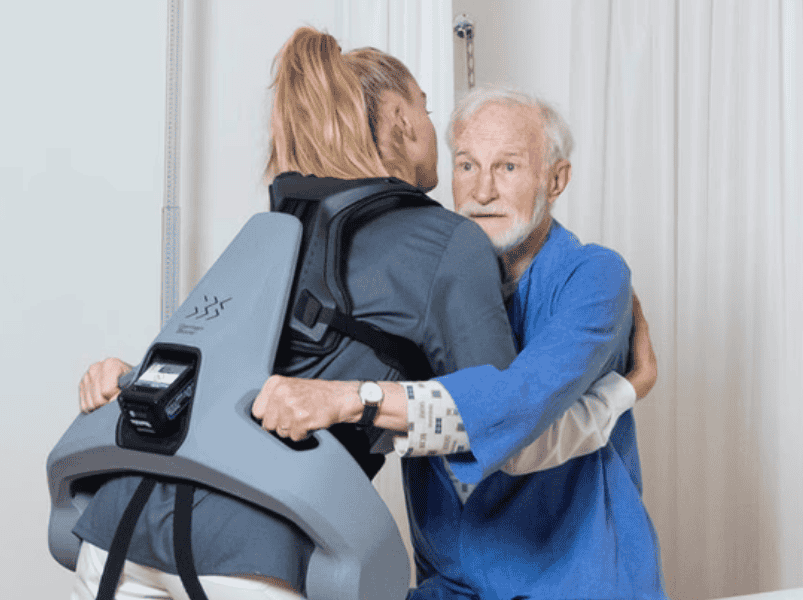
The company targets industries with high rates of physical strain: logistics (including long-standing partnerships with DHL and other global carriers), automotive manufacturing, construction, and heavy industry. It also explores use cases in healthcare, supporting caregivers with patient lifting tasks to reduce back strain in clinical settings. Case studies from partner firms report up to 60% reductions in musculoskeletal injury rates and 15–20% productivity gains in lifting-heavy roles after adopting German Bionic systems.
As of 2026, German Bionic has expanded its market presence to North America and Asia, with updated Cray X models offering improved battery efficiency and predictive strain detection powered by upgraded on-device AI. The company recently launched a pilot program for exoskeleton rentals, lowering upfront costs for small and medium enterprises looking to test the technology. It emphasizes a sustainability-focused value proposition: reducing worker turnover, lowering employer injury-related costs, and extending the working lifespan of aging employees in physically demanding roles. Its design philosophy prioritizes intuitive, ergonomic wearables that adapt to users rather than requiring users to adapt to rigid robotic systems, aligning with its core tagline of “Augmenting Human Potential.”

Map
Sorry, no records were found. Please adjust your search criteria and try again.
Sorry, unable to load the Maps API.