Profile
The Exoskeleton Report is an independent, information-focused platform dedicated to industrial, medical, military, and emerging consumer exoskeleton technologies. Rather than manufacturing hardware, the organization serves as a critical knowledge hub, analyst clearinghouse, and market-intelligence resource for an industry racing to redefine human capability, safety, and recovery. Its core mission is to demystify wearable robotics—often called “exosuits” or “exoframes”—and accelerate their responsible deployment in real-world settings where human bodies face repetitive strain, injury risk, or mobility loss.
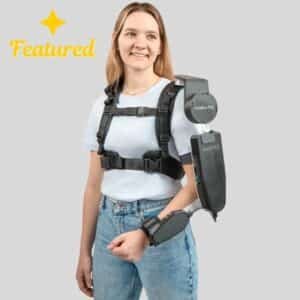
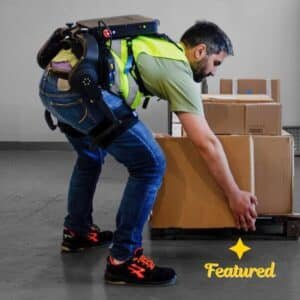
On the industrial side, the report extensively covers powered upper-body exoskeletons designed to reduce fatigue and musculoskeletal injury in manufacturing, logistics, construction, and agriculture. Passive exoskeletons—using springs, dampers, and clever leverage—redirect weight away from the neck, shoulders, and lower back, easing overhead work and repetitive lifting. Powered variants add electric actuators and adaptive clutches to dynamically assist or resist motion, allowing workers to sustain high-effort tasks with reduced metabolic cost. Companies featured routinely include German Bionic, Levitate Technologies, Hyundai Vest Exoskeleton, and Sarcos, alongside modular systems targeting specific joints such as shoulders, elbows, wrists, or the lower back.
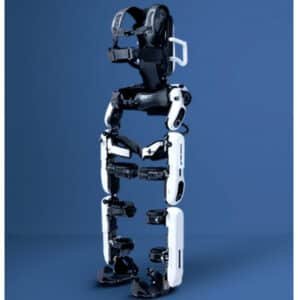
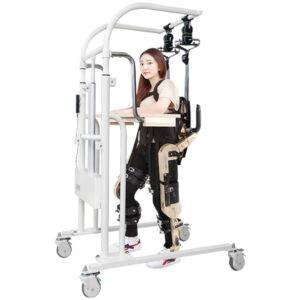
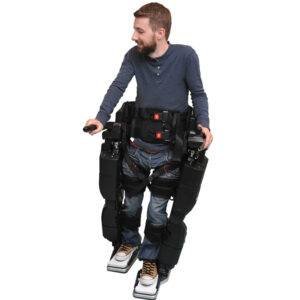
In medical rehabilitation, the Exoskeleton Report highlights robotic gait-training systems that help individuals with spinal cord injury, stroke, or cerebral palsy stand and walk. Weight-bearing, dynamically responsive frames provide precise, repeatable stepping patterns while sensors monitor muscle activity, balance, and progress. Ekso Bionics, ReWalk Robotics, Cyberdyne (HAL), and Parker-Hannifin’s Indego are among the prominent platforms tracked, alongside pediatric and research-grade devices. The site also follows upper-extremity systems that assist with reaching and grasping, crucial for neurorehabilitation and activities of daily living.
Military and first-responder applications represent another major focus. Lockheed Martin’s FORTIS, for instance, enables soldiers or firefighters to hold heavy tools or weapons with far less fatigue, while other systems aim to enhance load carriage, endurance, and situational awareness without sacrificing agility. The report emphasizes the delicate balance these systems must strike between power, weight, power supply, and mobility in unpredictable environments.
Beyond product catalogs, the Exoskeleton Report analyzes enabling technologies: lightweight materials, efficient actuators (electric, pneumatic, hydraulic), advanced batteries, machine-learning control strategies, and sensor fusion for intent detection. It also examines standards, regulation, insurance coverage, and return-on-investment data—key hurdles for widespread adoption.
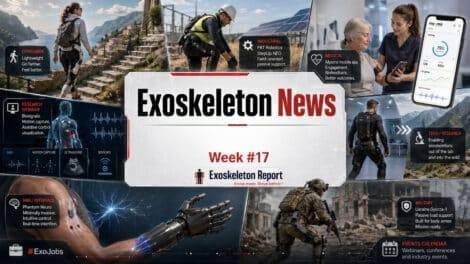
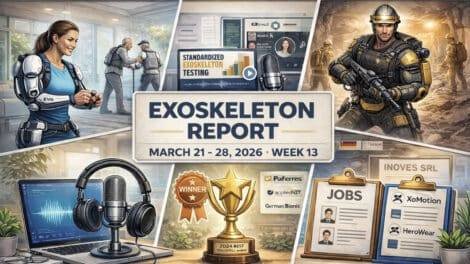
Through news, case studies, conference coverage, and market analysis, the Exoskeleton Report illuminates how wearable robotics are transitioning from niche research platforms to practical tools that augment human resilience. In doing so, it maps a future where machines don’t replace people, but extend their strength, restore their motion, and protect their long-term health.