Profile
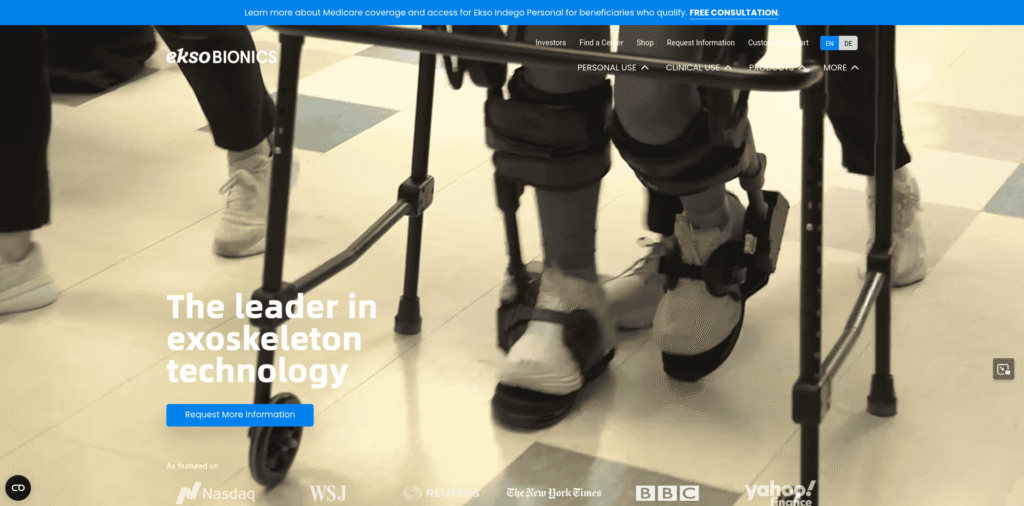
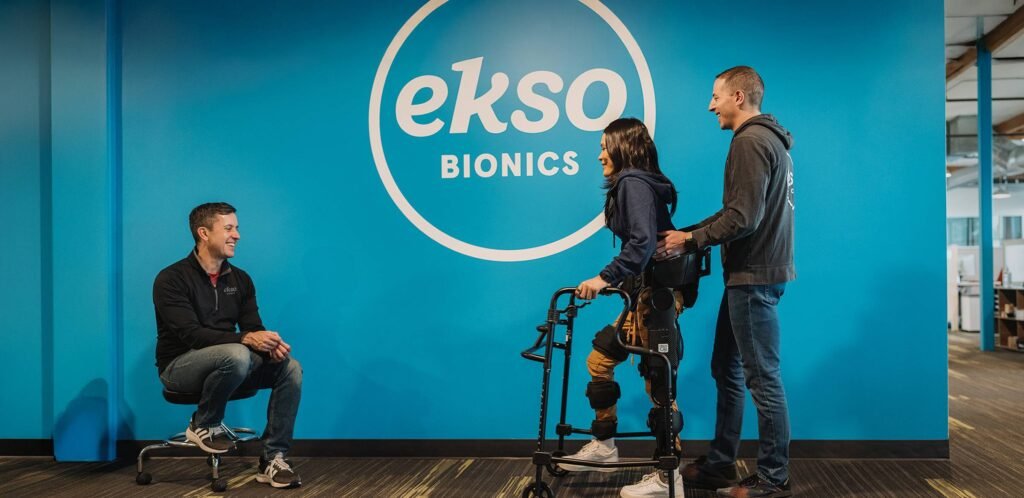
At Ekso Bionics, we develop disruptive wearable robotics to take on loss of mobility. In doing so, we have helped thousands of patients with lower extremity disabilities take hundreds of millions of Ekso-aided steps and have inspired an entirely new medical device industry. We are rethinking rehabilitation with assistive technology, and we still have the same goal: helping people reach their full rehabilitation potential.
A brief history of Ekso and health
Our bionic exoskeletons were initially designed for people who have spinal cord injury (SCI). Many people who have an injury to their spinal cord experience some extent of paralysis or loss of function. In many cases, individuals with paralysis are told that they’ll never walk again, but our medical exoskeletons prove that notion wrong.
EksoNR is also being used to treat people after a stroke, acquired brain injury (ABI), and those with multiple sclerosis (MS). Ekso Indego Therapy is being used to treat people after SCI and stroke. Such patients often suffer lower limb disability and loss of movement, but with the help of wearable exoskeletons, they can begin to mobilize without their wheelchairs, balance with the use of an assistive device, regain sensation and function, and often learn to walk unassisted once again.
A research backed rehabilitation exoskeleton that helps patients regain mobility
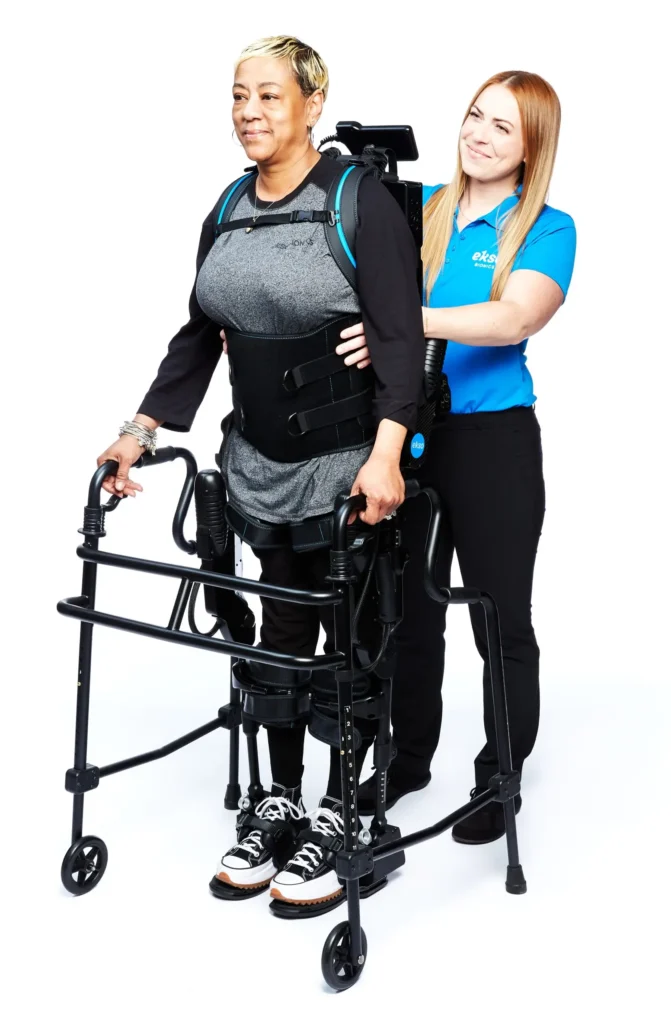
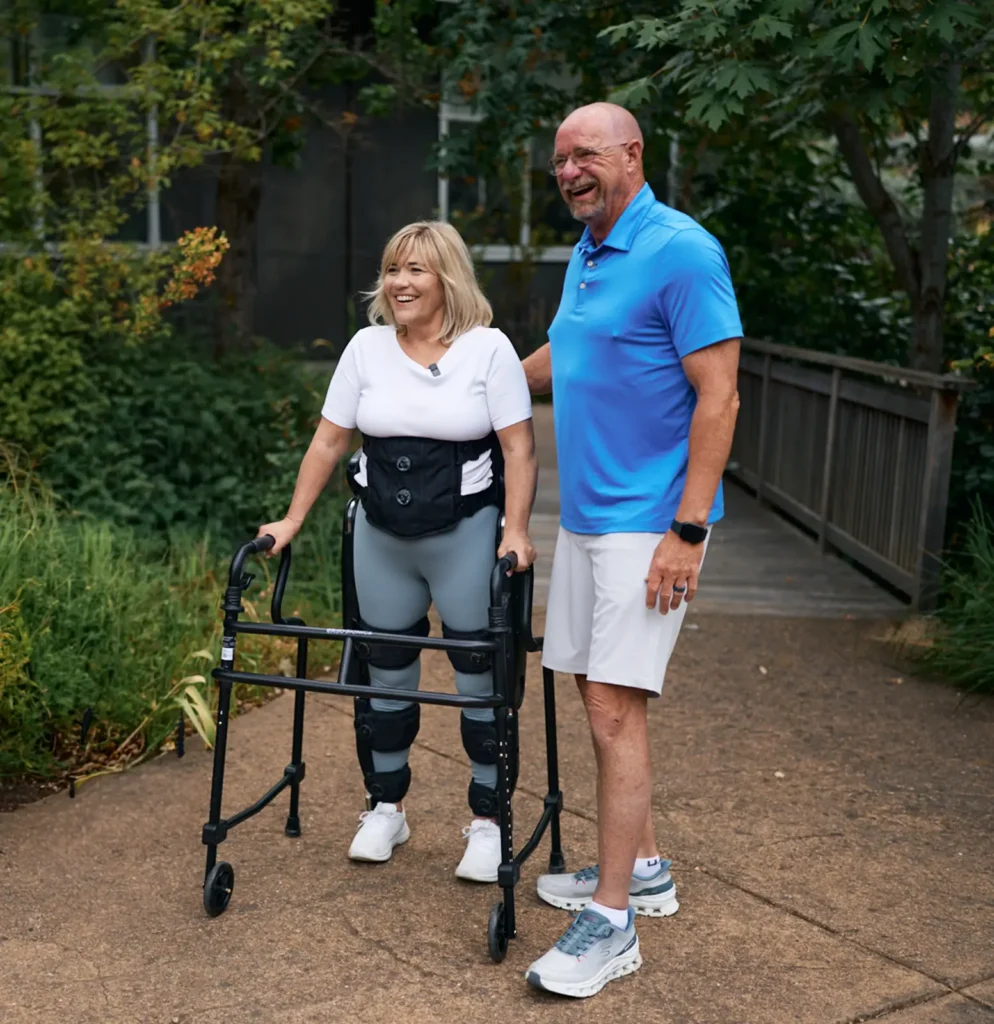
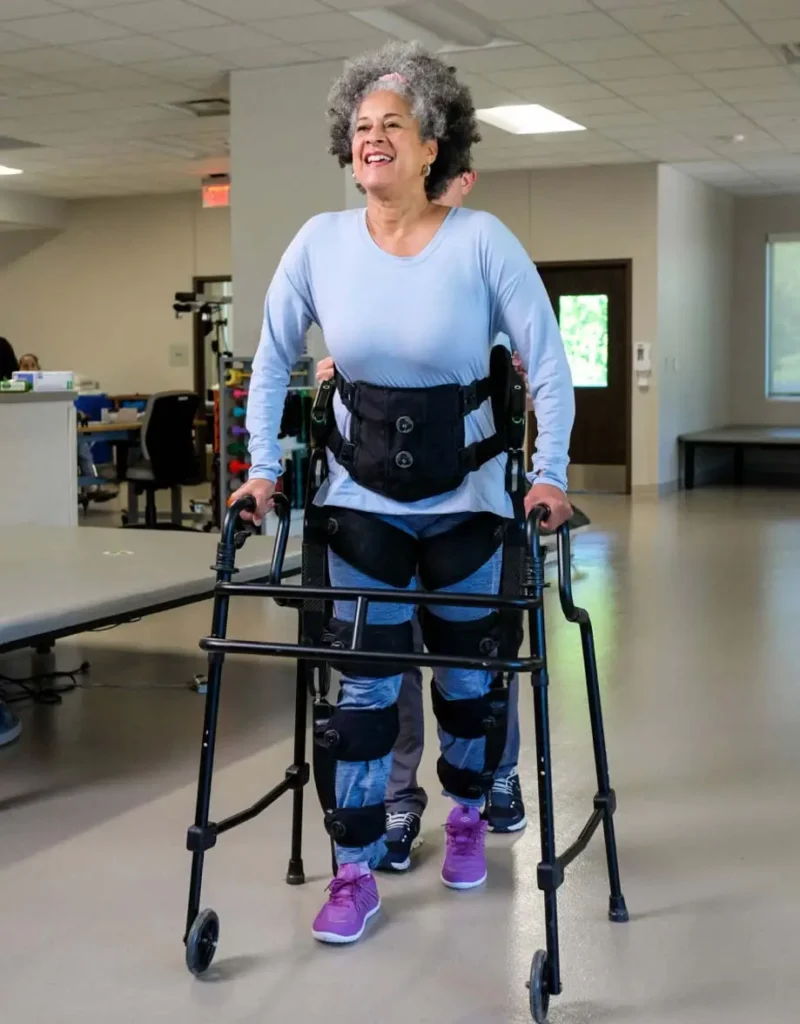
Designed to help patients stand and walk during rehabilitation, EksoNR works with clinicians to give the necessary support to the patient’s trunk and legs, promoting correct movement patterns in all phases of physical rehabilitation and challenging patients as they progress towards walking out of the EksoNR rehabilitation setting and back into their communities.
EksoNR with GaitCoach software is the newest and improved version of our rehab exoskeleton that addresses gait inefficiencies and has become a standard as the first exoskeleton cleared by the US Food and Drug Administration (FDA) for medical applications in treating patients with strokes, brain injuries, SCI and multiple sclerosis (MS).
GaitCoach software, released in late 2023 provides an even better robotic solution for therapists. The integrated GaitCoach provides an extra set of clinical eyes and helps guide therapists to progress patients through their recovery easier and better than ever before. The engineering and clinical teams collaborated to design more intuitive software with improved feedback and real-time data enhancing clinical application and patient engagement.

Map
Sorry, no records were found. Please adjust your search criteria and try again.
Sorry, unable to load the Maps API.