
Profile
DARPA, the Defense Advanced Research Projects Agency, is a pivotal U.S. government agency established in 1958 in response to the Soviet Sputnik launch, aimed at maintaining technological superiority for national security. Headquartered in Arlington, Virginia, DARPA operates with a unique model that unites scientists, engineers, and innovators to explore high-risk, high-reward projects, avoiding large-scale in-house work by funding external partners. Its mission is to create breakthrough technologies that address unforeseen challenges, with a focus on artificial intelligence, autonomy, and robotics. Over the years, DARPA has driven innovations like the internet and GPS, and today it invests in advanced robotics to enhance military capabilities, disaster response, and civilian applications.
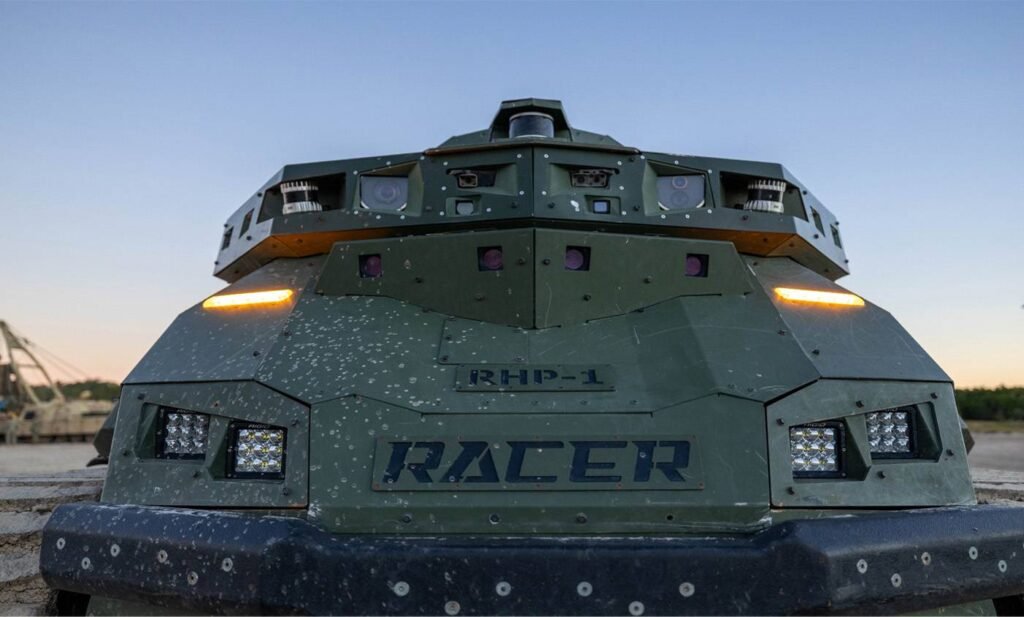
In the realm of robot-based initiatives, DARPA spearheads programs that push the boundaries of autonomous systems. The DARPA Robotics Challenge (DRC), launched in 2012, tested humanoid robots in simulated disaster scenarios, such as navigating rubble and operating tools, leading to advancements in bipedal mobility and dexterous manipulation. Robots like Boston Dynamics’ Atlas, initially developed with DARPA funding, exemplify this work, showcasing AI-driven balance and environmental interaction for tasks in hazardous areas. Another key effort is the DARPA Grand Challenge for self-driving vehicles, which evolved into programs like the DARPA Subterranean Challenge, where teams deployed robotic systems to map and navigate underground environments, integrating sensors, AI, and swarm robotics.
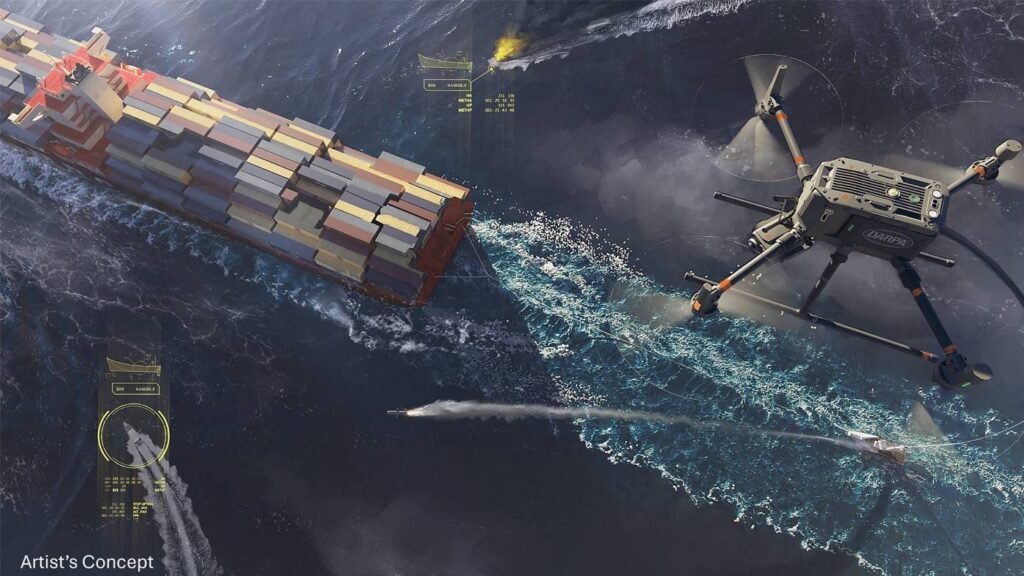
DARPA’s current robotics portfolio includes the AI Cyber Challenge, which enhances robotic systems with cybersecurity features, and the Robotic Servicing of Geostationary Satellites (RSGS) program, focusing on orbital robots for satellite repair. The agency’s funding has accelerated developments in micro-robotics, such as insect-sized drones under the Fast Lightweight Autonomy program, designed for urban reconnaissance with agile navigation. Additionally, DARPA’s Collaborative Operations in Denied Environments (CODE) initiative equips unmanned systems with adaptive AI for coordinated missions, including drone swarms that operate without human intervention.
Through programs like the Agile Research Groups in Extreme Environments, DARPA fosters resilient robot designs for extreme conditions, emphasizing machine learning for real-time decision-making. This has led to commercial spillovers, influencing industries in autonomous vehicles and prosthetics. DARPA’s open-source approach, seen in the DARPA Autonomy Research Pilot Initiative (DARPA ARPI), encourages broader adoption of its technologies.
Overall, DARPA’s robot-based work represents a commitment to innovation, funding over $3 billion annually in projects that bridge research and application, driving the future of robotics in defense and society. By partnering with academia and industry, DARPA ensures its initiatives translate into practical advancements, maintaining U.S. leadership in an increasingly automated world.




Map
Sorry, no records were found. Please adjust your search criteria and try again.
Sorry, unable to load the Maps API.