Profile
PlatformIO: Open-Source Embedded Development Ecosystem
Organization Overview
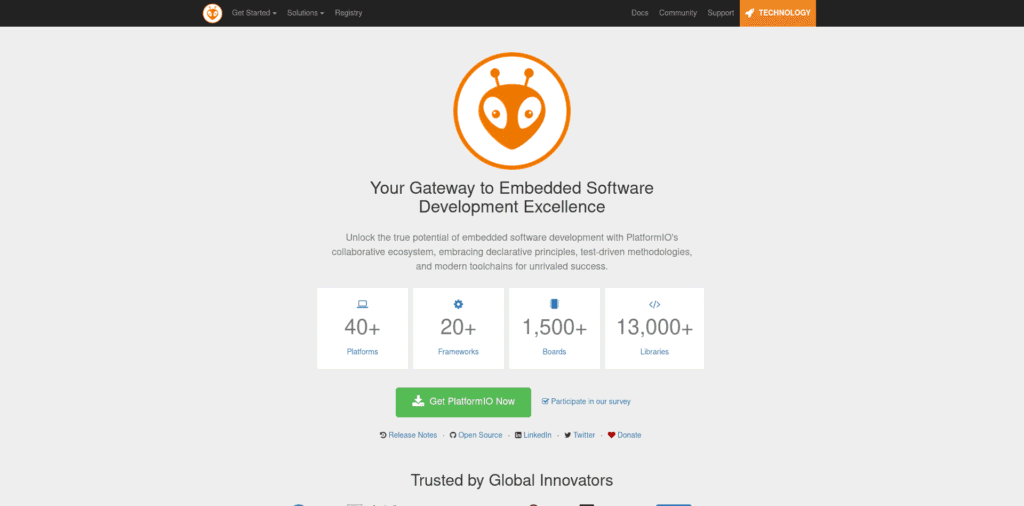
Launched in 2014, PlatformIO is an open-source initiative (not a traditional for-profit corporation) dedicated to unifying fragmented embedded systems and IoT development workflows. Originally founded by lead developer Ivan Kravets, it is maintained by a core engineering team with contributions from a global community of embedded developers. It operates under an Apache 2.0 license for core tools, with optional commercial support tiers for enterprise users. The project supports hardware from 100+ manufacturers including Espressif, STMicroelectronics, Raspberry Pi, and Arduino, with a core mission to eliminate vendor lock-in via cross-platform, board-agnostic tooling.
Core Technology
The ecosystem’s backbone is PlatformIO Core, a Python-based command-line interface that uses a single platformio.ini configuration file to define all project parameters: target board, framework, library dependencies, and debug/upload settings. The Core automatically fetches required toolchains, SDKs, and libraries from the PlatformIO registry on project initialization, removing manual setup overhead for hundreds of microcontroller families. Key technical pillars include full cross-platform compatibility (Windows, macOS, Linux) with identical workflows across operating systems, a unified package manager for 1000+ development boards, 40+ embedded frameworks, and 1000+ libraries, plus a modular architecture that allows components to be used independently or integrated into existing workflows.
Product Portfolio
Four interoperable components make up the full PlatformIO toolchain:
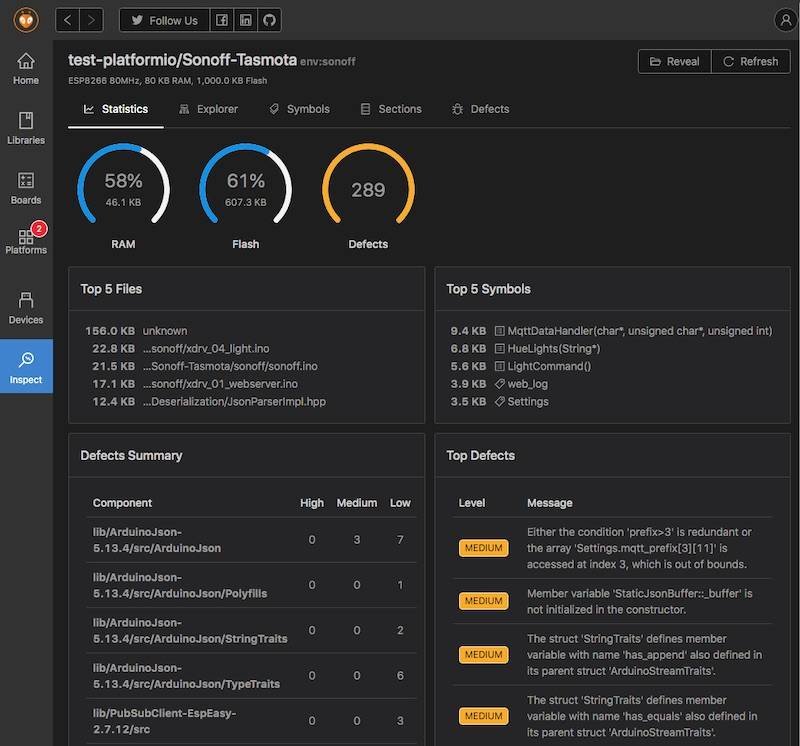
PlatformIO Core: The underlying CLI for project initialization, dependency resolution, compilation, firmware uploading, and debugging. It supports advanced features including embedded unit testing, static code analysis, and integration with CI/CD pipelines (GitHub Actions, GitLab CI).
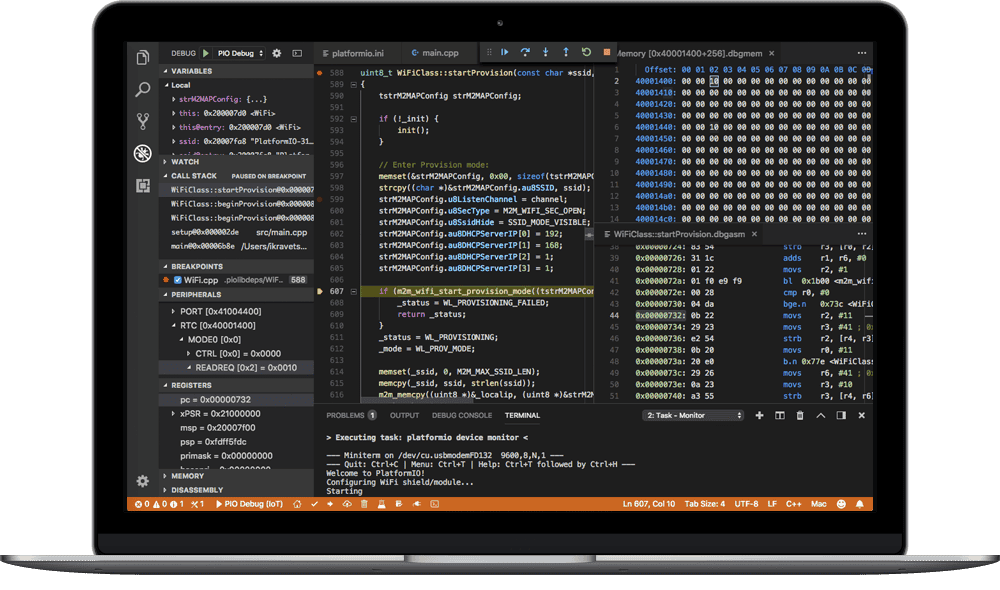
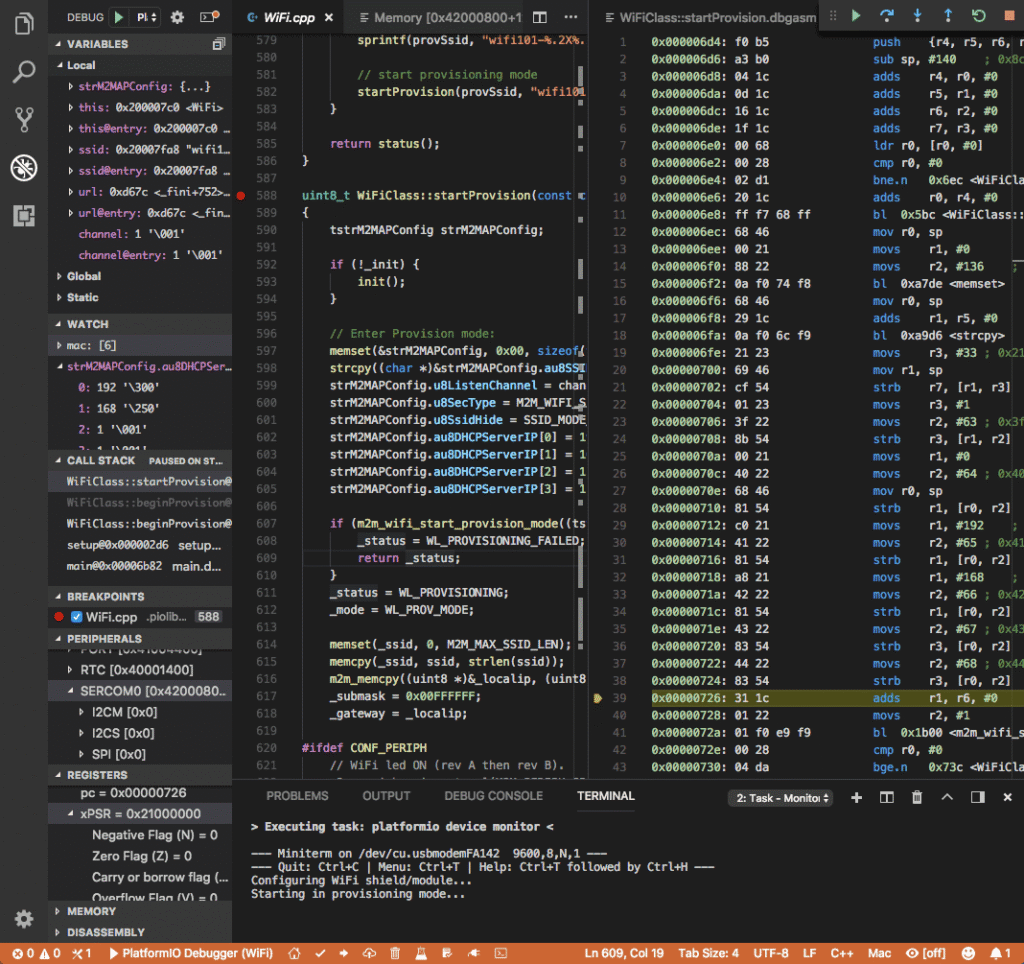
PlatformIO IDE: The official integrated development environment, delivered as a Visual Studio Code extension (the original Atom-based IDE was sunset in 2023 following Atom’s end-of-life). Features include framework-specific code completion, integrated serial monitor, GDB-based debugging, and a terminal pre-configured with platformio CLI access.
PlatformIO Home: A locally hosted web dashboard for visual project management, allowing users to browse supported boards, install libraries, and configure platformio.ini settings via a graphical interface instead of manual text editing.
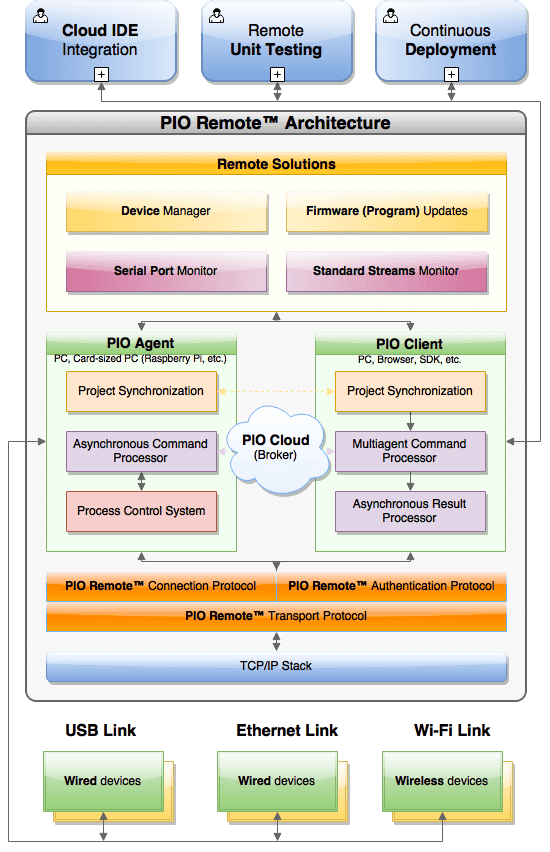
PlatformIO Cloud: Enterprise-grade services for team collaboration, remote device management, over-the-air (OTA) firmware updates for deployed IoT devices, and PIO Remote for accessing hardware connected to remote networks.
Adoption and Roadmap
PlatformIO is widely adopted in educational settings for teaching embedded systems, as it removes the overhead of configuring vendor-specific IDEs for each microcontroller family. Enterprise users leverage its CI/CD integrations and cloud tools to manage fleets of IoT devices, while hobbyists value its support for low-cost boards like the ESP32 and Arduino Uno. Major hardware partners include Espressif Systems and STMicroelectronics, which maintain official PlatformIO platform support for their latest MCU lines.
Upcoming priorities include expanded RISC-V architecture support, deeper integration with VS Code’s remote development features, and enhanced security tools for IoT firmware validation, plus native support for edge AI development workflows for embedded machine learning projects.
Map
Sorry, no records were found. Please adjust your search criteria and try again.
Sorry, unable to load the Maps API.