Profile
Robotis: Engineering the Future of Intelligent Robotics
Overview
Robotis, with its U.S. division operating at robotis.us, is a South Korean robotics company founded in 1996 that has grown into a premier manufacturer of humanoid robots, robotic actuators, and educational robotics platforms. The company bridges the gap between industrial automation and accessible education, serving both professional engineers developing cutting-edge applications and students taking their first steps into robotics. Robotis is particularly renowned for their proprietary actuator technology and the humanoid robot platforms that have become staples in research labs and competitions worldwide.
Core Product Lines
Humanoid Robotics
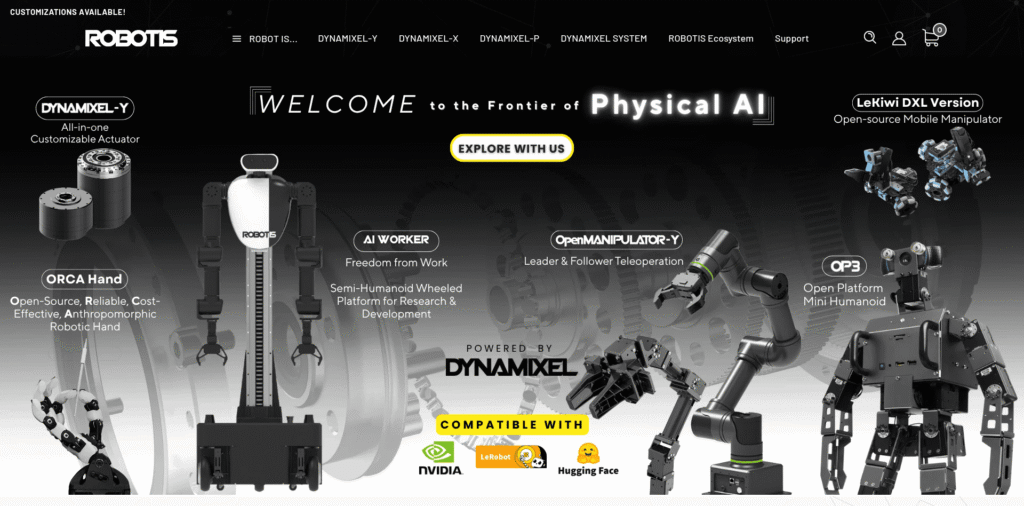
Robotis is perhaps best known for their NAO and DARwIn (Dynamic Anthropomorphic Robot with Intelligence) series. DARwIn-OP and DARwIn-MINI have become international fixtures in RoboCup soccer competitions, where teams of autonomous humanoid robots compete in fully dynamic environments. These robots feature 20+ degrees of freedom, stereoscopic vision, and sophisticated balance control systems, allowing them to walk, run, fall, and recover autonomously. The OP3 and OP5 models represent iterative improvements in affordability and capability, making serious humanoid research accessible to universities without massive defense budgets.
Dynamixel Actuators
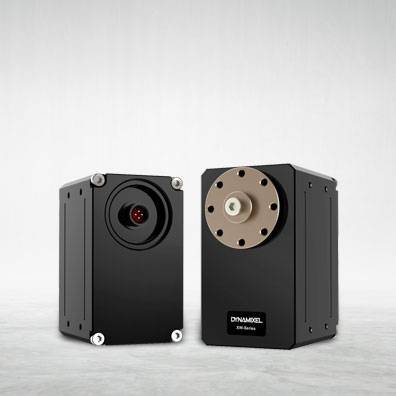
The cornerstone of Robotis’s engineering prowess lies in their Dynamixel smart servo motors. These aren’t mere servos but complete robotic joints containing motors, gearboxes, controllers, and communication interfaces in a single package. Available in various sizes and torque ratings (from the tiny XM series to the powerful PRO line), Dynamixels enable modular robot construction where each joint communicates over daisy-chained networks, providing position, velocity, temperature, and load feedback. These actuators power everything from educational robots to industrial prototypes and research exoskeletons.
Educational Platforms
Robotis serves the STEM education market through several platforms:
STEM Lab: Comprehensive robotics kits aligned with educational standards
TurtleBot: Open-source ROS (Robot Operating System) platforms for autonomous navigation research
Play 700 and other beginner kits: Introduce young learners to basic programming and mechanics
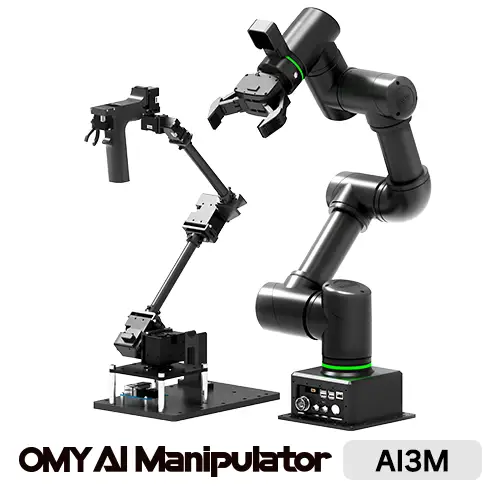
Thor and OpenManipulator: Industrial training systems for collaborative robot (cobot) education
BIOLOID System
Their modular robotics system allows users to construct various configurations—quadrupeds, hexapods, bipeds, and wheeled robots—using standardized components. This flexibility makes BIOLOID invaluable for understanding kinematics, gait generation, and mechanical design principles.
Technology and Innovation
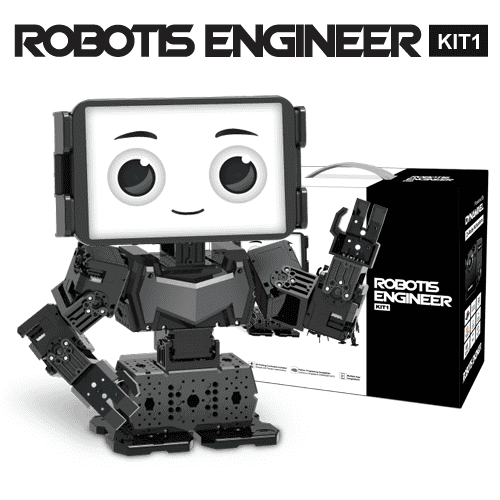
ROBOTIS ENGINE
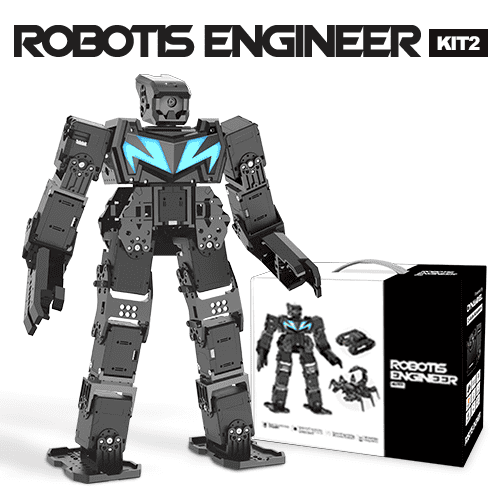
Robotis software ecosystem includes ROBOTIS ENGINE (formerly R+ Task), their proprietary programming environment supporting C++, Python, and drag-and-drop interfaces. The integration with ROS (Robot Operating System) enables researchers to leverage thousands of community-developed packages for computer vision, path planning, and machine learning.
Open-Source Philosophy
Unlike many robotics companies that maintain closed ecosystems, Robotis embraces open-source development. They provide detailed URDF (Unified Robot Description Format) files, CAD models, and communication protocols, enabling researchers to customize and extend their platforms rather than working within proprietary constraints.
Actuator Innovation
The Dynamixel architecture represents a significant engineering achievement: combining high-efficiency planetary gearboxes with brushless DC motors, absolute encoders, and distributed control over RS-485 or Daisy Chain networks. This allows robots with dozens of joints to coordinate complex movements through a single communication bus, essential for maintaining balance in dynamic humanoid locomotion.
Industry Applications
Research and Development
Universities worldwide use Robotis platforms for biomechanics research, AI development, and human-robot interaction studies. The standardized platform allows researchers to compare algorithms across institutions, accelerating the field’s progress.
Industrial Prototyping
Engineers use Dynamixel actuators to build custom manipulators, inspection robots, and automation prototypes before transitioning to custom designs or industrial solutions.
Entertainment and Art
Robotis robots feature in performances, museums, and interactive installations, demonstrating the artistic potential of programmable movement.
Competitive Robotics
From RoboCup to FIRST competitions, Robotis platforms provide the mechanical foundation for student teams to demonstrate autonomous behaviors and teamwork algorithms.
Global Impact and Market Position
Robotis occupies a unique position between hobbyist-grade servos and industrial actuators. While companies like Boston Dynamics focus on extreme performance and LEGO Education emphasizes accessibility, Robotis targets the serious student, researcher, and professional prototyper who needs reliability, precision, and expandability without aerospace-level pricing.
The company’s commitment to education has created a pipeline of engineers familiar with their technology, ensuring continued adoption in professional settings. Their Korean manufacturing maintains quality standards while keeping costs competitive with Western alternatives.
Future Trajectories
As robotics moves toward greater autonomy and human-robot collaboration, Robotis appears positioned to provide the foundational actuation and platform technologies. Their investment in ROS 2 compatibility, artificial intelligence integration, and cloud connectivity suggests preparation for increasingly sophisticated applications in healthcare, logistics, and smart environments.
Robotis represents the democratization of advanced robotics—transforming what was once laboratory-exclusive technology into tools that students, makers, and companies can deploy to solve real problems. From a servo motor in a high school classroom to the joints of a research platform navigating disaster scenarios, Robotis components are increasingly becoming the physical infrastructure of our automated future.
Map
Sorry, no records were found. Please adjust your search criteria and try again.
Sorry, unable to load the Maps API.