Profile
FANUC Corporation is a Japanese multinational factory automation (FA) and robotics leader, headquartered in Oshino, Yamanashi, Japan. Founded in 1956 as a division of Fujitsu, the company spun off as an independent entity in 1972, and has since become the world’s largest industrial robot manufacturer by volume and market share. As of April 2026, FANUC holds a ~24% share of the global industrial robot market, outpacing competitors including ABB, Yaskawa Electric, and KUKA.
Company Overview
FANUC’s core business spans three segments: industrial robots, computer numerical control (CNC) systems, and factory automation software. For fiscal 2025 (ended March 2026), the company reported annual revenue of ~$7.2 billion, with industrial robots and related services contributing 62% of total sales, CNC systems 28%, and the remaining 10% from software subscriptions and certified operator training. All robots are produced in vertically integrated facilities, with 90% of components (including servo motors, controllers, and precision reducers) manufactured in-house to minimize supply chain risk and maintain a 15–20% cost advantage over peers.
Industrial Robot Portfolio
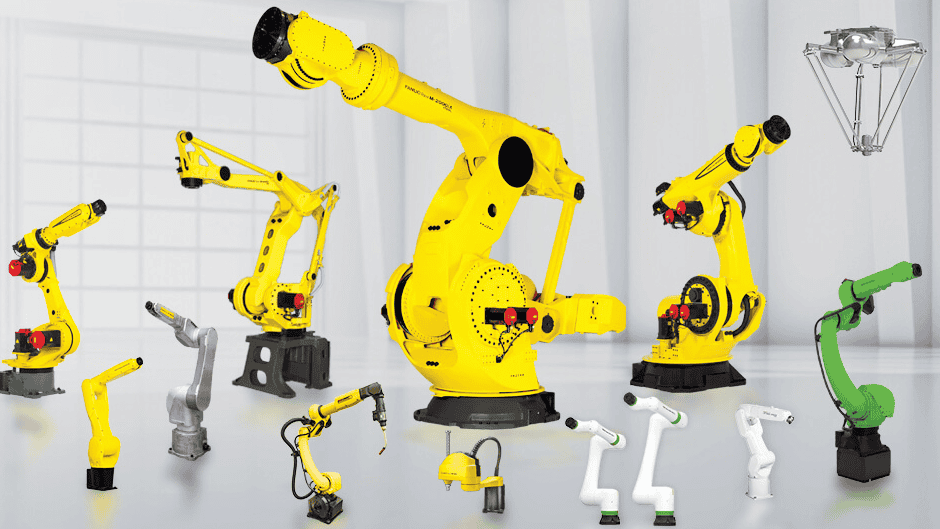
FANUC offers 80+ robot models across 5 core lines, tailored to payload, reach, and use case requirements:
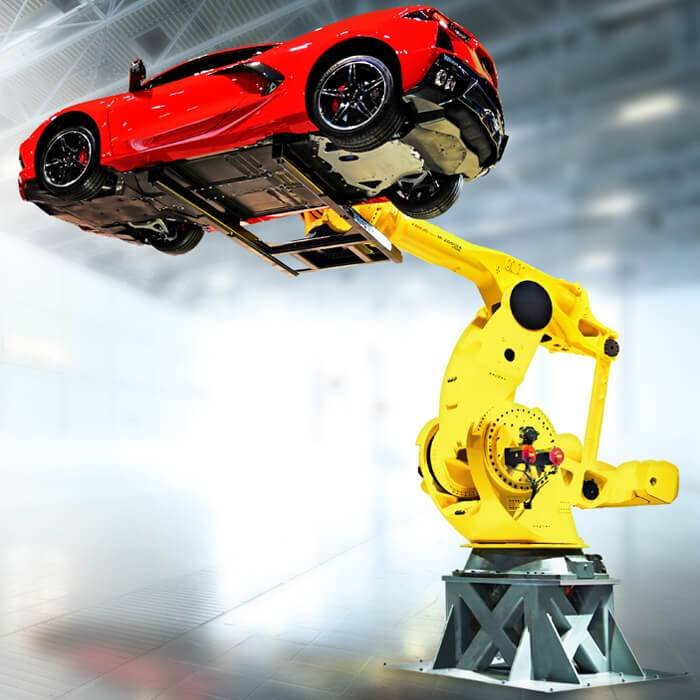
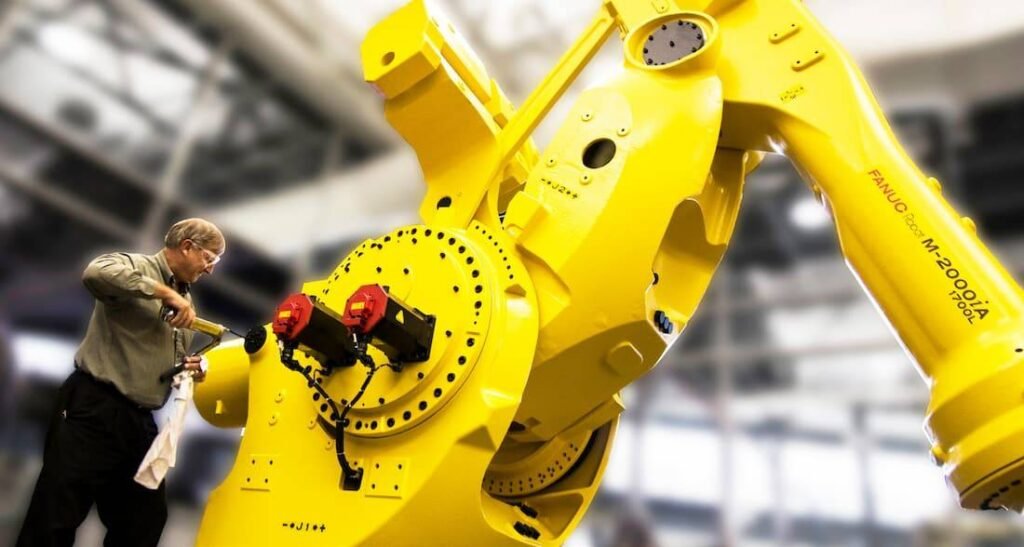
Heavy-Payload Robots: The R-2000iC series supports payloads up to 210 kg and reaches up to 2650 mm, optimized for automotive spot welding, large-part material handling, and die casting.
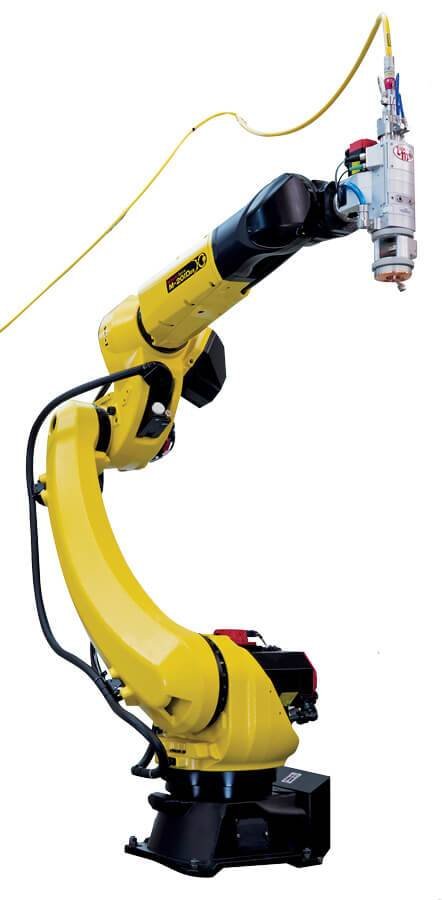
Medium-Payload Robots: The M-20iA series (20 kg payload, 1813 mm reach) is FANUC’s best-selling line, used for electronics assembly, packaging, and machine tending.
Compact/Small-Payload Robots: The LR Mate series (5–20 kg payload) is designed for precision tasks in tight workspaces, including medical device manufacturing and lab automation.
Collaborative Robots (Cobots): The CRX series, launched in 2020, features force-limited joints for safety cage-free human-robot collaboration, with payloads from 6 kg to 20 kg and <100 ms collision detection latency.
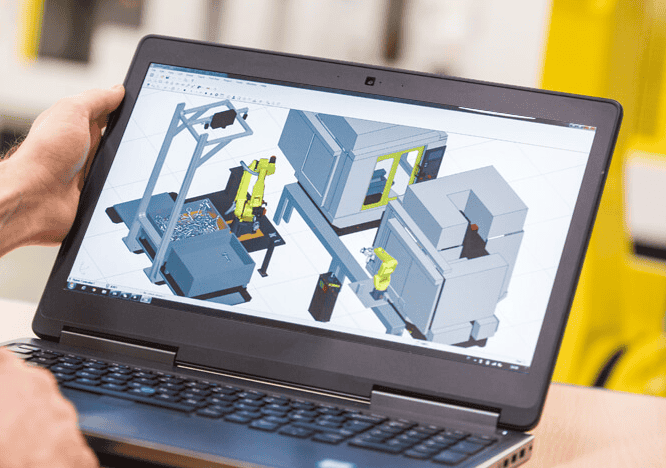
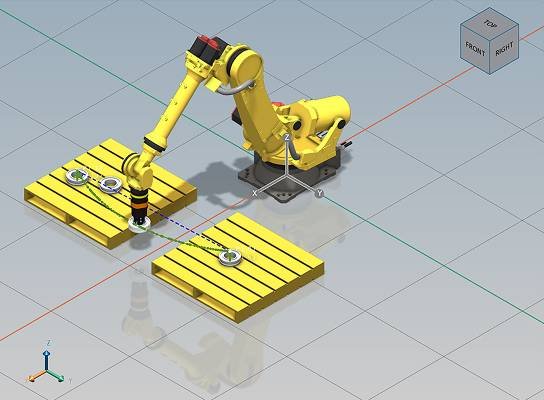
Software Ecosystem: Proprietary add-ons including ROBOGUIDE (3D offline programming and simulation) and iRVision (integrated 2D/3D vision) generate ~18% of recurring robot segment revenue.
Business Model & Market Position
FANUC uses a hybrid revenue model: 55% of robot segment income comes from one-time hardware sales, while 45% comes from recurring streams including spare parts (20%), multi-year maintenance contracts (15%), software subscriptions (7%), and training (3%). Key end markets for industrial robots are automotive (35% of sales), electronics (28%), logistics (17%), and food & beverage (12%). The company’s North American production facility in Rochester Hills, Michigan, supplies 40% of U.S. industrial robot demand, with plans to expand capacity by 25% in 2026 to meet reshoring-driven demand.
Map
Sorry, no records were found. Please adjust your search criteria and try again.
Sorry, unable to load the Maps API.