Profile
Distalmotion develops and commercializes advanced robotic systems designed specifically to make minimally invasive surgery more accessible. Founded in 2012 as a spin-off from the Robotics Lab at the Swiss Federal Institute of Technology in Lausanne (EPFL), the company is headquartered in Epalinges, Switzerland. With more than 150 employees representing over 25 nationalities, Distalmotion’s mission is to remove the operational and economic barriers that currently limit robotic surgery to a relatively small number of hospitals and ORs.
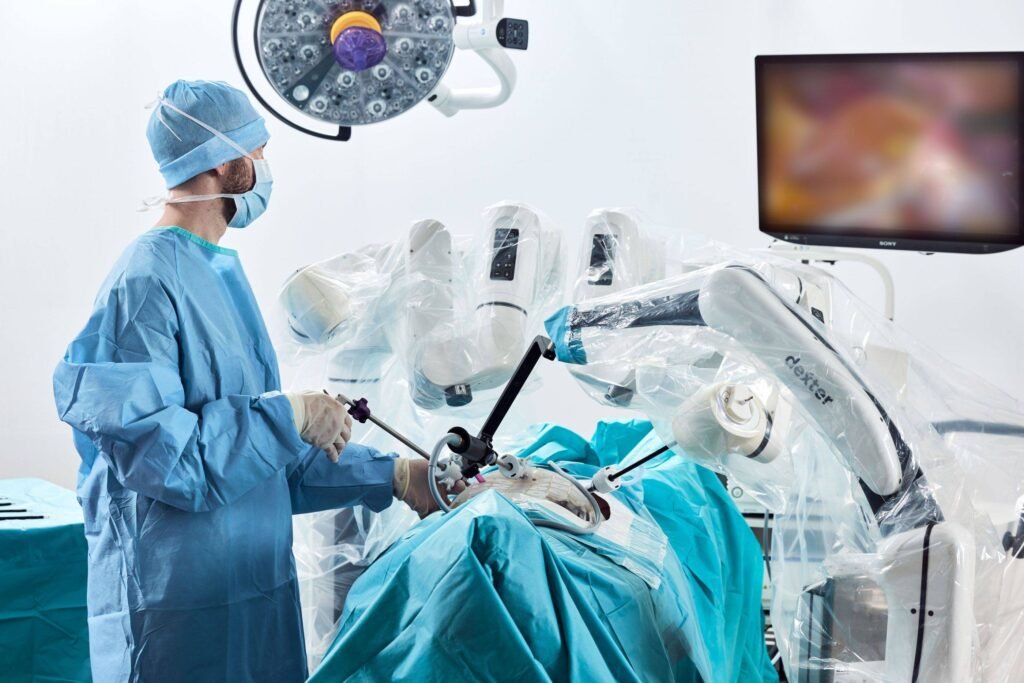
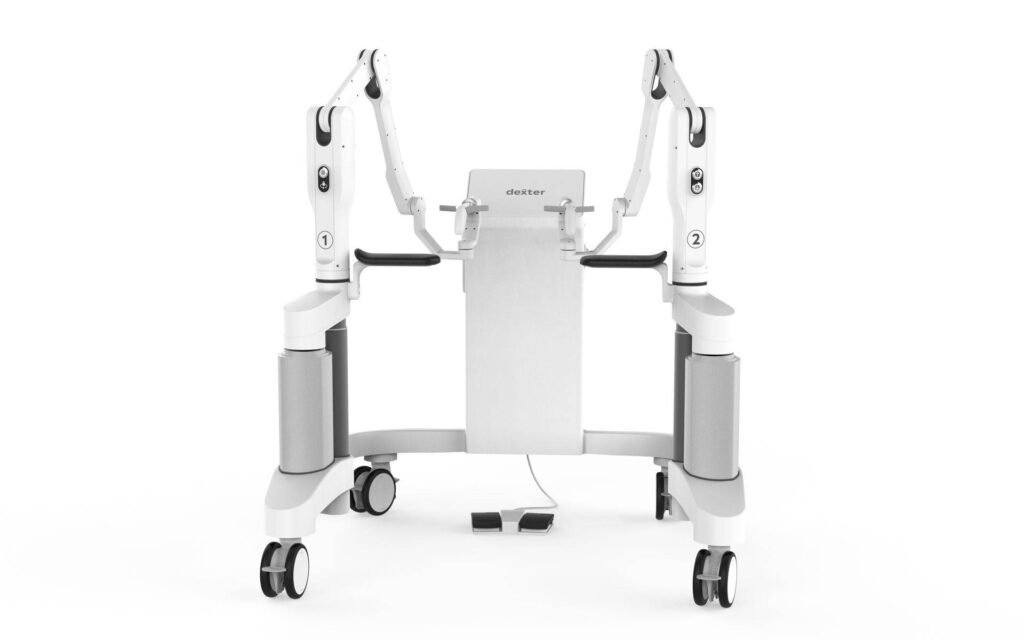
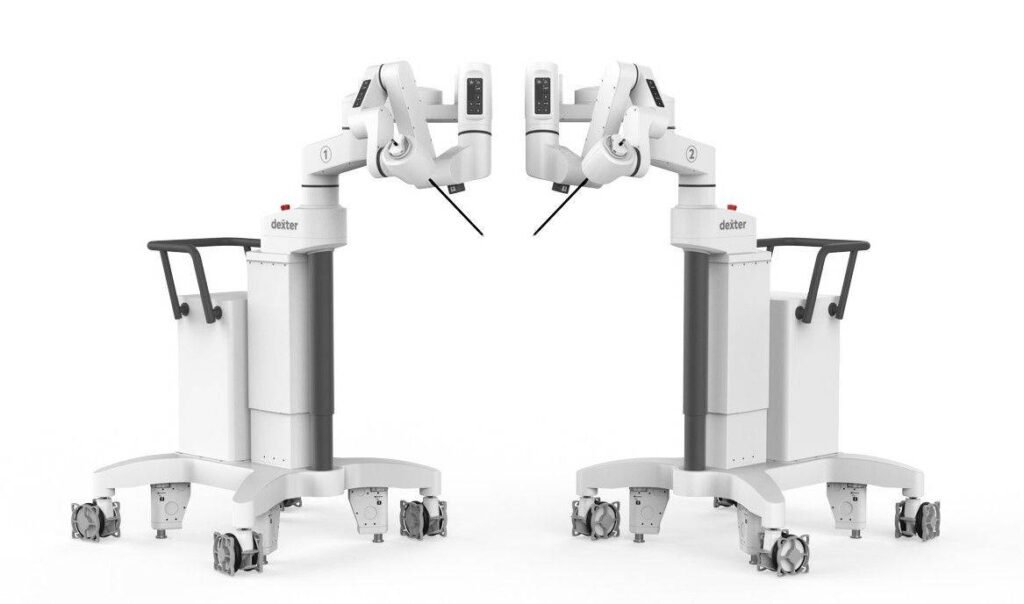
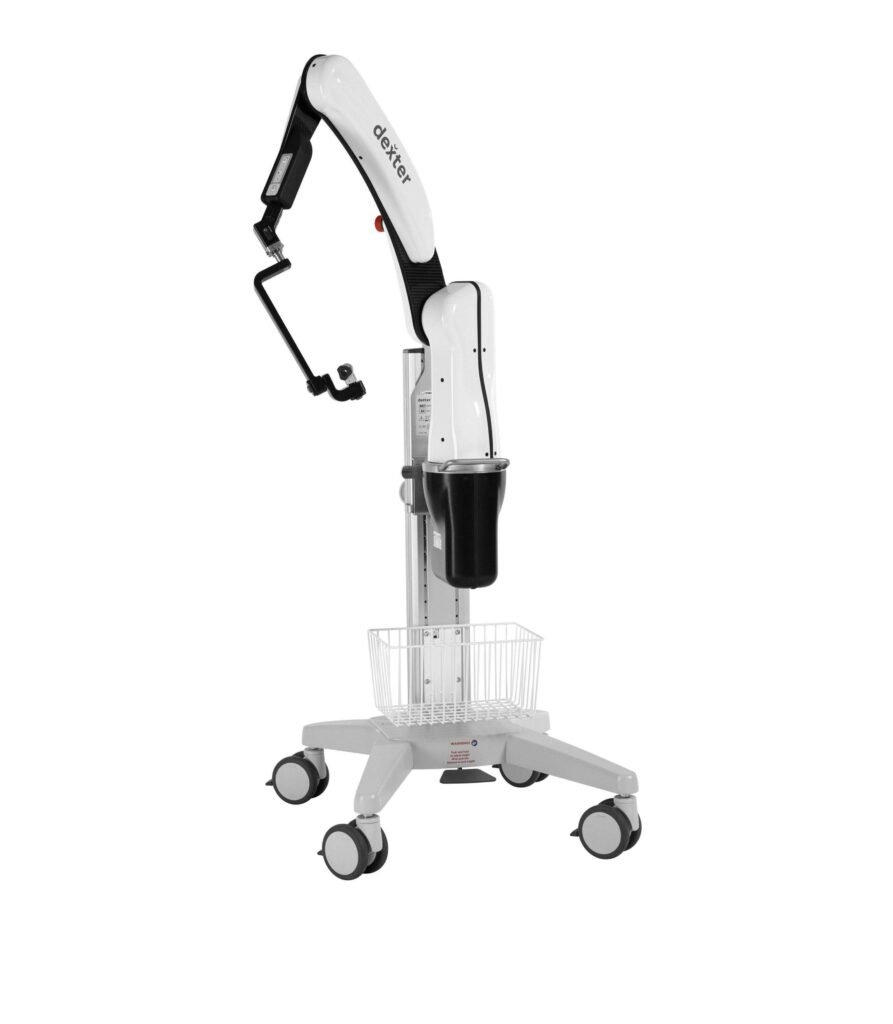
Its flagship product is the DEXTER® Robotic Surgery System, a compact, mobile robotic platform engineered for soft-tissue procedures. Unlike traditional large, fixed robotic towers that require dedicated rooms and extensive infrastructure, DEXTER is small and easily maneuvered between operating rooms. This mobility allows hospitals and ambulatory surgical centers (ASCs) to maximize utilization without modifying existing facilities.
Key design features include:
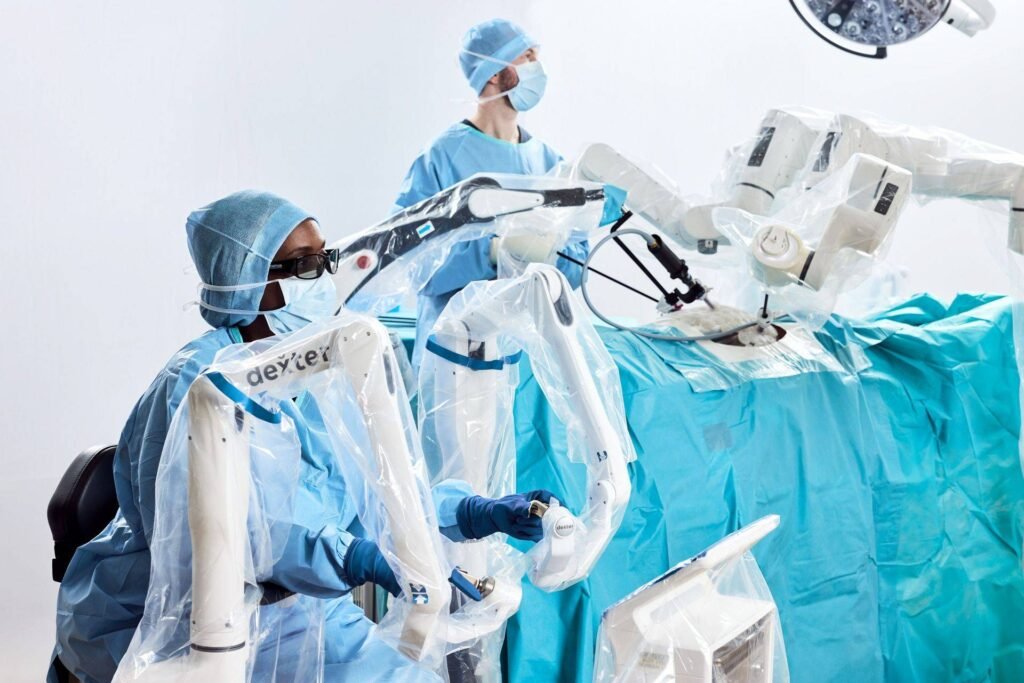
- A draped surgeon console that keeps the operator in the sterile field with immediate bedside access to the patient.
- An open architecture that permits use of the surgeon’s preferred visualization systems and advanced energy devices.
- Seamless one-button transition between laparoscopic and robotic techniques with no redocking required.
- Intuitive setup that typically takes only about four minutes from draping to first instrument use.
DEXTER received CE mark certification in 2020 for urology, gynecology, and general surgery. In the United States it holds FDA clearances for adult inguinal hernia repair, cholecystectomy, and several benign hysterectomy procedures. Clinical use began in 2021, and the system is now treating patients daily in both Europe and the United States, with more than 3,000 procedures performed to date.
The system is positioned especially for outpatient and community hospital settings where large robotic platforms are economically or logistically impractical. Hospitals report that DEXTER enables them to launch or expand robotics programs without disrupting established laparoscopic workflows or requiring major capital investments in specialized infrastructure.

Map
Sorry, no records were found. Please adjust your search criteria and try again.
Sorry, unable to load the Maps API.