Profile
Universal Robots: Democratizing Automation and Redefining Global Manufacturing
Headquartered in the historic robotics hub of Odense, Denmark, Universal Robots (UR) stands as one of the most transformative forces in the global manufacturing and industrial automation sectors. Founded in 2005 by three robotics researchers who recognized a glaring gap in the market—rigid, expensive, and dangerous traditional industrial robots—UR pioneered the collaborative robot, or “cobot.” Today, operating as a subsidiary of Teradyne, Inc., UR has become the global market leader in collaborative robotics. By stripping away the complexity, cost, and physical danger historically associated with factory automation, Universal Robots has successfully democratized robotics, empowering small-to-medium enterprises (SMEs) and global conglomerates alike to achieve unprecedented levels of productivity, safety, and flexibility.
The Birth of the Collaborative Robot (Cobot)
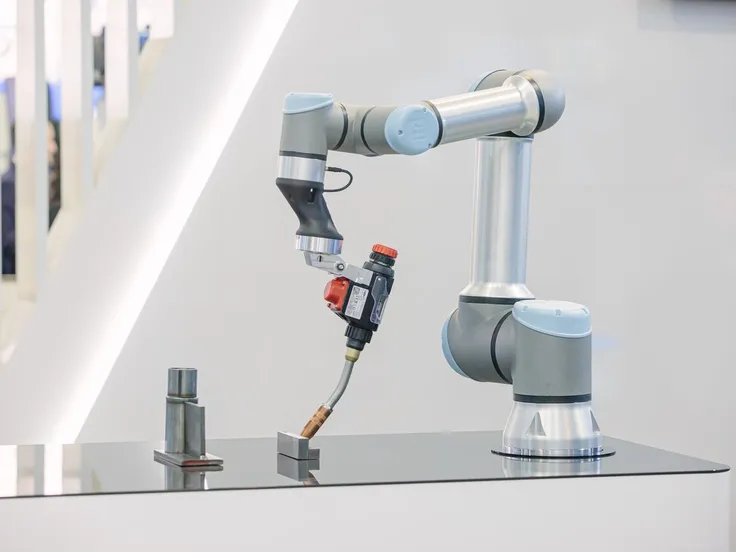
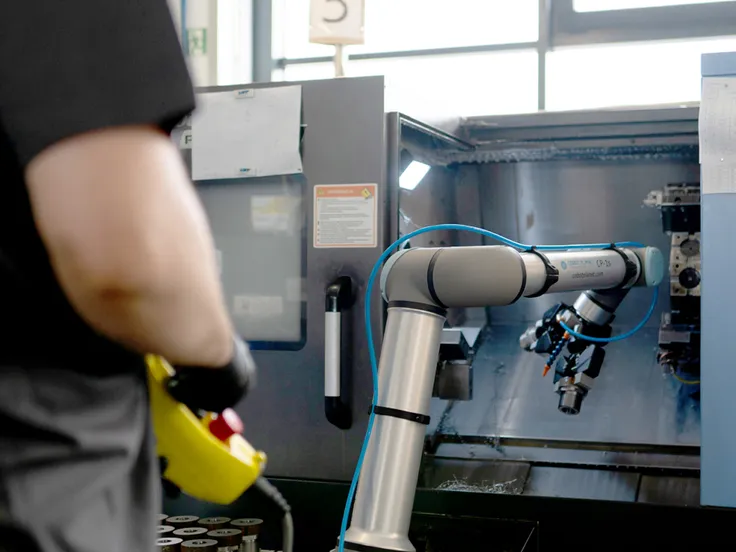
For decades, industrial robots were massive, steel-caged behemoths programmed to perform singular, repetitive tasks at high speeds, posing severe safety risks to human workers. Universal Robots disrupted this paradigm by engineering a new class of robotic arms designed explicitly to share workspace with humans. The UR cobot is defined by its lightweight structure, rounded edges, and advanced force-sensing technology. If a UR arm encounters a human or an unexpected obstacle, it automatically limits its force or stops its movement to prevent injury. By eliminating the need for expensive physical safety cages and complex shielding, UR drastically reduced the footprint, cost, and integration time required to deploy automated solutions on factory floors.
Accessibility, Flexibility, and Ease of Use
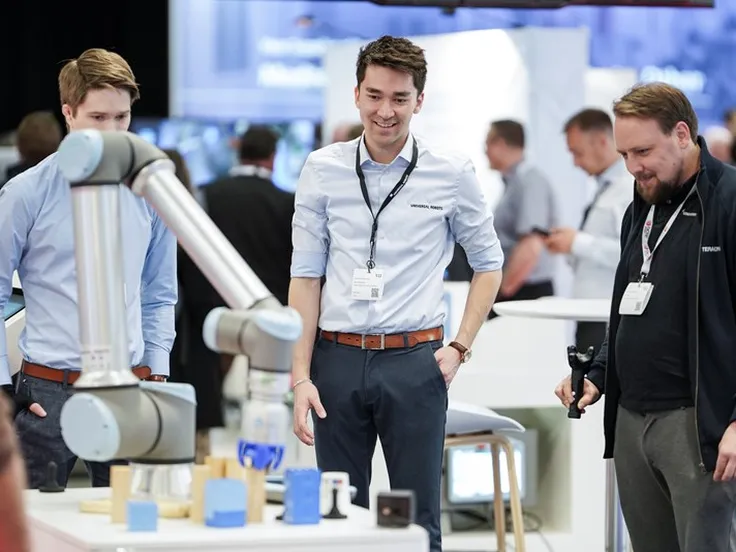
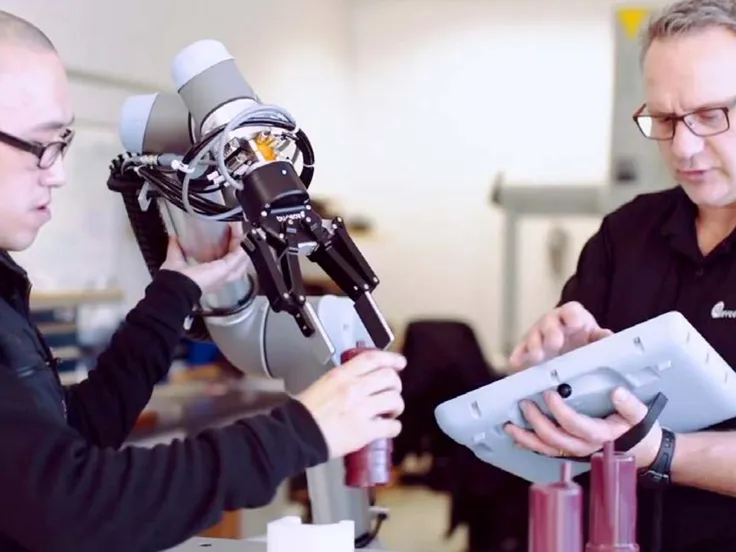
Traditional automation requires massive capital expenditure, dedicated facilities, and specialized engineering teams. Universal Robots subverted this model by creating a platform renowned for its ease of use and agility. The signature intuitive, 3D touchscreen interface of modern UR arms allows operators with zero programming background to manually guide the robot through its tasks, teaching it paths and routines like showing a coworker how to perform a job. Furthermore, their compact, six-axis articulated arms can be mounted almost anywhere—inside standard machinery, on mobile platforms, or directly on a workbench—and can be redeployed across entirely different production lines in a matter of hours. This unmatched flexibility provides manufacturers with the agility necessary to survive in today’s hyper-competitive, rapidly fluctuating global supply chains.
An Open Ecosystem for Limitless Applications
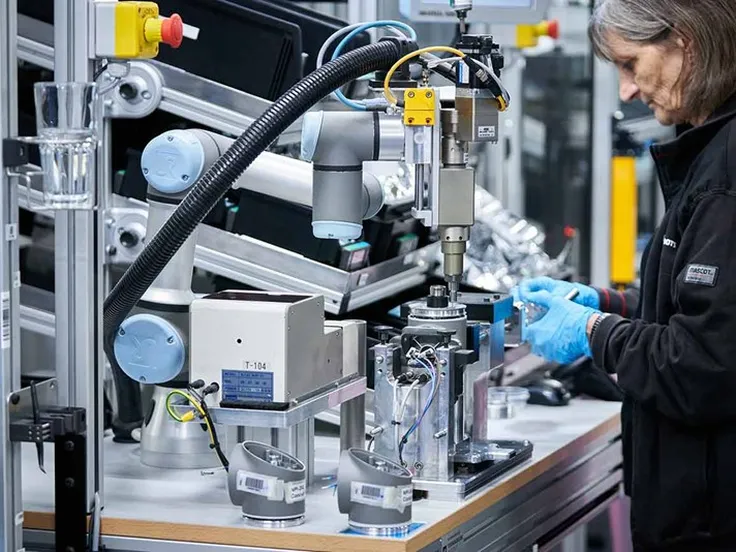
Universal Robots operates on an open-source philosophy regarding its platform. Instead of locking users into proprietary tooling, UR utilizes standardized interfaces (such as the UR+ ecosystem) that support a massive library of third-party end-effectors, vision systems, software, and grippers. This open architecture allows a single UR arm to seamlessly transition from precision screw-driving and circuit board assembly to machine tending, packaging, laboratory testing, and even surgical assistance. By fostering a rich ecosystem of partners, UR ensures that its cobots serve as versatile, future-proof platforms rather than single-purpose machines.
Conclusion
Universal Robots effectively bridged the gap between human ingenuity and mechanical precision. By placing safety, accessibility, and user-friendly programming at the forefront of its design philosophy, UR dismantled the traditional barriers to automation. Today, the company remains the gold standard in collaborative robotics, continually pushing the boundaries of what automated systems can achieve while empowering a diverse, global workforce to harness the power of advanced manufacturing technology.
Map
Sorry, no records were found. Please adjust your search criteria and try again.
Sorry, unable to load the Maps API.