Profile
Stanley Robotics is a French deep-tech company specializing in autonomous robotic parking solutions for airports, stadiums, and large mobility hubs. Founded in 2015 and headquartered near Paris, the company has developed an innovative, fully automated valet parking system that uses intelligent mobile robots to move vehicles without any human intervention.
Core Innovation: The Stanley Robot
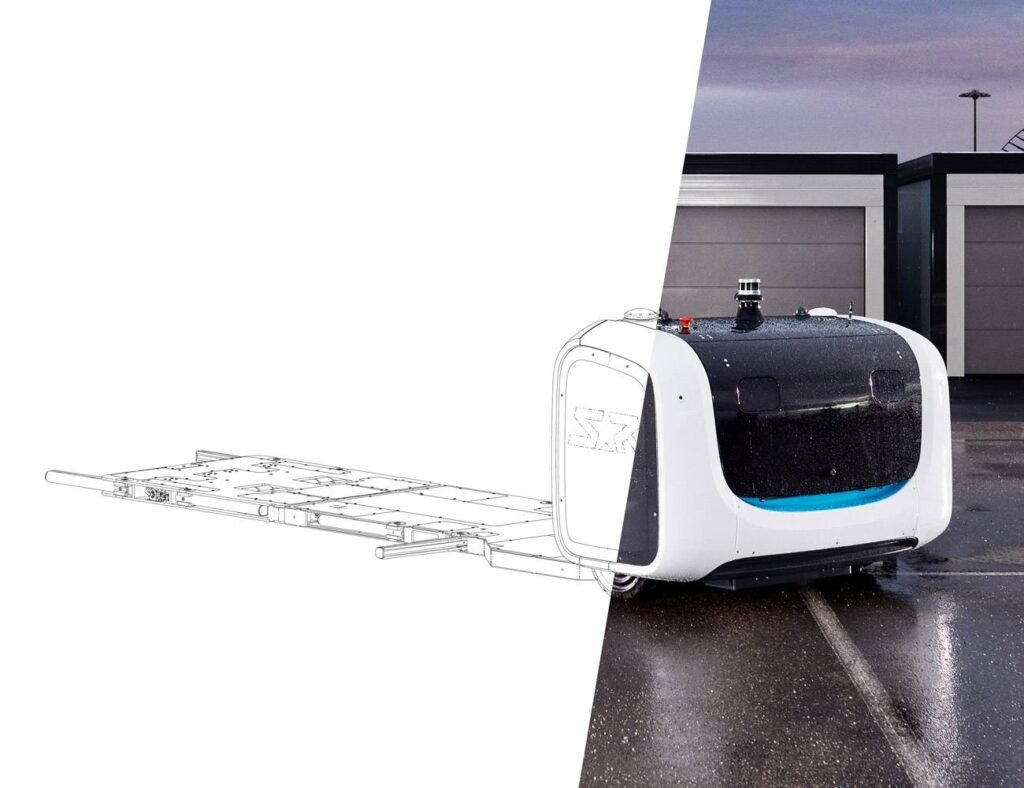
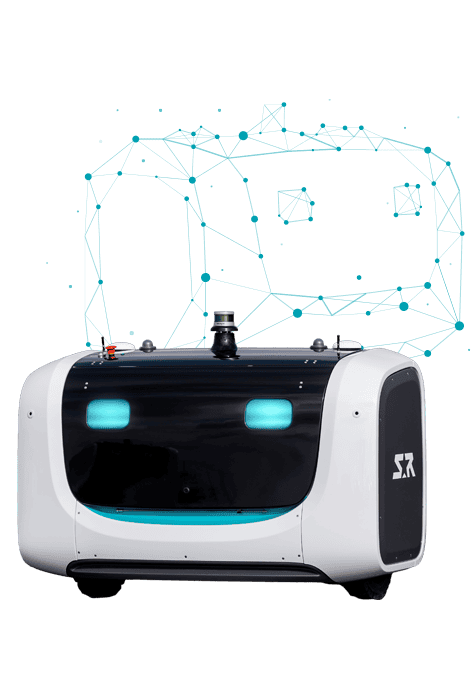
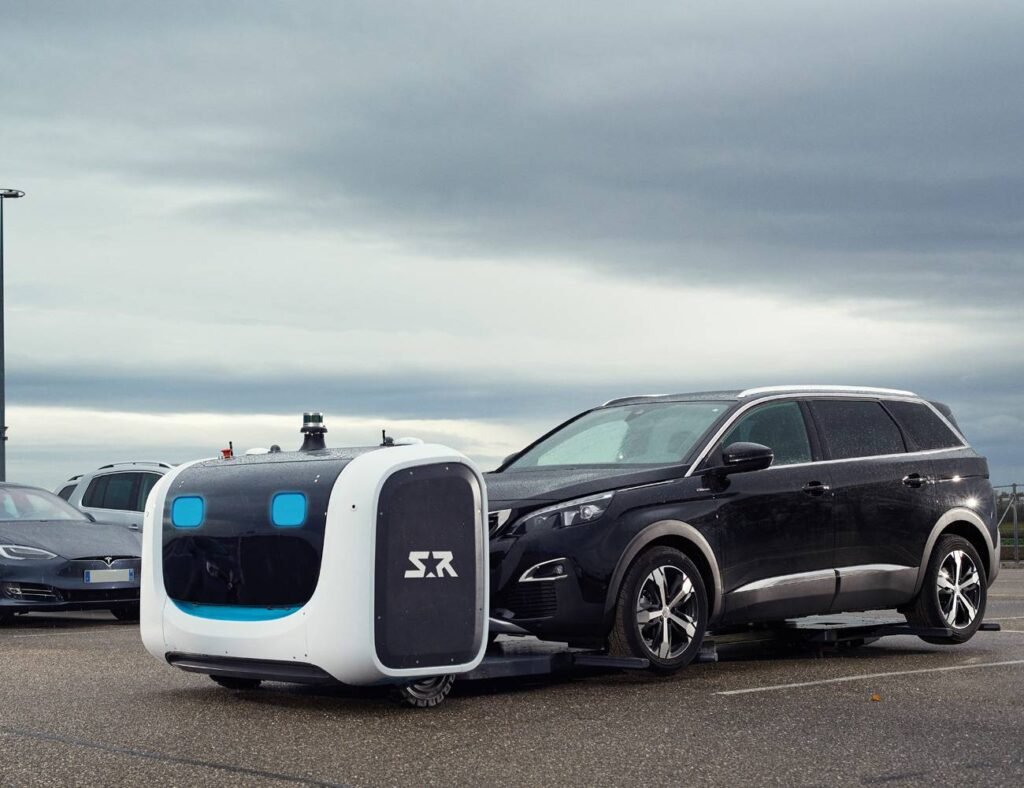
The company’s flagship product is a unique, low-profile autonomous mobile robot capable of lifting and transporting cars and vans weighing up to 3.5 tons. Unlike traditional Automated Guided Vehicles (AGVs) used in parking systems, Stanley’s robots do not require fixed infrastructure such as rails, magnets, or underground sensors. They operate on standard asphalt or concrete surfaces using advanced computer vision, LiDAR, and proprietary navigation algorithms.
The robot drives under the vehicle, lifts it by the wheels (a system similar to a robotic forklift for cars), and transports it to an available parking space. This “lift-and-carry” approach allows for extremely dense parking — Stanley claims up to a 50% increase in parking capacity compared to conventional parking garages because vehicles can be parked much closer together with no need for space for car doors to open or for driving lanes.
Target Markets and Use Cases
Stanley Robotics initially focused on airport parking, which remains its primary market. Airports face chronic problems with limited land, high operational costs, and the environmental impact of large parking structures. The Stanley system addresses these by:
- Reducing the physical footprint needed for the same number of vehicles
- Eliminating the need for shuttle buses (passengers park their car and walk directly into the terminal)
- Operating 24/7 with minimal human oversight
- Improving safety and reducing vehicle damage compared to human valets
The company’s first major commercial deployment was at Paris Charles de Gaulle Airport (Roissy) in partnership with Vinci Airports and Apcoa. The system, branded “Stanley Valet”, has been operational since 2021 and continues to expand.
Beyond airports, Stanley is targeting stadiums, shopping centers, hospitals, and large business campuses where parking logistics are expensive and land is constrained.
Technology and Competitive Advantages
Key differentiators include:
- Infrastructure-light design: No need to build expensive automated parking structures.
- Scalability: The system is modular — more robots can be added as demand grows.
- Weather resilience: Designed to operate outdoors in rain, snow, and extreme temperatures.
- High vehicle compatibility: Works with almost any passenger vehicle up to 3.5 tons (including many SUVs and light vans).
The company combines robotics, computer vision, fleet management software, and a sophisticated planning algorithm that optimizes parking density and retrieval speed in real time.
Business Model and Growth
Stanley Robotics operates on a Robot-as-a-Service (RaaS) or concession model. Typically, the company installs and operates the entire system (robots + software + control center) and shares revenue with the parking operator or airport. This lowers the capital expenditure barrier for clients.
As of 2024–2025, the company has raised over €30 million from investors including Bpifrance, Vinci, and several European venture funds. It is considered one of Europe’s most promising robotics startups in the smart mobility and logistics space.
Strategic Vision
Stanley’s long-term ambition is to become the global leader in robotic parking automation while contributing to more sustainable mobility. By dramatically increasing parking density, the company reduces the need for new parking construction, lowers CO₂ emissions from shuttles, and improves the user experience through contactless, stress-free parking.
The company is currently expanding internationally, with active commercial discussions in North America, the Middle East, and across Europe.